Frozen Mango for Smoothie Shops: Diced vs Puree vs Fresh
Mango is on almost every smoothie menu, and it is one of the easiest ingredients to lose money on. Here is how frozen diced mango, mango puree, and whole fresh fruit compare on cost per drink, labor, waste, and consistency, with the math from a real 10 kg case.
Mango is the flavor customers expect to see on a smoothie menu. It is also an ingredient that quietly eats margin, because the fruit you buy and the fruit that ends up in the blender are rarely the same weight.
This is a working comparison for smoothie shops, juice bars, and cafes: fresh mango, mango puree, and frozen diced mango, measured on cost per drink, labor, waste, and consistency. The numbers use a real case spec so you can rerun them with your own portions.
The case spec we are working from
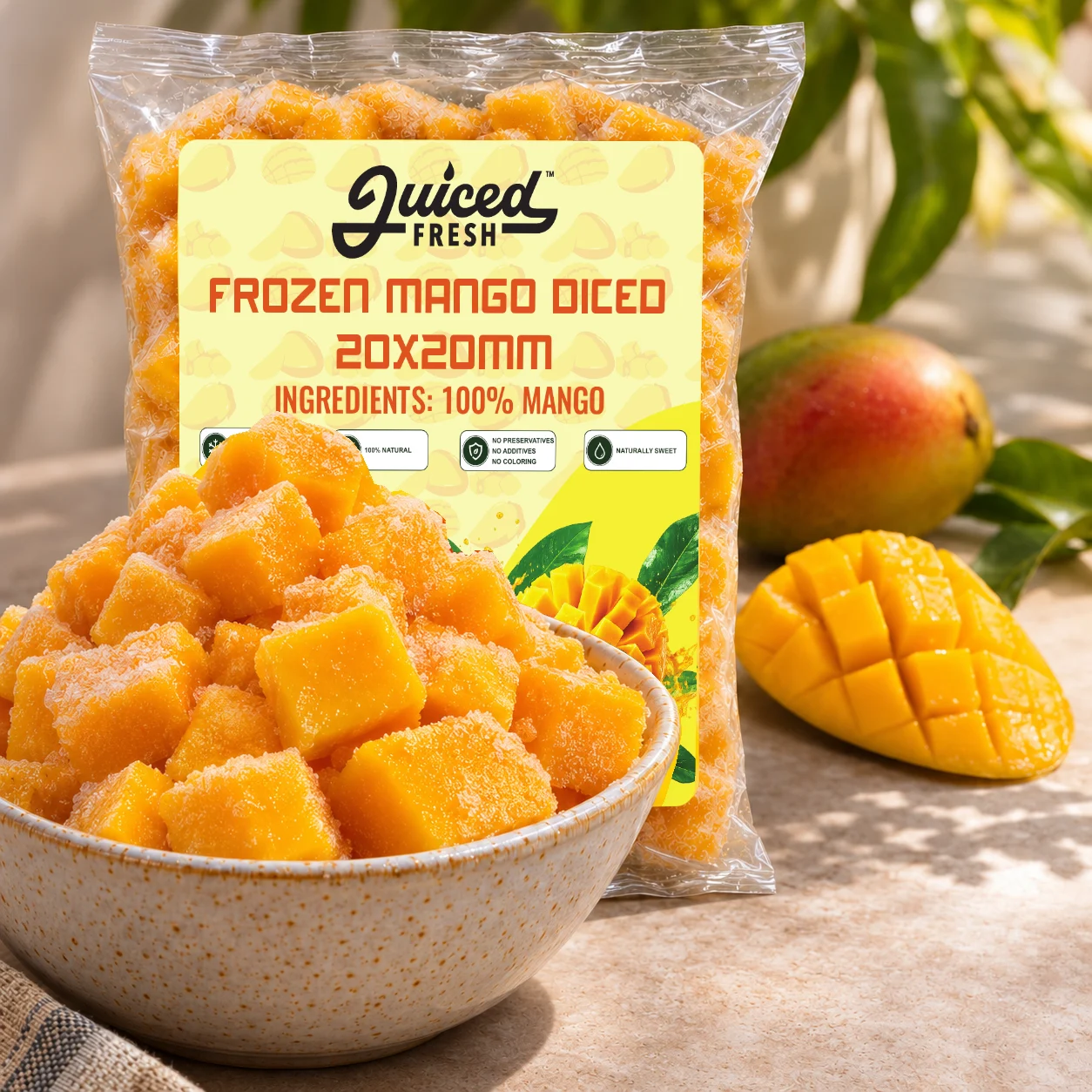
The frozen option here is our frozen diced mango:
- 10 kg case, packed as ten 1 kg packs
- 20 x 20 mm dice
- 100% mango, grown in Vietnam
- 24 months frozen shelf life
- $89 per case
That is $8.90 per kilogram, or about $4.04 per pound, and every gram of it is usable. A pallet is 120 cases at 17% off before freight, which brings a case to about $73.87 and a kilogram to about $7.39.
Option 1: fresh mango
Fresh mango at peak season is hard to beat on flavor, and in season it can be cheap by the pound. The problem is everything between the box and the blender.
- Yield. Skin and pit are heavy. Depending on the variety and the knife work, roughly 60 to 70% of a whole mango is usable flesh. To get 10 kg of flesh you need to buy about 15 kg of fruit.
- Ripening. Mangoes arrive hard and all ripen together. For a few days you have too little ripe fruit, then you have too much.
- Labor. Every mango has to be peeled, cut off the pit, and diced by hand. It is slow, slippery knife work.
- Consistency. Sweetness changes with variety, season, and ripeness, so the same recipe tastes different in March than it does in July.
- Price swings. Off-season fresh mango costs far more than it does at peak.
Fresh makes sense as a garnish, on a fruit plate, or when mango is the star of a seasonal special. As the everyday base for a blended drink, it is the most expensive way to get there once labor and waste are counted.
Option 2: mango puree
Puree is mango that has already been blended smooth. It pours, it measures by volume, and it disappears into a drink.
- Where it wins: lassi, sauces, cocktails, drizzles, and anything that should be completely smooth.
- Where it loses: it adds no body. A smoothie built on puree needs extra ice or frozen banana to get thick. It also cannot be used as a topping or anywhere you want to see and bite fruit.
- What to check: many purees include added sugar or acid. Read the label and adjust your recipe.
Option 3: frozen diced mango
Frozen dice is whole fruit that has been peeled, pitted, cut, and frozen for you.
- 100% usable. No skin, no pit, no trim. The weight on the box is the weight in the blender.
- It thickens the drink. Frozen fruit does the job of ice without watering the smoothie down.
- No ripening window. It is ready the moment you open the pack and it tastes the same in every season.
- Portion control. Ten 1 kg packs mean you open only what you need and the rest stays sealed in the freezer.
- It works as a topping. A 20 mm dice is the right size to scatter over a bowl, fold into yogurt, or bake into a muffin.
Cost per drink from one case
Here is what a 10 kg case yields at common portion sizes, at the single-case price of $89 and at the pallet price of about $73.87.
- Smoothie, 150 g of mango per 16 oz drink: about 66 drinks per case. Mango cost is about $1.34 per drink by the case, or about $1.11 at pallet pricing.
- Mango lassi, 120 g per drink: about 83 drinks per case. About $1.07 per drink by the case, or about 89 cents at pallet pricing.
- Bowl topping, 100 g per bowl: 100 bowls per case. 89 cents per bowl by the case, or about 74 cents at pallet pricing.
At a $7 to $9 menu price, mango cost of $1.34 leaves plenty of room for the cup, the other ingredients, and labor. More importantly, that $1.34 does not move. It is the same number in the off-season, and it does not include a prep cook standing at a cutting board.
If you already buy fresh, the honest comparison is this: take your price per pound for whole mango, divide by 0.65 to account for skin and pit, then add the labor to peel and dice it and the fruit you throw away when it over-ripens. In peak season fresh can still come out ahead on paper. Across a full year, frozen is usually cheaper and always more predictable.
Can you make puree from frozen dice?
Yes, and this is why most shops only need one mango product. Thaw the dice in the refrigerator, then blend until smooth. You get a puree with nothing added, made in the quantity you need, and you still have dice for smoothies and toppings.
Going the other way is not possible. You cannot turn puree back into fruit.
Storage and handling
- Keep cases at 0°F or below. Shelf life is 24 months frozen.
- Blend straight from frozen for smoothies. There is no need to thaw.
- For toppings and bakery, thaw only what you need in the refrigerator and use it promptly.
- Do not refreeze thawed fruit. Texture suffers and it clumps.
- Rotate stock first in, first out, and label each pack with the date you opened it.
More detail is in our guide to frozen tropical fruit shelf life and handling.
What else to build around it
Mango is rarely alone on a menu. The same freezer order can cover the rest of a tropical lineup:
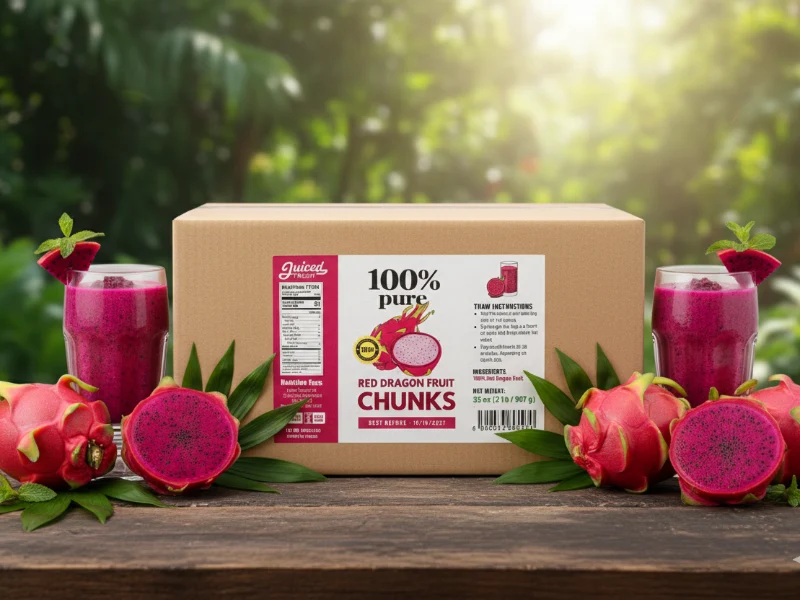
- Red dragon fruit chunks for pitaya bowls and color.
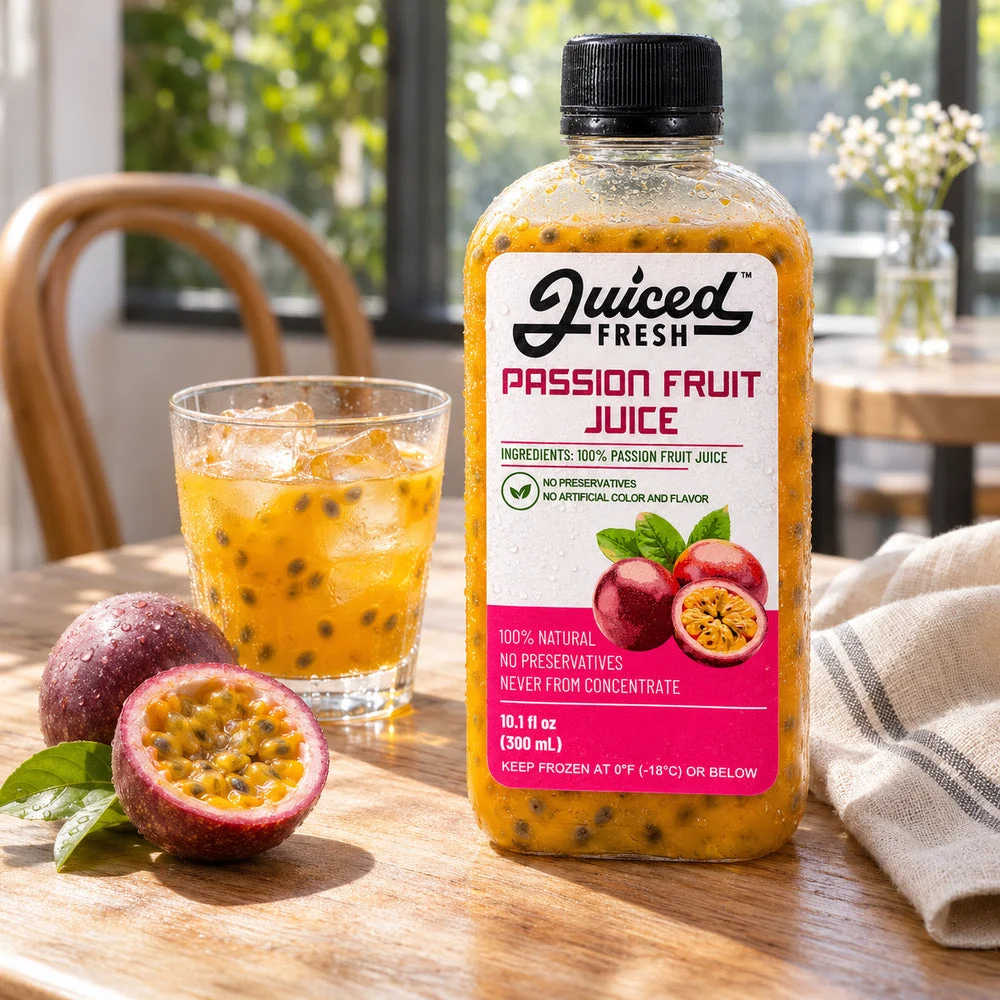
- Passion fruit juice for a tart mango passion smoothie.
- Coconut water as a lighter liquid base than juice.
How much frozen mango does a smoothie shop need?
Work backward from drinks. At 150 g per smoothie, a shop selling 30 mango drinks a day uses about 4.5 kg a day, or roughly three cases a week. Start with a few cases, measure your real usage for two weeks, then decide whether pallet pricing makes sense.
How do I order?
Order by the 10 kg case on the frozen diced mango page. Orders ship frozen from Austin, Texas and arrive in 2 to 5 days. For pallet quotes, see the wholesale page or message us on WhatsApp at +1 (201) 920-9678. We usually reply in minutes.
Published by Juiced Fresh.
Notes from the warehouse, the farm, and the bars we supply. See all Field Notes