Chapter
I
Before you start.
Three rules that apply to every Juiced Fresh format. Get these right and you'll never lose product to a thaw gone wrong.
- Refrigerator thaw or cold-water bath only. Never room temperature. Never warm water. Never microwave. Heat damages flavor, rushes bacterial risk into the danger zone, and ruptures cell structure unevenly.
- Thaw only what you'll use. Once thawed, the clock is running. Juice holds 24 hours refrigerated. Stalks hold 2 to 3 days. Drums, once decanted, are 7 days. Never refreeze.
- Inspect before service. Every format has visible and olfactory signs of spoilage. Trust the senses. When in doubt, discard. The cost of wasted product is always lower than a sick customer.
Quick facts
- Bottled juice: 30–40 min in cool water bath.
- 1 kg juice bag: 8–12 hrs fridge OR 2–3 hrs cold water.
- 22 lb stalk case: 20–30 min cold water OR 24–48 hrs fridge.
- 55-gallon drum: 4–7 days walk-in refrigerator.
- 275-gallon IBC tote: 7–10 days temperature-controlled thaw room.
Chapter
II
Bottled juice.
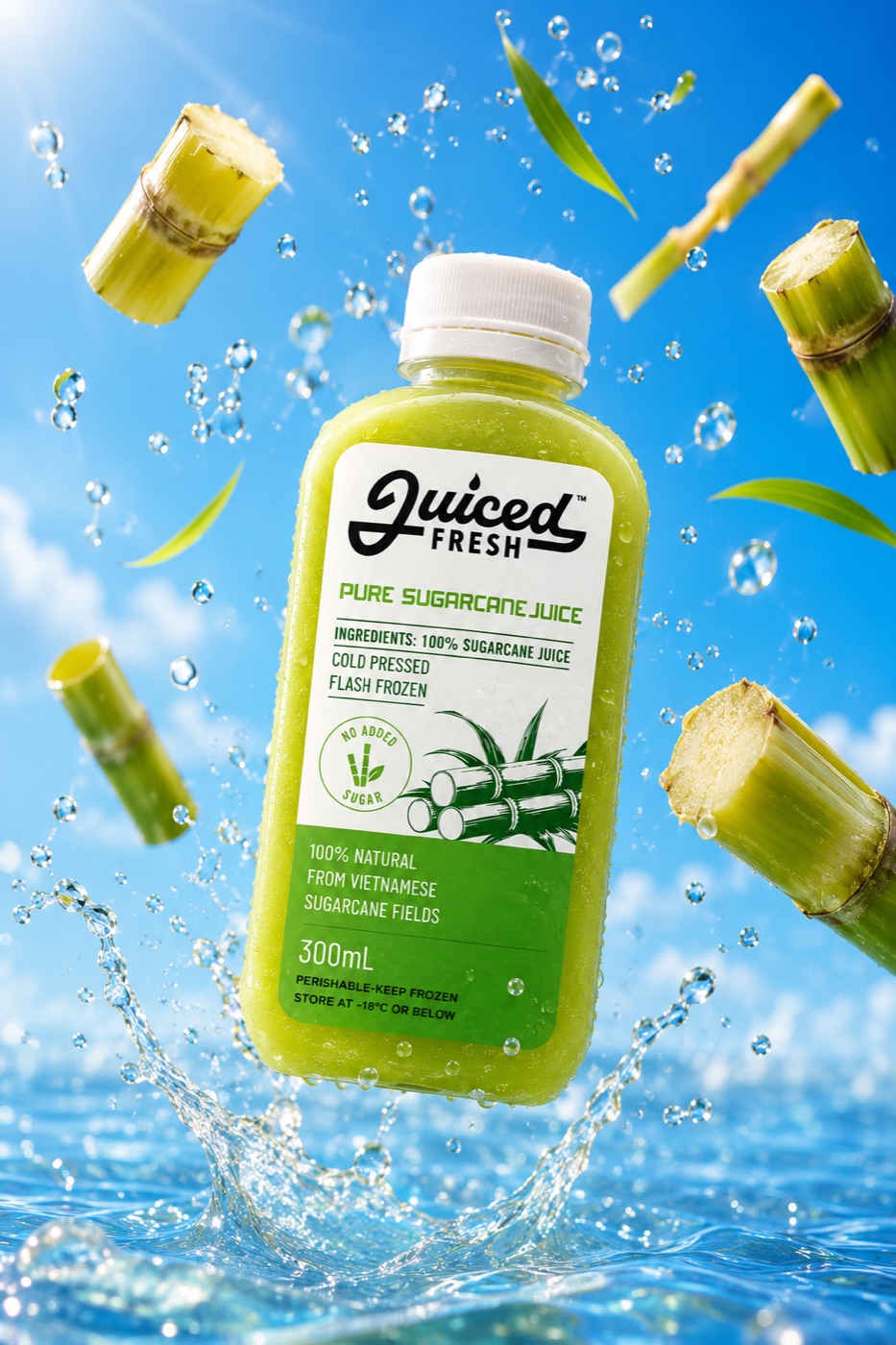
Consumer and small-bar scale. Three steps, under an hour from freezer to glass.
_1765289577513-BHExCmdI.webp)
- 01
Keep the bottle frozen until you need it
Juiced Fresh bottled juice holds at 0°F for up to 24 months. There's no rush. Leave it in the freezer and pull only what you'll serve in the next day.
- 02
Thaw in a bowl of cool water
Submerge the sealed bottle in a bowl of room-temperature or cool tap water for 30–40 minutes. The gentle ambient thaw preserves flavor and color. Do not use hot water, do not microwave, do not set on a stovetop to warm.
- 03
Shake gently and serve over ice
Once fully thawed, swirl or stir the bottle to recombine any natural sediment. Pour over crushed or cubed ice. A squeeze of lime brightens the drink and slows oxidation. Drink within 24 hours for the best brightness.
Chapter
III
Frozen stalks.
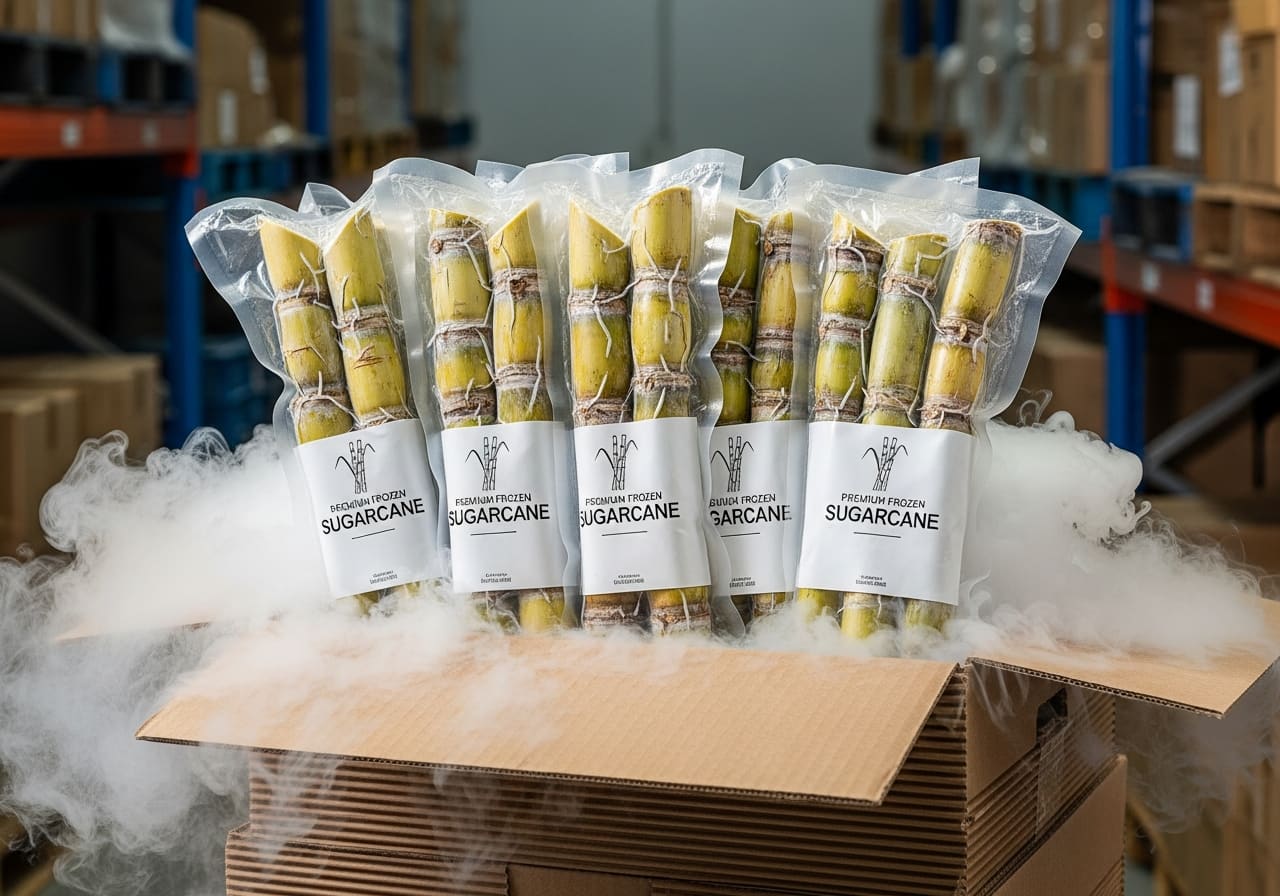
Case-scale stalks for juice-bar and restaurant service. Two acceptable methods: cold-water bath for same-day service, or refrigerator thaw for next-day service. Neither is wrong. Pick by schedule.
_1765289577513-D9Ljm2-Q.webp)
- 01
Pull what you'll use the same day
Remove only the stalks you plan to press in the next 6 to 24 hours. Leave the rest sealed in the freezer. Thawing more than you'll use wastes product and forces you into a refreeze you should never do.
- 02
Cold-water bath OR refrigerator thaw
Two methods work. Cold-water bath: submerge stalks in a clean, food-safe tub of cool water, 20–30 minutes until flexible. Refrigerator thaw: unbox and place on a covered tray on the lowest shelf for 12–24 hours. Refrigerator thaw is safer for longer holds; cold-water is faster for same-day service.
- 03
Drain and inspect
Stand thawed stalks upright in a clean bucket to drain surface water. Inspect each stalk: yellow-green rind is healthy. If a stalk is slimy, sticky, or smells sour or alcoholic, discard it. That's spoiled.
- 04
Press the same day
Once thawed, the window is short. Press within 24 hours for best flavor. Refrigerated thawed stalks (tightly wrapped) can hold another 2–3 days, but the clock is running. Never refreeze.
Video tutorial · How to thaw frozen sugarcane stalks
Chapter
IV
Drums & IBC totes.
Distillery and co-packer scale. These formats need a week of lead time in the thaw calendar. No shortcuts.
Our 55-gallon drum holds roughly 485 lb of frozen pressed juice; our 275-gallon IBC tote holds roughly 2,425 lb. At those masses, thaw physics takes over. Even at 40°F ambient, the geometric center of the drum needs days to reach liquid state. The right answer is to plan around it.
- 01
Schedule the thaw a week in advance
A 55-gallon drum needs 4–7 days to thaw fully in a walk-in refrigerator. A 275-gallon IBC tote needs 7–10 days. Build the thaw into your production calendar before the mash or service date.
- 02
Move to a temperature-controlled thaw area
Transfer the drum or tote from frozen storage to a 35–40°F walk-in or dedicated thaw room. Leave sealed during the thaw. Opening the drum prematurely introduces contamination risk without speeding the process.
- 03
Verify thaw completion before decanting
Check the drum or tote contents visually and with a thermometer probe at the geometric center. Juice should be liquid throughout with no solid ice core. If you find a frozen core, give it another 24–48 hours and re-check.
- 04
Decant and fermentation-ready
Pressed juice is ready to pitch or portion into your mash bill immediately on full thaw. Document the thaw-complete date on your batch sheet. Once decanted and in use, refrigerate any unused juice and consume within 7 days.
Chapter
V
Thawing time by format.
The whole thing in one table. Print it, tape it to your walk-in door.
| Format | Method | Time | Notes |
|---|---|---|---|
| 330 ml bottled juice | Cool water bath, sealed | 30–40 minutes | Consumer scale. Keep bottle sealed during thaw. |
| 1 kg juice bag | Refrigerator OR cold water bath | 8–12 hrs fridge · 2–3 hrs cold water | Bar mise en place scale. Cold-water bath thaws in sealed original pouch only. |
| 22 lb case of stalks | Refrigerator OR cold water bath | 12–24 hrs fridge · 20–30 min cold water | Small juice-bar qualification case. Plan thaw the night before service. |
| 55-gallon juice drum | Walk-in refrigerator | 4–7 days | Schedule a week ahead. Drum too large for cold-water rush. |
| 275-gallon IBC tote | Temperature-controlled thaw room | 7–10 days | Distillery-scale. Plan with production calendar. |
Times assume starting from a continuous 0°F (−18°C) freeze state and ambient thaw environments in the standard refrigerator or cool-water range. Deeper freeze or warmer ambient temps will adjust these windows by 10–20%.
Chapter
VI
Do not do this.
Six ways operators lose product to bad thaw technique. Each one with the reason and the reminder.
Do not
Do not microwave or use hot water
WhyHeat degrades flavor compounds, oxidizes polyphenols, and creates an uneven thaw that ruptures cell structure unevenly. Cold or room-temperature water only.
Do not
Do not leave at room temperature for long stretches
WhyAmbient room air puts product in the food-safety danger zone (40–140°F) while the core is still frozen. Use a cold-water bath or refrigerator.
Do not
Do not refreeze after thawing
WhySecond-cycle freezing ruptures cells a second time, destroys texture, and creates food-safety concerns. Thaw only what you will use.
Do not
Do not shake thawed juice violently
WhyViolent agitation aerates the juice and accelerates oxidation. Gentle swirl or stir is enough to recombine natural sediment.
Do not
Do not thaw near raw meat, seafood, or strong-smelling foods
WhyCane absorbs surrounding aromas, especially during the thaw window when cell structures are rehydrating. Give it its own tray or shelf.
Do not
Do not open drums or totes before verifying complete thaw
WhyOpening a partially-thawed bulk container introduces contamination risk without speeding the process. Check with a thermometer probe at the center.
Chapter
VII
Spoilage checks.
Six signs that a thawed product is compromised. Even one is enough to discard. Food safety margin is always cheaper than a reputation or health incident.
| Sign | Product | Action |
|---|---|---|
| Bottle is bloated or leaking | Bottled juice | Discard. Indicates fermentation or seal failure during freezing or transit. |
| Juice smells sour, alcoholic, or 'off' | All juice formats | Discard. Natural cane juice should smell faintly grassy and honeyed. Never sour. |
| Stalk feels slimy or sticky | Frozen stalks | Discard the whole stalk. The surface texture reflects what's happening underneath. Bacterial or yeast activity. |
| Gray, brown, or black flesh when cut | Frozen stalks | Trim until you reach clean yellow-green flesh, or discard if rot extends deep. |
| Mold anywhere on the stalk surface | Frozen stalks | Discard the entire stalk. Mold hyphae often extend into flesh beyond what's visible. |
| Drum or tote fill level doesn't match documented weight | Drums, IBC totes | Contact us immediately. Partial leakage during freeze or transit changes the safety profile. |
Chapter
VIII
Common questions.
How long does it take to thaw frozen sugarcane juice?+
A bottled 330 ml juice takes 30–40 minutes in a bowl of cool water. A 1 kg juice bag needs 8–12 hours in the refrigerator or 2–3 hours in a sealed cold-water bath. A 55-gallon drum needs 4–7 days in a walk-in refrigerator. Never use hot water, microwaves, or direct heat. They damage flavor and create food-safety issues.
How do I thaw frozen sugarcane stalks?+
Two methods work. Cold-water bath: submerge stalks in a tub of cool water for 20–30 minutes. Refrigerator thaw: place the unboxed case on a covered tray in a 35–45°F walk-in for 24–48 hours. After thawing, drain excess water and press the same day for best quality.
Can I refreeze thawed sugarcane products?+
No. Refreezing ruptures cell walls a second time, destroys texture, and creates food-safety concerns as bacteria that survived the first thaw multiply. Thaw only what you will use within the recommended window. If you over-thawed stalks, press the juice and freeze the juice. That survives better than whole stalks.
How long can I store frozen sugarcane products?+
Frozen bottled juice holds 24 months at 0°F (−18°C). Frozen stalks hold 12 months. Frozen pressed juice in drums or IBC totes holds 24 months. Keep at or below 0°F continuously. Any thaw-and-refreeze cycle shortens quality dramatically.
How do I know if thawed sugarcane is spoiled?+
Bottled juice: check for bloating, leaks, or sour smell. Stalks: slimy or sticky surface, gray or brown flesh when cut, mold, or sour smell are all discard signs. When in doubt, discard. Food-safety margin is always cheaper than a customer incident.
Can I thaw stalks in the cold-water bath method for commercial service?+
Yes, for same-day service. Cold-water bath thaws a 22 lb case of stalks in 20–30 minutes. For multi-day holds or high-volume operations, refrigerator thaw is the safer default because it gives you a longer refrigerated window after thaw.
What temperature should my thaw area be?+
Refrigerator thaw area: 35–45°F (2–7°C), standard walk-in range. Cold-water bath: start with cool tap water (50–70°F) and change the water halfway through if the thaw is slow. Never use room-temperature air for longer than brief moments or the food-safety danger zone becomes a real risk.
Can distilleries and co-packers thaw drums or IBC totes faster?+
Not safely, no. 55-gallon drums need 4–7 days in a walk-in; 275-gallon IBC totes need 7–10 days. Forced-air thaws with ambient warm air introduce contamination risk. Plan the thaw into your production calendar a week in advance. It saves the batch.
Keep reading
Related guides.
The Juiced Fresh Thawing Guide