Chapter
I
What you need to juice sugarcane.
Three things. In order of how much they matter: a cane-specific press, fresh or properly thawed stalks, and a plan to serve the juice quickly. Everything else follows from those three.
Quick facts
- Cane presses are different from regular juicers. You cannot substitute.
- Thaw frozen stalks 24–48 hours in the refrigerator. Never at room temp.
- Fresh pressed juice oxidizes in 15–30 minutes. Press to order.
- Expect 8–12 oz of juice per 1 lb stalk at 70%+ extraction.
- One 22 lb case yields roughly 1.1–1.3 gallons of finished juice.
Chapter
II
Equipment.
Five tiers of press, sized by volume and budget. Pick the one that matches how much juice you plan to sell, not what looks impressive in the catalog.
| Tier | Price | Output | Extraction | Right for |
|---|---|---|---|---|
| Manual hand press | $80–200 | Slow, single-serve | ~50% | Home, hobby, single-stall events |
| Electric home juicer | $300–800 | ~1 stalk / minute | 50–60% | Small cafés, home enthusiasts |
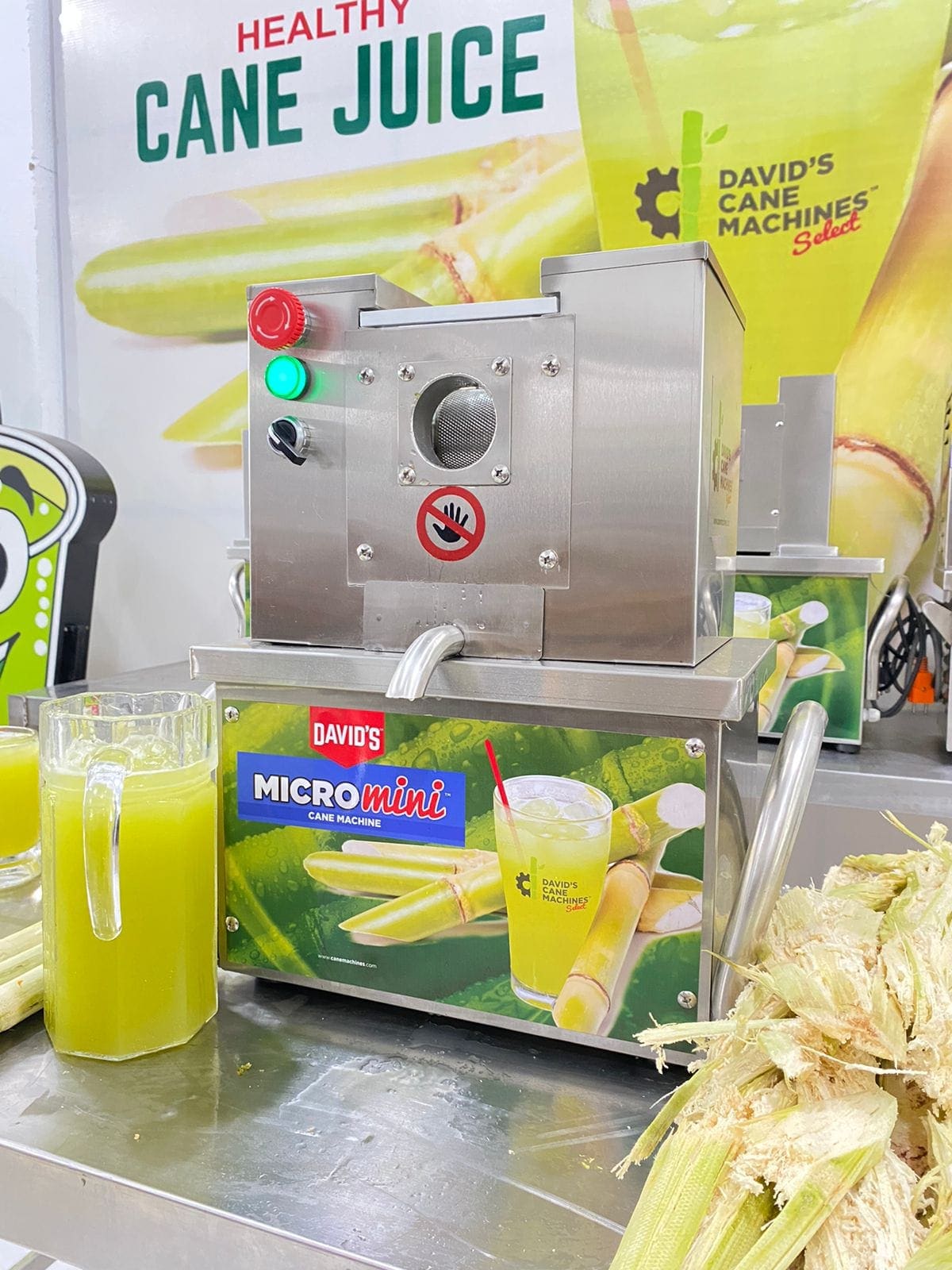
| David's Cane Machine | From Juiced Fresh | 1 L / minute | 70%+ | Juice bars, restaurants, bars |
| Commercial triple-roller | $2,000–4,000 | Continuous feed | 75%+ | High-volume juice bars, festivals |
| Industrial mill | $5,000+ | Pallet-level throughput | 80%+ | Distilleries, co-packers |
Notes on each tier
- Manual hand press: Physical effort required. Works on peeled stalks only. Not sized for commercial service.
- Electric home juicer: Cheap imports jam frequently and lose yield. Motors burn out on frozen-thawed cane.
- David's Cane Machine: 800W motor, 38 kg. Handles peeled or unpeeled stalks. Our recommended press for commercial service.
- Commercial triple-roller: Industrial build. NSF-certified. Needs regular roller adjustment and staff training.
- Industrial mill: Rarely needed. If you're pressing at this scale, our drum-supplied pressed juice is usually more economic.
For almost every commercial juice-bar, restaurant, or bar use case, David's Cane Machine is the right press. We supply it directly. Message us for pricing and shipping.
Chapter
III
Preparing the stalks.
How you handle the cane before it hits the press matters more than the press itself. Good prep means clean flavor, higher yield, and fewer machine jams.
- 01
Thaw completely (if frozen)
24–48 hours in a 35–40°F refrigerator. Never thaw in warm water, at room temperature, or in a microwave. These methods rupture cell walls unevenly and reduce yield. Fully thawed cane feels pliable, not icy-firm.
- 02
Rinse under cool water
10–15 seconds of running water. Wipe down with a clean towel if any surface grime persists. Don't soak. Extended water contact dilutes the juice in the outer cell layers.
- 03
Trim brown cut ends
Inspect each end of each stalk. Yellow-green or pale-cream is good. Brown, gray, or black means oxidation. Slice off 1/2 to 1 inch with a sharp knife until you reach clean tissue.
- 04
Cut to press-feed length
Most commercial presses want 12–18 inch lengths. Use a heavy chef's knife or clean machete. Cut cleanly across the grain. A crushed end feeds the rollers poorly and causes stalling.
Chapter
IV
The pressing technique.
Eight steps from a prepped stalk to juice in the glass. This is the commercial-service flow we walk new operators through during onboarding.
- 01
Thaw frozen stalks completely
If using frozen cane, move stalks to a refrigerated walk-in or fridge 24–48 hours before pressing. Do not thaw in warm water, at room temperature, or in a microwave. Slow cold thaw preserves cell structure and keeps juice yield at 70%+. Once fully thawed, use within 5–7 days.
- 02
Rinse and inspect
Pass each stalk under cool running water for 10–15 seconds to wash off any surface debris. Inspect the cut ends: they should be pale yellow-green and clean. Brown, gray, or black cut ends indicate oxidation. Trim those sections off with a sharp knife before pressing.
- 03
Cut to machine length
Most commercial presses accept 12–18 inch lengths. Cut stalks cleanly across the grain with a heavy chef's knife or machete. Avoid crushing the cut end. A clean cross-section feeds the rollers evenly and prevents stalling.
- 04
Position the press and catch vessels
Place the press on a level, non-slip surface. Position a food-grade stainless or plastic catch vessel under the juice spout. Place a second container under the bagasse exit to collect pressed fiber.
- 05
Feed steadily, do not force
Insert stalks into the feeding throat with steady, even pressure. Let the rollers pull the stalk through. Forcing it can overheat the motor on electric presses or strain a manual mechanism. If a stalk stalls, stop, reverse, and feed from the other end.
- 06
Pass each piece 2–3 times
First-pass extraction typically captures 50–55% of the juice. Running the stalk through a second or third time recovers another 15–20%. After the third pass, you start extracting bagasse-bitter compounds. Stop there.
- 07
Strain through fine mesh
Pour the juice through a 100–200 mesh fine strainer to catch pulp fragments and fine fibers. For premium service, double-strain through cheesecloth for a glass-clear pour.
- 08
Serve immediately
Cane juice oxidizes within 15–30 minutes. Serve over crushed ice, ideally with a squeeze of lime or kumquat to slow oxidation and brighten the flavor. If you must hold juice, refrigerate airtight and use within 24 hours. Quality drops noticeably past that window.
Chapter
V
Straining and serving.
The difference between a pressed glass that reads premium and one that reads homemade is the straining. Do this right.
- Primary strain: 100–200 mesh food-grade stainless strainer, directly into the service vessel. Catches the pulp and most of the fiber.
- Secondary strain (optional, for premium): Double-fold cheesecloth over the catch container for the final clarification. The juice comes out almost clear with a faint green-gold cast.
- Serve over crushed ice: Cubed ice works but crushed melts faster, dilutes less evenly, and gives the drink the traditional texture.
- Add the acid lift: A squeeze of lime, kumquat, or calamansi at the point of service slows oxidation and balances the sweet-forward profile.
- Drink within 15 minutes of press: That's the window when cane juice tastes distinctly different from any other sweetener you've had. Beyond 30 minutes you're still drinking a good beverage, but you've lost the moment that makes fresh cane its own category.
Storage if you must hold
Transfer to an airtight container, refrigerate immediately below 40°F, and use within 24 hours. Expect noticeable color darkening within a few hours. For any longer hold, freeze in ice-cube trays or vacuum-sealed bags. Frozen pressed juice holds 24 months at 0°F without quality loss.
Chapter
VI
Pro tips from operators.
Ten tips we share with every new customer during onboarding. They compound. Any three of them materially improve a juice-bar's cane program.
Keep thawed stalks on ice during prep. Chilled cane pressed cold tastes brighter and oxidizes slower.
A squeeze of lime or lemon in each pour slows oxidation. Also balances the pure-sweet profile, which is how it's served everywhere it's served.
Ginger root pressed through the same machine lifts the drink without muddling. It's the Vietnamese and Indian street-stand move.
Frozen stalks actually press better than fresh. The freeze pre-breaks cell walls, so extraction is 10–15% higher by weight.
Clean the rollers after every service window. Dried juice residue builds up fast and compounds into machine strain.
Keep a pallet of frozen backup. The 12-month shelf life means you never lose a promotional weekend to a thawed-and-wasted case.
Pre-batch syrups and cane-based mixers, never pre-batch the straight press. The raw juice doesn't hold.
Compost the bagasse or sell it. Pressed fiber is useful in gardens, as fire starter, or as animal feed. One more line item off the waste bill.
Train every barista on the same press technique. Yield consistency comes from operator consistency, not from the machine.
Shake cocktails with cane juice. Don't blend. Blending aerates and oxidizes the juice. A proper hard shake in a tin preserves color.
Chapter
VII
Troubleshooting common problems.
Six problems operators run into, and exactly how to fix each one. If you've hit a wall that isn't on this list, message us. We've seen almost every cane-press failure mode at this point.
Problem
Juice turning brown quickly
Cause
Oxidation from air exposure. Normal for fresh cane juice, accelerates above 55°F.
Fix
Serve immediately. Add a squeeze of acid (lime, kumquat, calamansi) at the point of service. For make-ahead service, vacuum-seal and hold at 35°F.
Problem
Low juice yield
Cause
Single-pass pressing, dull roller surface, or stalks not fully thawed.
Fix
Pass each stalk 2–3 times. Check roller grooves monthly for wear. Confirm 24–48 hour refrigerator thaw for frozen cane.
Problem
Fibrous bits in the glass
Cause
Insufficient straining, or over-pressing (4+ passes).
Fix
Double-strain through 100-mesh fine strainer and cheesecloth. Cap pressing at 3 passes to avoid releasing bagasse fragments.
Problem
Machine stalling or jamming
Cause
Stalk diameter too thick, partially frozen cane, or forced feeding.
Fix
Trim thick sections to fit the feed throat. Confirm cane is fully thawed. Feed with steady pressure; let the rollers pull, don't push.
Problem
Sour or off-tasting juice
Cause
Oxidized stalks (brown ends) or juice held past 24 hours.
Fix
Inspect and trim brown cut ends before pressing. Press to order whenever possible. Discard any juice older than 24 hours refrigerated.
Problem
Motor overheating
Cause
Pushing frozen-solid cane, overloading the feed, or extended continuous runs.
Fix
Thaw fully before pressing. Don't force. Take a 30-second break between cases to let the motor cool.
Chapter
VIII
Yield expectations.
What you should expect in finished juice and finished drinks per input unit, across standard Juiced Fresh order sizes. Use this to plan a purchase.
| Input | Juice yield | 12 oz servings | Use case |
|---|---|---|---|
| 1 stalk (~1 lb) | 8–12 oz | ~1 | Yield reference for prep testing |
| 1 case (22 lb) | 1.1–1.3 gal | 14–17 | Trial-size case |
| 1 pallet (48 x 22 lb) | 53–65 gal | 675–850 | Monthly supply for busy shops |
| 1 container (20 ft) | ~1,800 gal | ~24,000 | Distributor or festival scale |
Yield varies with variety, ripeness, extraction rate, and operator technique. The ranges above assume Vietnamese Yellow cane (our variety) pressed on a 70%+ extraction machine by a trained operator.
Chapter
IX
Flavor combinations.
Six classic cane-juice serves. Start with the first three. They're the ones every cane-drinking culture has converged on independently, which tells you something.
Universal
Cane + lime
Press the cane, squeeze half a lime over the glass, pour, stir once. The acid balances sweetness and slows oxidation. Most common serve across every cuisine that drinks cane juice.
India, Vietnam
Cane + ginger
Pass a thumb-sized knob of peeled ginger through the press between stalks. Ginger juice mixes in naturally. Adds heat and a digestive kick. The ganne ka ras street-stand standard.
Vietnam
Cane + kumquat
Drop a whole kumquat. Skin and all. Into the press with the cane. The oils from the rind give the drink a bright citrus-floral lift. The signature move of Vietnamese nước mía.
Contemporary
Cane + mint
Muddle 4–5 mint leaves in the glass before pouring. Cane and mint together is the backbone of a proper mojito. Also works neat as a summer patio special.
Caribbean, Latin
Cane + pineapple
Blend 1:1 with fresh pineapple juice. Tropical, sweet-forward, perfect for a beach-bar menu or an aguas frescas stand. Strain before serving.
French Caribbean
Cane syrup
Reduce pressed juice 2:1 over low heat until just syrupy. Use in Ti' Punch, mojitos, or over pancakes. Holds 7 days refrigerated in an airtight container.
Chapter
X
Common questions.
Can I use a regular juicer for sugarcane?+
No. Centrifugal and masticating juicers can't handle sugarcane's fiber. You need a dedicated roller press that crushes the stalk between grooved rollers. Forcing cane through a regular juicer jams the machine, drops yield to 40–50%, and leaves fiber in the juice.
How much sugarcane do I need per serving?+
One 16–20 inch stalk (about 1 lb) yields 8–12 oz of juice at 70%+ extraction. Roughly one 12 oz serving. For a juice bar, plan 2–3 stalks per customer when they order cane-forward drinks, since many customers order 16 oz or buy for a group.
Why does my sugarcane juice turn brown?+
Oxidation. Freshly pressed juice exposed to air browns within 15–30 minutes. This is normal. Slow it with a squeeze of citrus (lime, lemon, kumquat) at the point of service, and refrigerate any juice you don't serve immediately. Browned juice is safe to drink but loses brightness.
Can I juice frozen sugarcane directly?+
No. Thaw completely in the refrigerator for 24–48 hours before pressing. Pressing partially frozen cane jams presses, reduces yield, and can damage motors on electric machines. Fully thawed stalks also release cleaner juice with less pulp.
What do I do with the pressed fiber (bagasse)?+
Compost it, use it as garden mulch, give it to a local farm as animal bedding or feed, or dry and use it as fire starter. A busy juice bar produces 20–30 lb of bagasse per service day. Finding a beneficial use for it cuts your waste line and can become a sustainability story your customers notice.
How long does pressed juice last in the fridge?+
24 hours in an airtight refrigerated container is the honest limit. Beyond that, color darkens and flavor flattens. For service consistency, press to order whenever possible. If you must batch, vacuum-seal and hold below 40°F, and always check color and aroma before serving.
Can I freeze pressed cane juice?+
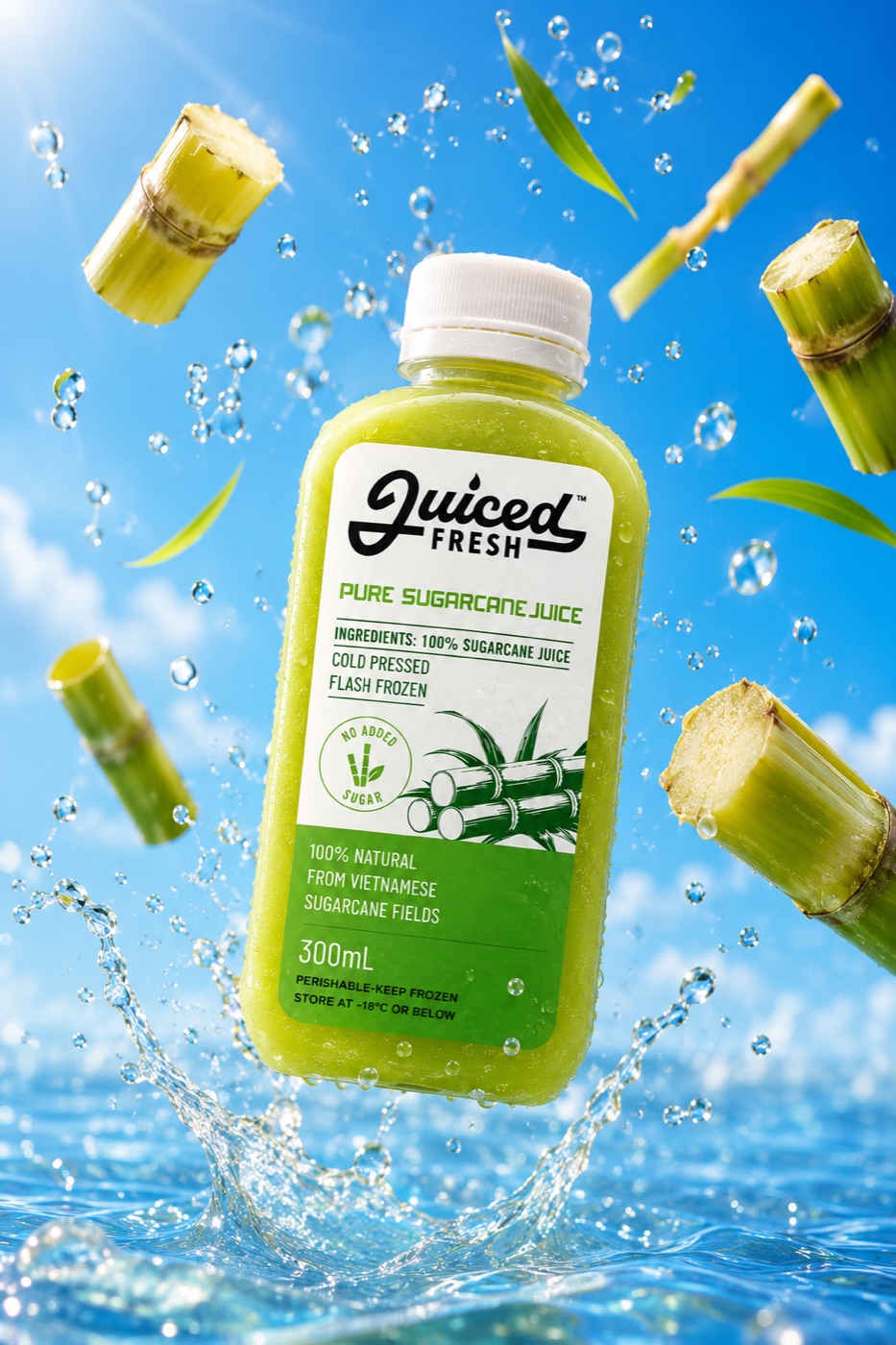
Yes. Pressed juice freezes well and holds 24 months at 0°F. That's exactly what we do. We press in Vietnam and ship frozen. For service, portion into sealed prep containers, freeze at 0°F, and thaw only what the menu needs. Texture and flavor survive the freeze.
What's the best variety of sugarcane for juicing?+
Vietnamese Yellow (ROC16). The variety we source and ship. Higher Brix (18–22°) than most varieties, cleaner flavor profile, and better fiber-to-juice ratio for commercial pressing. US-grown CP-series hybrids are bred for sugar refining, not juicing, and produce less juice per stalk.
Keep reading
Related guides.
The Juiced Fresh How-To