The Frozen Tropical Shelf-Life and Handling Reference
A practical handling reference for frozen tropical juice, pulp, fruit, and sugarcane: storage temperatures, slow thawing, thawed use windows, the no-refreeze rule, and receiving checks. Clear rules a line cook can follow.
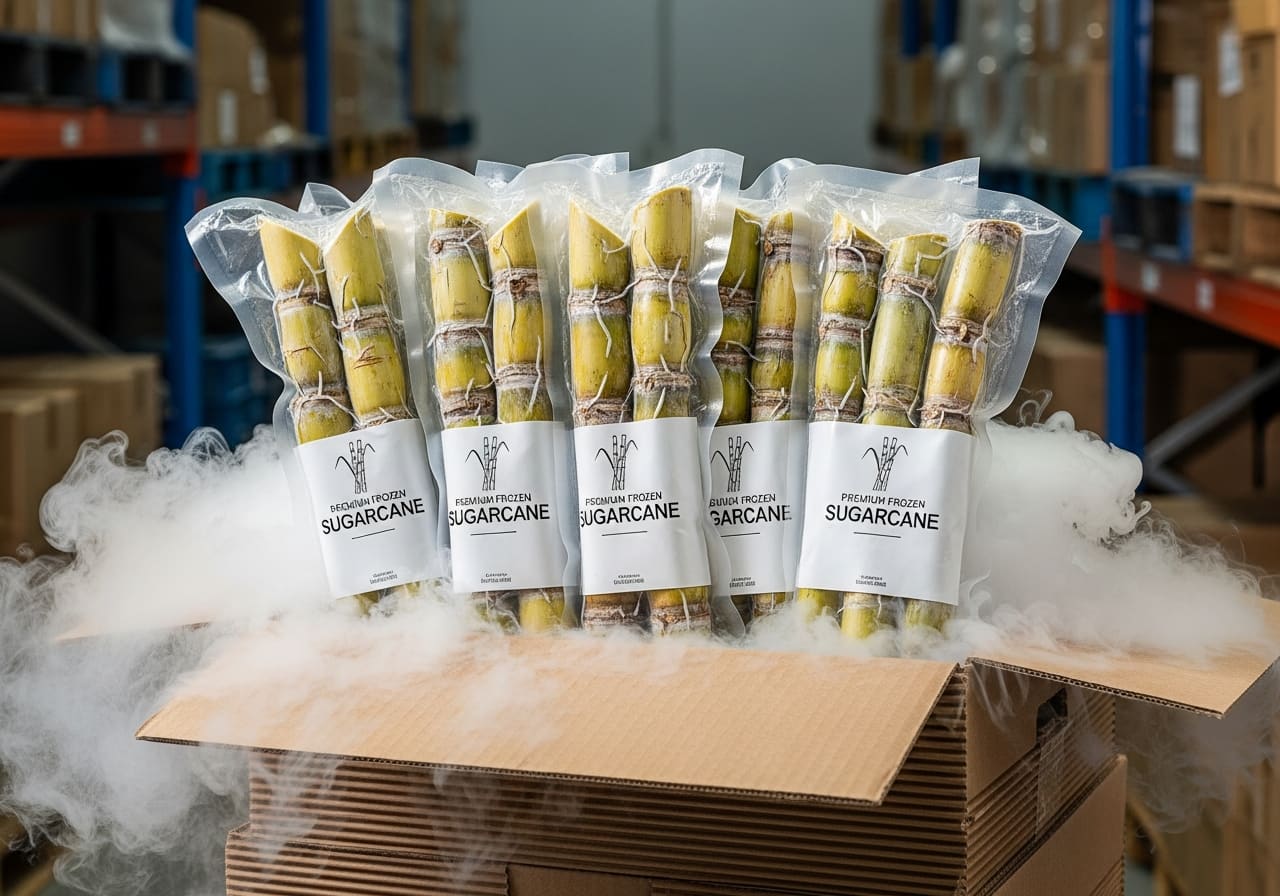
Why handling protects the product you paid for
Frozen tropical ingredients arrive at your kitchen carrying most of their value in a state you cannot see: the structure of the fruit at the cellular level. Flash-freezing within about four hours of harvest at -35C locks color, aroma, and texture in place before they have a chance to degrade. From that point forward, every choice you make either preserves that work or undoes it.
The rules below are not suggestions. A single afternoon on a warm prep counter, or one freezer that cycles too far during a defrost, can cost you the very qualities you bought single-origin product to get. Handle the product correctly and a case opened months from now performs like the day it was packed. Handle it carelessly and you are serving a lesser version of what you paid for.
This reference covers frozen shelf life, storage temperature, thawing by format, the thawed use window, the no-refreeze rule, format-specific notes, and receiving checks. It is written so a line cook can follow it without interpretation. For a quick-reference version focused on prep, see our thawing and handling page.
Frozen shelf life held continuously frozen
Held continuously frozen at the correct temperature, Juiced Fresh products carry up to about a two-year frozen shelf life. That window is real, but it depends entirely on the word continuously.
Flash-freezing is what makes the long shelf life possible. When fruit freezes slowly, large ice crystals form inside the cells and rupture their walls. On thawing, that damage shows up as mush, weeping liquid, and flat flavor. Flash-freezing at -35C forms crystals so small they leave cell structure intact. There is no concentrate and there are no additives doing this work; the freezing process alone is what protects the product. Because the structure is preserved at the moment of freezing, the clock on quality runs slowly as long as the product stays solidly frozen.
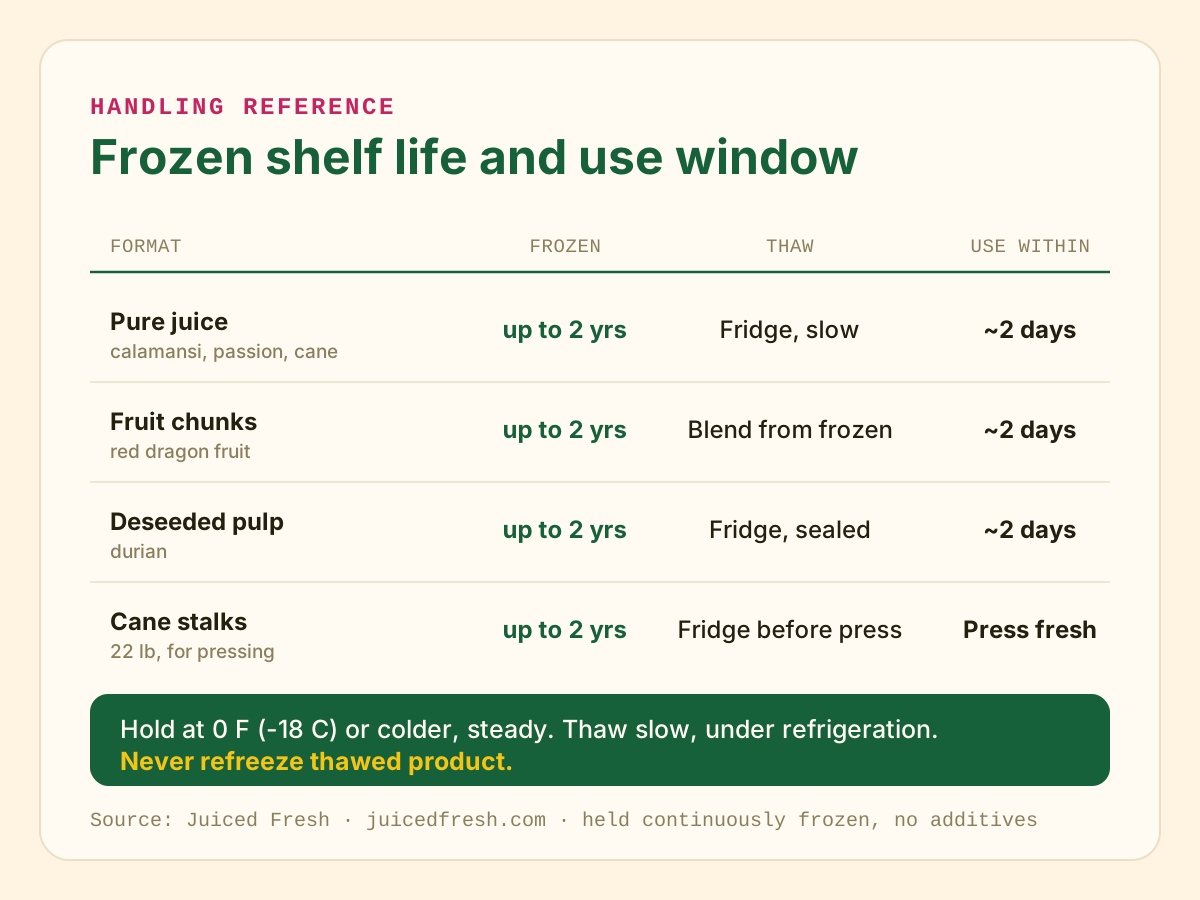
The shelf-life figures by format break down as follows:
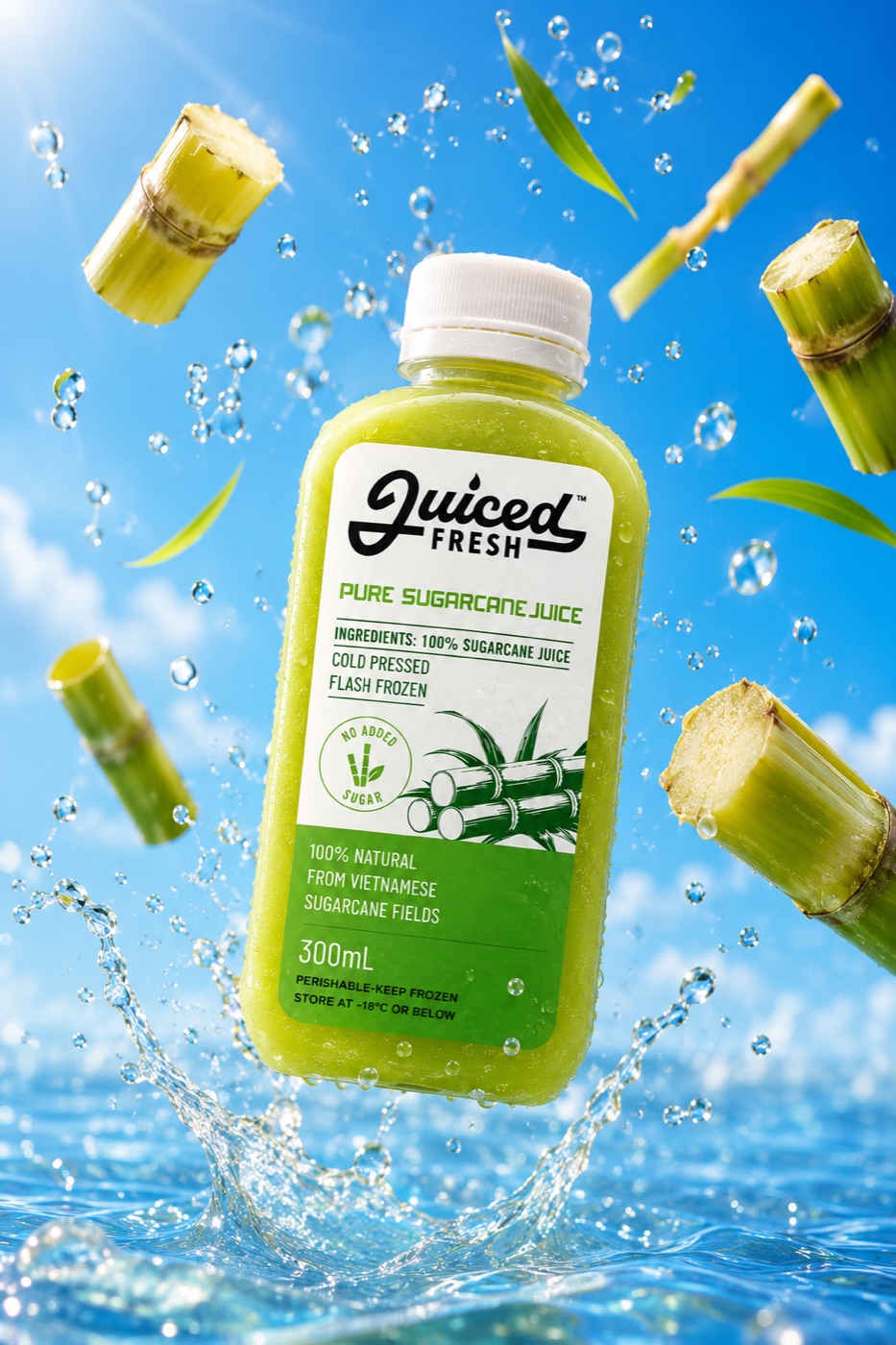
- Pure frozen juice (calamansi, passion fruit, sugarcane juice): up to about 2 years frozen, held solid.
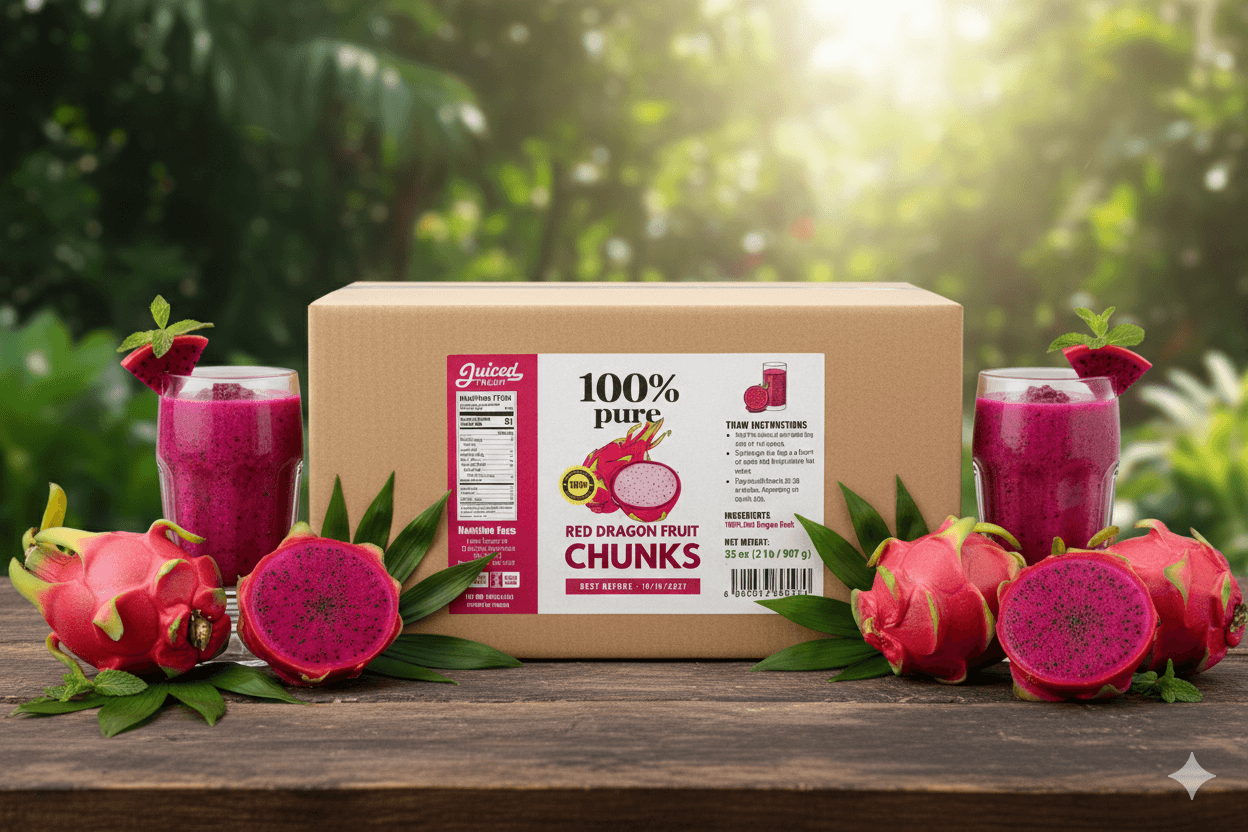
- Frozen fruit chunks (red dragon fruit): up to about 2 years frozen, held solid.
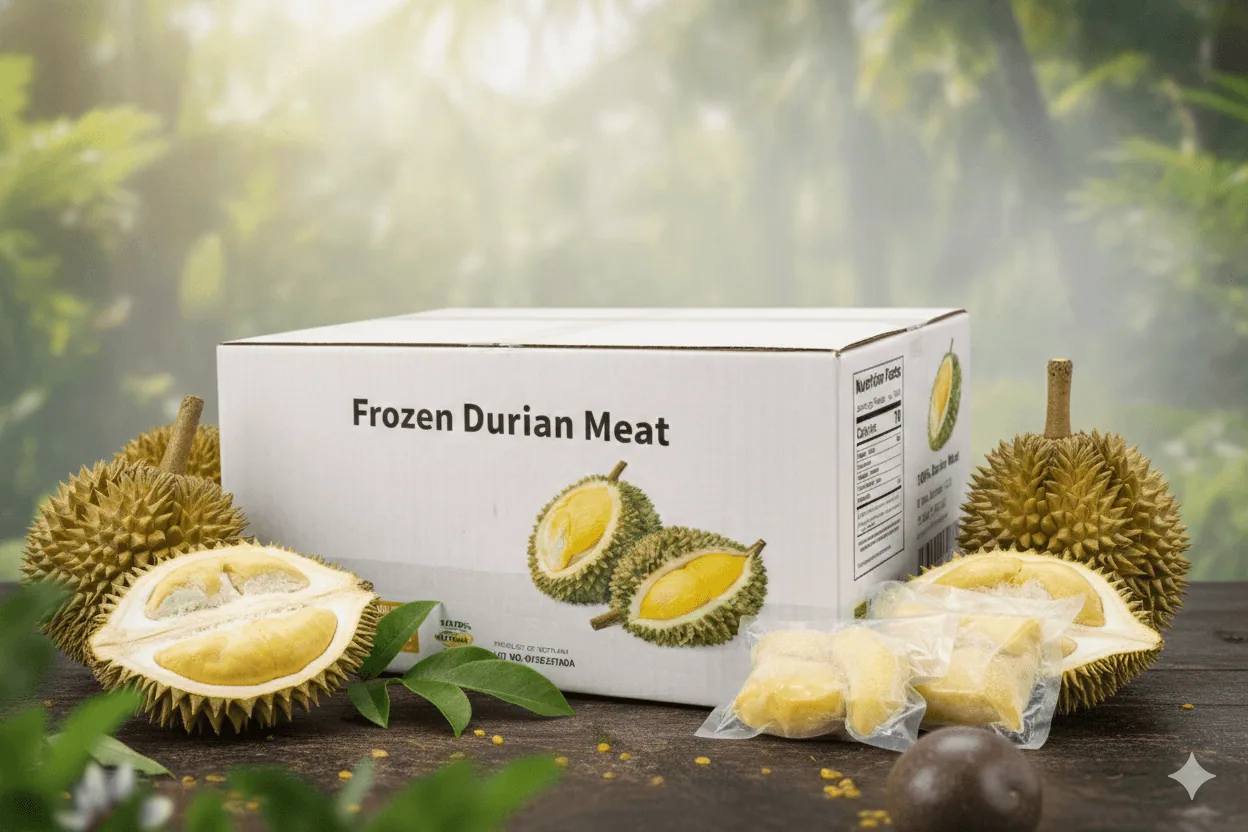
- Deseeded frozen pulp (durian): up to about 2 years frozen, held solid.
- Flash-frozen sugarcane stalks (22 lb): up to about 2 years frozen, held solid.
Treat the two-year figure as a ceiling for product that has never warmed, not a guarantee for product that has been mishandled. Label every case with its receiving date on arrival and rotate first in, first out. The quality you are protecting was set at harvest; your freezer's only job is to keep it there.
Storage temperature and the danger of temperature swings
Hold all frozen product at 0F (-18C) or colder. Colder is fine. The number that matters most is not the average temperature but the stability of it.
Temperature swings are the quiet enemy of frozen quality. Every time product partially softens and refreezes, small ice crystals melt and reform as larger ones, gradually undoing the cell-protecting work of the original flash-freeze. The result over many cycles is the same damage slow freezing would have caused in the first place: weeping, softness, and faded flavor. This is why a freezer that holds a steady 5F often preserves product better than one that swings between -10F and 25F around its defrost cycle.
Practical storage rules:
- Keep product in the back of the freezer, away from the door, where temperature is most stable.
- Do not store frozen cases on the floor directly in the path of a defrost cycle's warm air.
- Keep a thermometer in the freezer and check it daily; do not rely on the unit's dial.
- Keep cases closed and product covered to limit freezer burn from dry, moving air.
- Avoid overloading the freezer in a way that blocks airflow and creates warm pockets.
If your freezer cannot hold a steady temperature, fix the freezer before you blame the product. No handling downstream recovers quality lost to repeated swings upstream.
Thawing by format and the thawed use window
Thaw slowly, under refrigeration, always. Slow thawing at 34F to 40F gives melting ice crystals time to be reabsorbed into the cell structure rather than running out as liquid. Fast thawing at room temperature or under warm water does the opposite: it forces liquid out, costing you texture, color, and yield, and it pushes the surface into the unsafe temperature range while the center is still frozen.
How to thaw each format under refrigeration:
- Pure frozen juice in bottles: move from freezer to refrigerator and thaw 12 to 24 hours depending on bottle size. Shake gently before use to recombine any natural separation.
- Frozen fruit chunks (red dragon fruit): thaw in a covered, draining container in the refrigerator for several hours until pliable. Many uses do not require a full thaw; see the format notes below.
- Deseeded frozen pulp (durian): thaw in a sealed container in the refrigerator overnight. Keep it covered and isolated, since the aroma transfers readily to other foods.
- Flash-frozen sugarcane stalks (22 lb): thaw under refrigeration before pressing or cutting. For pressing, partial thaw is often enough to feed the press.
Once thawed, the clock changes. Use thawed product within a couple of days and keep it cold the entire time. A reasonable rule for the line is to use thawed juice, pulp, and fruit within 48 hours, held at 40F or colder, and to label every thawed container with the date and time it came out of the freezer. Thaw only what you expect to use in that window. The single most effective way to avoid waste is to not thaw more than you need.
The no-refreeze rule and food safety
Do not refreeze product that has fully thawed. This is a firm rule, not a judgment call.
There are two reasons. The first is quality: refreezing forces a second round of large ice crystal formation, compounding the texture and flavor damage and leaving you with a visibly inferior product. The second is safety: once product has spent time in the temperature range between 40F and 140F, any bacteria present have had a chance to multiply, and refreezing does not kill them. It only pauses them. When you thaw that product a second time, you resume from a higher and less safe starting point.
The practical discipline that prevents refreeze problems is portioning. Break large formats into single-shift or single-batch portions while still frozen, so you only ever thaw what you will use. If product has partially thawed in transit but is still solid with ice crystals throughout and is still below 40F, it can be moved straight into the freezer and held; use it sooner rather than later. If it has gone soft, warmed past 40F, or you are unsure, do not refreeze it and do not gamble. Thaw it fully under refrigeration, use it within the thawed window if it is sound, and discard it if there is any doubt.
Format-by-format notes
Each format behaves a little differently. These notes cover the handling details that are specific to each.
Pure frozen juice (calamansi, passion fruit, sugarcane):
- This is single-strength juice, not concentrate, so dose it as you would fresh juice; do not dilute it expecting concentrate strength. For the reasoning behind single-strength frozen versus concentrate, see frozen pulp vs fresh vs concentrate.
- Thaw in the refrigerator, shake to recombine, and keep refrigerated. Natural separation is normal and is not a defect.
- Portion into smaller frozen units if your volume is low, so you are not thawing a large bottle for a few servings.
Frozen fruit chunks (red dragon fruit):
- For blended drinks, smoothies, and purees, add the chunks straight from frozen. This protects color and yield and keeps the blend cold.
- When you need thawed fruit for plating or garnish, thaw in a draining container so released liquid does not pool. Expect some softening; thawed flash-frozen fruit is closer to ripe than to fresh-firm.
Deseeded frozen pulp (durian):
- The pulp is already deseeded and ready to portion, which is its main labor advantage. Cut or scale frozen portions before thawing.
- Aroma transfer is significant. Thaw and store sealed and away from dairy, neutral bases, and anything that absorbs odor.
- For desserts and beverages, the pulp can often be blended from frozen rather than fully thawed.
Flash-frozen sugarcane stalks (22 lb):
- These are whole stalks for pressing and for display or service applications. Thaw under refrigeration before cutting; for pressing, a partial thaw is usually enough to run the press.
- Press cane juice is best used fresh after pressing and kept cold. For ongoing supply and case configuration, see frozen sugarcane wholesale.
- Keep stalks covered in storage to limit surface drying.
Receiving and cold-chain checks on delivery
Product ships frozen from Austin, Texas on temperature-logged LTL cold-chain freight, typically arriving in 2 to 5 days nationwide. Your receiving routine is the last checkpoint before the product becomes your responsibility, so run it every time.
At delivery, before signing:
- Confirm the product is solidly frozen. It should be hard, not soft or pliable, and free of large pooled liquid in the packaging.
- Check the temperature log that travels with the shipment and confirm it stayed within range in transit.
- Inspect for signs of a thaw-and-refreeze event: heavy ice glaze inside bags, large clumps where free-flowing product should move, or liquid stains on packaging.
- Note any visible damage, soft cases, or temperature excursions on the delivery paperwork before you sign, and photograph anything questionable.
After acceptance:
- Move product into freezer storage immediately. Do not stage frozen cases on a warm dock or prep line.
- Label cases with the receiving date and rotate first in, first out.
- If something looks wrong, message us right away with photos and the lot details. We reply in minutes and will help you resolve it.
A few minutes at the dock protects a shipment that traveled days to reach you. Skipping the check is how mishandled product slips into inventory unnoticed.
Portioning straight from frozen to minimize waste
The cheapest yield improvement in any kitchen using frozen tropical product is portioning while the product is still frozen. Frozen product cuts and scales cleanly, holds its weight, and goes straight into blenders and presses without a thaw step.
Working rules for portioning:
- Decide portions for the format up front: bottle splits for juice, bagged units for fruit chunks, scaled blocks for pulp, cut sections for cane.
- Portion in a cold environment and return units to the freezer quickly so they never fully soften.
- Blend, press, or cook from frozen wherever the recipe allows, and reserve slow refrigerated thawing for uses that genuinely need thawed product.
- Thaw to order in small batches rather than thawing whole cases on a schedule.
Done consistently, frozen portioning means you thaw only what you sell, you never face the refreeze question, and almost nothing goes to waste.
How long does frozen tropical juice and fruit last in the freezer?
Held continuously frozen at 0F (-18C) or colder, Juiced Fresh juice, fruit chunks, pulp, and sugarcane carry up to about a two-year frozen shelf life. That figure assumes the product never warms. Label cases with the receiving date and rotate first in, first out so older stock moves first.
Can I refreeze frozen pulp or juice after it has thawed?
No. Do not refreeze product that has fully thawed, both because refreezing damages texture and flavor and because any bacteria that grew during thawing are not killed by refreezing. If product is still solid with ice crystals throughout and below 40F, it can go back into the freezer and should be used soon. If it has softened or warmed past 40F, use it within the thawed window if it is sound or discard it.
What is the correct way to thaw frozen durian pulp?
Thaw durian pulp slowly under refrigeration, sealed, overnight. The pulp comes deseeded and ready to portion, so cut or scale frozen portions before thawing to avoid thawing more than you need. Keep it tightly covered and away from dairy and neutral bases, since the aroma transfers readily to other foods.
How long can I keep product after thawing?
Use thawed juice, pulp, and fruit within a couple of days, holding it at 40F or colder the entire time. A practical line rule is 48 hours from the moment it leaves the freezer. Label every thawed container with the date and time it was pulled, and thaw only what you expect to use in that window.
What should I check when a frozen shipment is delivered?
Before signing, confirm the product is solidly frozen and hard, check the temperature log that ships with the order, and look for thaw-and-refreeze signs like heavy ice glaze, large clumps, or liquid stains. Note any damage or temperature excursions on the paperwork before signing and photograph anything questionable. Then move the product into the freezer immediately rather than staging it on a warm dock.
Correct handling is what lets single-origin, flash-frozen product perform months after harvest. Store it cold and steady, thaw it slow, never refreeze it, and portion it from frozen, and a case will serve like the day it was packed. Browse products to see current formats, or review wholesale and pallet pricing for case and pallet configurations and freight to your location. If you have a handling question or want help sizing your first order, message us on WhatsApp and we will reply in minutes.
Published by Juiced Fresh.
Notes from the warehouse, the farm, and the bars we supply. See all Field Notes