Durian for Ice Cream Makers and Bakeries: Sourcing, Cost, and Yield
Durian is premium-priced and polarizing, but for the right menu it carries a margin almost nothing else can. Here is how deseeded frozen pulp actually works in an ice cream base or a pastry kitchen, with real numbers per scoop and per dessert.
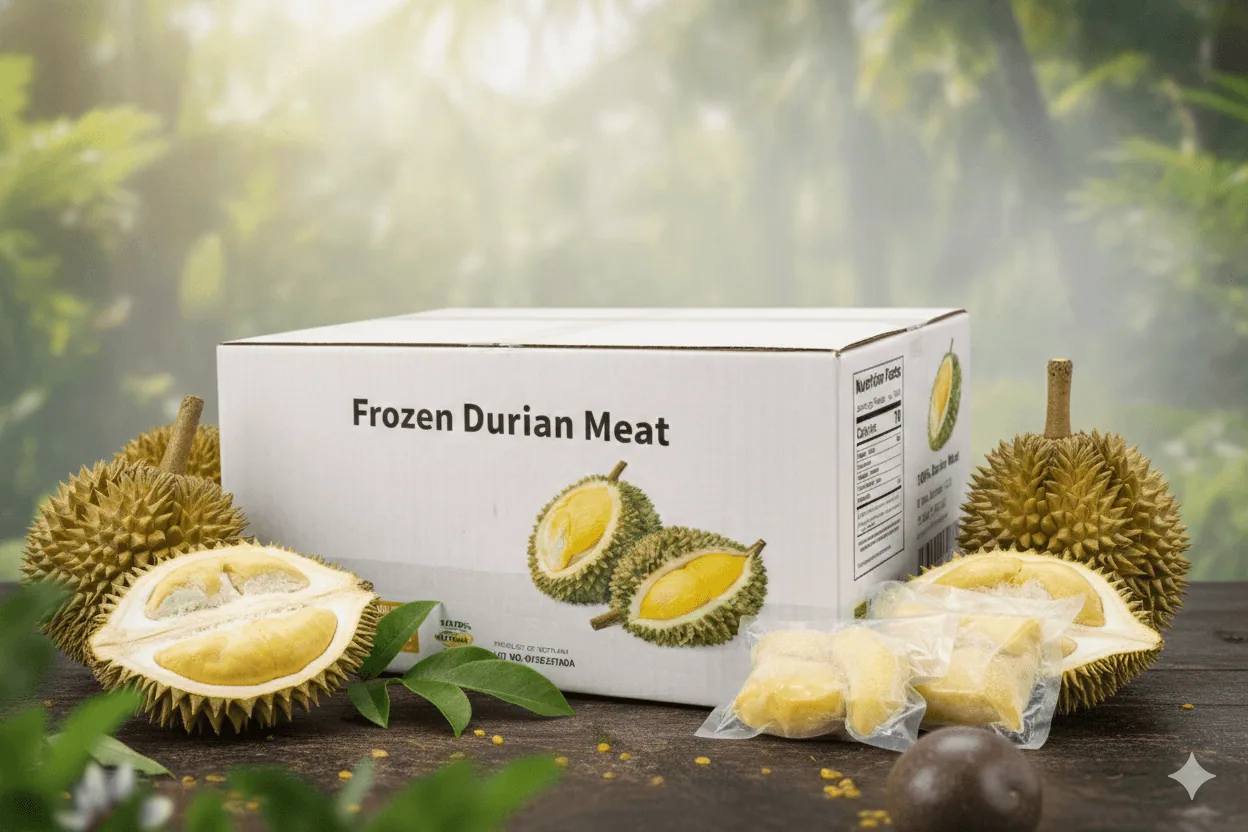
Durian is the rare ingredient that sells itself before the customer tastes it. Put it on a menu and two things happen at once. The people who love it will travel for it, and the people who have only heard the stories will order it to find out what the fuss is about. Both of those reactions are worth money. What stops most operators is not demand. It is the format. Whole durian is seasonal, heavy with seed and husk, wildly inconsistent, and a labor nightmare to break down behind the line.
This is a guide for ice cream and gelato makers, bakeries and pastry kitchens, and Asian restaurants who want durian on the menu without any of that. We will cover why deseeded frozen pulp is the only practical foodservice format, what Monthong-style pulp actually is, and then the part everyone asks about first: whether the economics work when a case runs about $445.
Why frozen pulp is the only format that makes sense
A whole durian is mostly not durian. Between the thick husk and the large seeds, edible flesh is a minority of the fruit by weight. You are paying to ship and store a lot of material you will throw away, and you are paying a skilled person to spend real time extracting flesh, dodging seeds, and grading what comes out. Quality swings hard from fruit to fruit and from week to week, which is the last thing you want when a dessert needs to taste the same in March and in November.
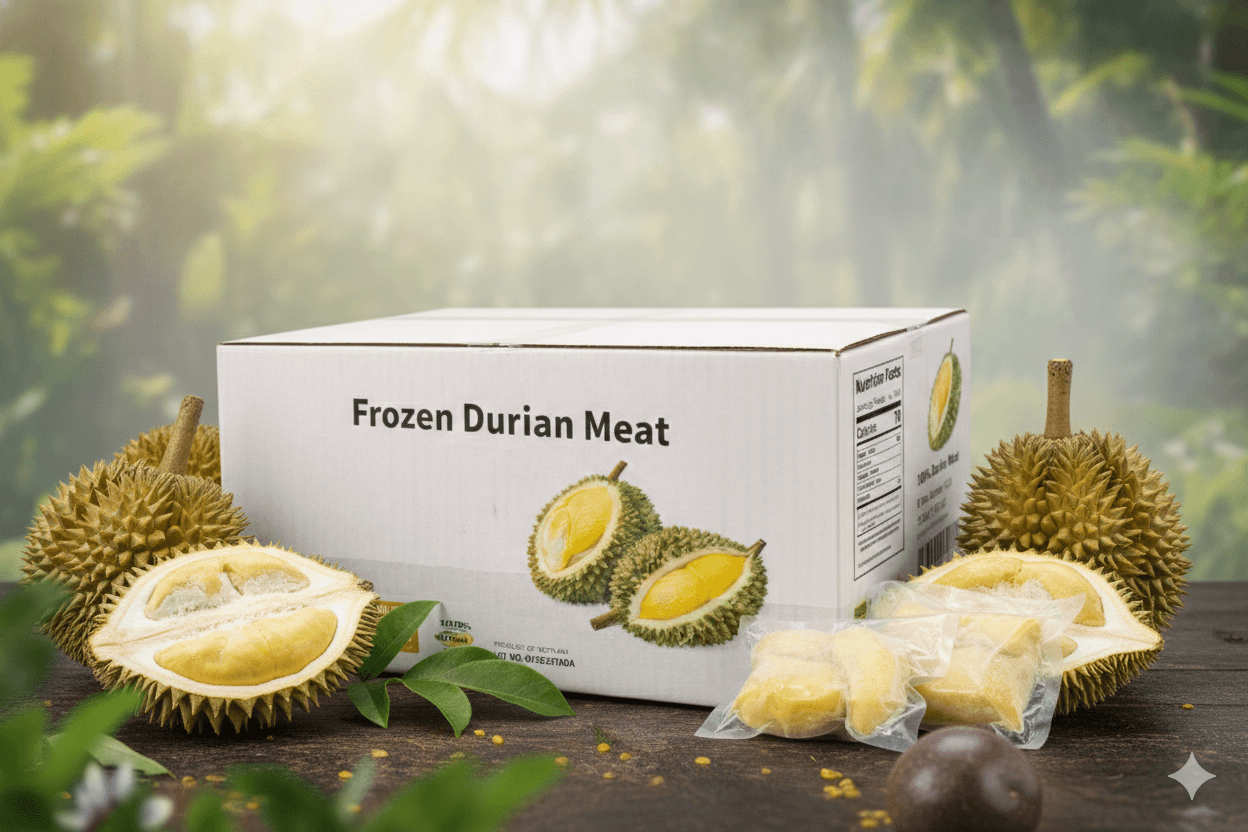
Deseeded frozen pulp removes every one of those problems. What arrives is graded flesh, seeds already out, ready to weigh and use. Because Durian Pulp is flash-frozen within about four hours of harvest at minus 35 Celsius, the flavor is locked at peak ripeness rather than wherever the fruit happened to land after a long supply chain. There are no additives, and the frozen shelf life runs up to two years, so you buy when the math is good and pull from the freezer when the menu calls for it.
For a production kitchen, that shelf life is the quiet advantage. A polarizing, premium ingredient is exactly the kind of thing you do not want to over-order fresh. Frozen, durian becomes a stable pantry item you portion on demand, which is what makes it safe to put on a menu at all.
The economics, per scoop and per dessert
Here is the number that scares people and the number that should reassure them, side by side.
A case is a 10 kg box at about $445. That is roughly $44.50 per kilogram of finished, deseeded pulp. There is no trim loss, no seed weight, no husk. Every gram you pay for is a gram you serve. On a pallet, which is 120 cases at 17 percent off before freight, the case lands around $369.35, or about $36.94 per kilogram. Most operators start with a case or two, prove the menu items, then move to wholesale and pallet pricing once durian earns its freezer space.
Now put that per-kilogram cost through real recipes.
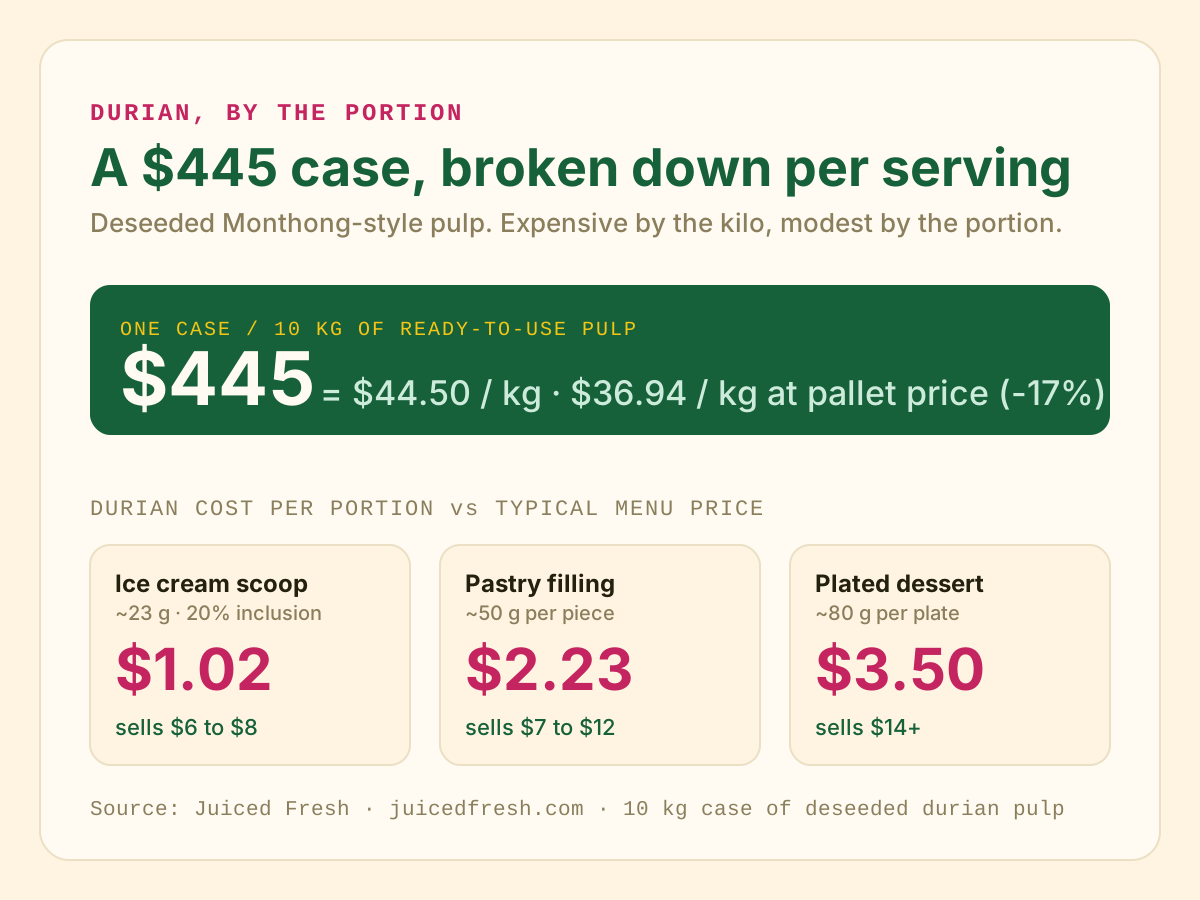
For ice cream, durian is potent enough that you do not build the whole base from it. A common approach is durian at 15 to 20 percent of the mix by weight, with cream, milk, and sugar carrying the rest. At 20 percent, a 4 ounce scoop, about 113 grams, contains roughly 23 grams of pulp. At the case price of $44.50 per kilogram, that is about $1.02 of durian per scoop. At the pallet price it is about $0.85. Durian ice cream routinely sells at a premium, and a single scoop priced at $6 to $8 turns a roughly one dollar ingredient cost into one of the strongest gross margins on your menu. Even at a generous 25 percent inclusion, you are near $1.28 of durian per scoop, which still leaves the math comfortable.
Pastry behaves the same way. A durian filling for a pastry, a tart, or a bun might use 40 to 60 grams of pulp per piece. Call it 50 grams. That is about $2.23 of durian at the case price, or about $1.85 at the pallet price. A durian pastry is a specialty item that commands $7 to $12 in most markets, so even the most generous filling leaves a wide gap between cost and price. A plated durian dessert, a mousse or a sticky rice plate using 70 to 90 grams, lands near $3.50 in pulp and typically carries a menu price north of $14.
The pattern is consistent. Durian is expensive per kilogram, but it is so concentrated in flavor and so reliably commands a premium price that the cost per portion stays modest while the menu price climbs. That spread is the whole reason to run it.
Sourcing and quality
Monthong is the benchmark cultivar for this use. It is the rich, custardy, slightly sweet profile most people picture when they imagine good durian, with a smooth texture that blends cleanly into a base or a filling. Monthong-style frozen pulp gives you that profile without sourcing whole fruit and without the variety roulette of a wholesale produce market.
Two things matter most for a kitchen that needs repeatable results. The first is single-origin sourcing. Our durian is single-origin from Southeast Asia, primarily Vietnam and the surrounding region, which means the flavor you dial in on your first batch is the flavor you get on the next one. The second is the freeze itself. Flash-freezing within about four hours of harvest at minus 35 Celsius, with no additives, captures ripe fruit at its peak and holds it there. You are not correcting for a tired ingredient. You are working with fruit that tastes the way it did the day it came off the tree.
That consistency is what lets you write a recipe once and trust it. If you want the deeper sourcing detail, see how we work with durian for ice cream makers, durian for bakeries, and durian for Asian restaurants. The common thread across all three is that a durian supplier earns its place by being boringly consistent, batch after batch.
How to use it
Thawing comes first, and it is simple. Move what you need from freezer to refrigerator and let it thaw slowly overnight. Pulp thaws to a soft, spoonable, almost custard-like texture that folds into a base or pipes into a shell with no extra work. Thaw only what you will use within a couple of days, keep it cold and covered, and do not refreeze thawed pulp, the same rule you already follow for any premium frozen ingredient.
For ice cream and gelato, start with durian at 15 to 20 percent of the total mix by weight and taste up from there. Durian is assertive, so a little goes a long way, and pushing the inclusion too high can flatten the dairy and sugar balance rather than make the flavor better. Blend the thawed pulp fully into your base before churning so the flavor is even across every scoop. Because the pulp is already smooth, you rarely need to strain.
For pastry, treat thawed durian as a finished filling component. It folds into pastry cream, whipped cream, mousse, or a cream cheese base, and it pipes cleanly into buns, tarts, choux, and crepe cakes. Dose to taste, and remember that the flavor reads stronger cold than warm, so check your seasoning at serving temperature, not straight out of the mixer. A small amount of salt and a touch of acid can sharpen the durian and keep a rich filling from going flat.
Dosing the flavor is the skill worth practicing. Durian rewards restraint. The goal is a clear, recognizable durian note that the people who love it recognize instantly and the curious find approachable, not a dose so heavy it only lands for devotees. Start conservative, taste, and build. You can always add more pulp to the next batch, and at these margins the cost of a slightly richer dose is trivial.
Durian is expensive by the kilogram and cheap by the portion. The premium price your menu can charge does the rest.
How much durian pulp do I need per scoop of ice cream?
At a 20 percent inclusion by weight, a 4 ounce scoop contains roughly 23 grams of pulp, which is about $1.02 at the case price and about $0.85 at the pallet price. Most makers land between 15 and 25 percent depending on how forward they want the flavor. Even at the high end the per-scoop ingredient cost stays around a dollar, well under a typical premium scoop price.
Is frozen durian pulp as good as fresh for ice cream and pastry?
For foodservice it is generally better, not worse. Flash-freezing within about four hours of harvest at minus 35 Celsius captures the fruit at peak ripeness, while fresh durian in the US has usually spent days in transit and varies fruit to fruit. Deseeded frozen pulp is also consistent and seed-free, which is what a repeatable recipe actually needs.
How long does durian pulp last, and how do I store it?
Sealed and frozen, the pulp keeps up to two years with no additives, so it works as a stable pantry item you portion on demand. Keep it at standard freezer temperature until you need it, then thaw only what you will use within a couple of days in the refrigerator. Do not refreeze pulp once it has thawed.
Should I buy a case or a pallet to start?
Start with a case if you are testing menu items or running a single location. A case is a 10 kg box at about $445, enough to develop recipes and gauge how durian sells before you commit freezer space. Once it earns a regular spot, a pallet of 120 cases at 17 percent off before freight drops the per-kilogram cost meaningfully, and pallets and containers are quoted on WhatsApp with replies in minutes.
Durian is one of the few ingredients where a high case price and a strong margin live comfortably together. The cost per scoop and per pastry stays modest, the menu price runs premium, and deseeded frozen pulp removes the labor and inconsistency that keep most kitchens away. Order a case of Durian Pulp online through DeliveredCold and it ships frozen from our Austin, Texas warehouse in 2 to 5 days nationwide. When you are ready to scale, see frozen durian wholesale and wholesale and pallet pricing, or message us on WhatsApp for pallet and container quotes. We reply in minutes.
Published by Juiced Fresh.
Notes from the warehouse, the farm, and the bars we supply. See all Field Notes