Nước Mía at Home: Vietnamese Sugarcane Juice Without a Press
Nước mía is the drink of every hot afternoon in Vietnam, pressed to order with a kumquat crushed in for balance. Here is what makes it taste the way it does, why it is so hard to make in an American kitchen, and how to pour a proper glass at home from a frozen bottle.
In Vietnam you do not look for nước mía. It finds you. Every few blocks there is a cart with a roller press, a bundle of peeled cane leaning against it, and a stack of plastic cups. You pay, the vendor feeds a stalk through the rollers, and a minute later you are holding a cup of pale green juice over ice.
Nước mía simply means sugarcane juice. This article explains what makes the Vietnamese version distinct, why it is hard to reproduce in a home kitchen in the US, and how to get very close with a frozen bottle.
What makes nước mía taste like nước mía
Three things, and none of them is complicated.
It is pressed to order. Cane juice oxidizes fast. Within 15 to 30 minutes of pressing, the color darkens and the fresh, grassy flavor fades. The street cart solves this by pressing each cup when you order it.
It is cut with citrus. Pure cane juice is sweet and low in acid, so on its own it can taste flat. Vietnamese vendors almost always feed a small kumquat through the press along with the cane. It is called quất in the north and tắc in the south, and it is the same family of tiny sour citrus as calamansi. The peel and juice add a sharp, floral sourness that makes the whole cup taste brighter.
It is served very cold. Always over ice, usually crushed, in a cup that sweats in your hand.
Beyond the kumquat, carts offer their own twists. Pineapple pressed in with the cane is common. Passion fruit is a popular modern addition. In Ho Chi Minh City you will even find cane juice blended with durian for people who want something richer.
Why it is hard to make at home in the US
You need three things that are difficult to get here.
- Fresh cane. Whole stalks are sold in a limited number of markets, and quality varies a lot by the time they reach the shelf.
- A press. Sugarcane is a woody grass. A blender or household juicer will not crush it. A proper roller press is a heavy countertop machine built for commercial use.
- Time. Stalks have to be washed, often peeled, and cut to length, and the press has to be taken apart and scrubbed after every session because cane sugar turns sticky quickly.
If you are curious about the full process, our how to juice sugarcane guide walks through it. For most households it is not a realistic way to get a glass of juice on a Tuesday.
The shortcut: juice pressed and frozen at the source
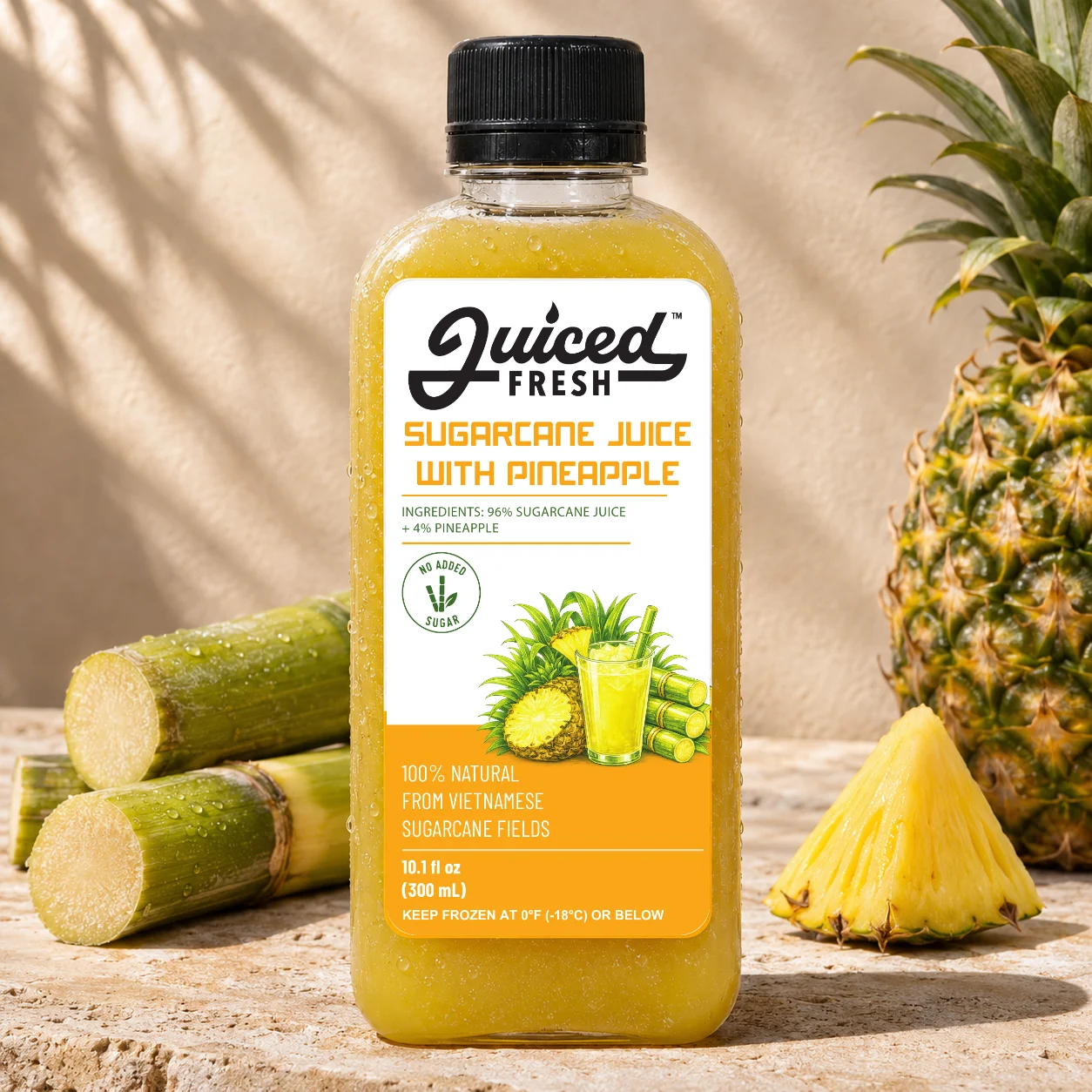
The practical answer is to let the pressing happen where the cane grows. Our sugarcane juice is pressed in Vietnam, flash frozen in 300 ml bottles, and kept frozen all the way to your freezer. Freezing pauses the oxidation that ruins cane juice, so what you thaw is far closer to the cart than anything that has been heat-treated to sit on a shelf.
The four blends in our lineup follow the same logic as the cart add-ins. The balancing ingredient is already in the bottle, and none of them has added sugar.
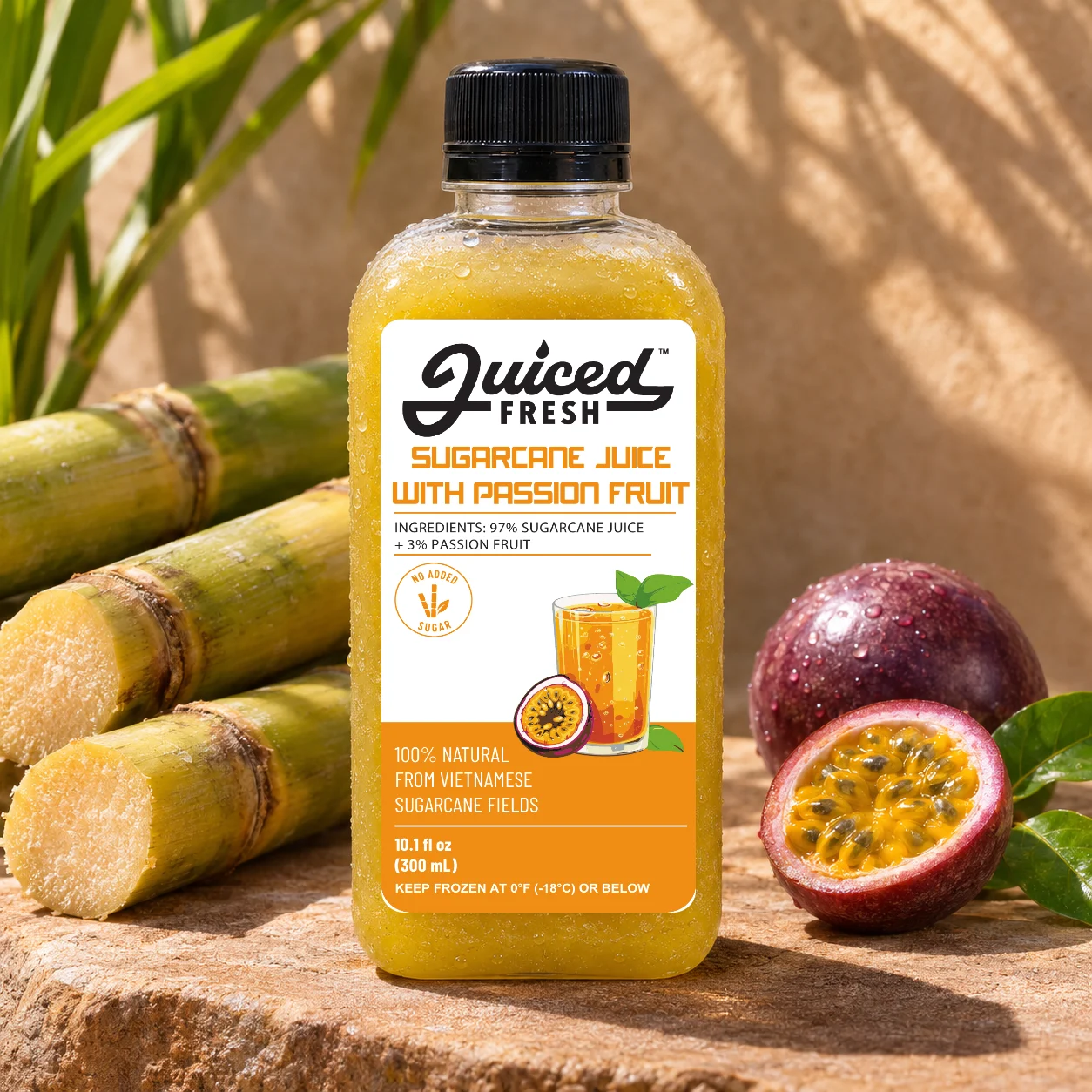
- Sugarcane with passion fruit: 97% cane, 3% passion fruit. Tart and tropical.
- Sugarcane with pineapple: 96% cane, 4% pineapple. Close to the pineapple version sold at many carts.
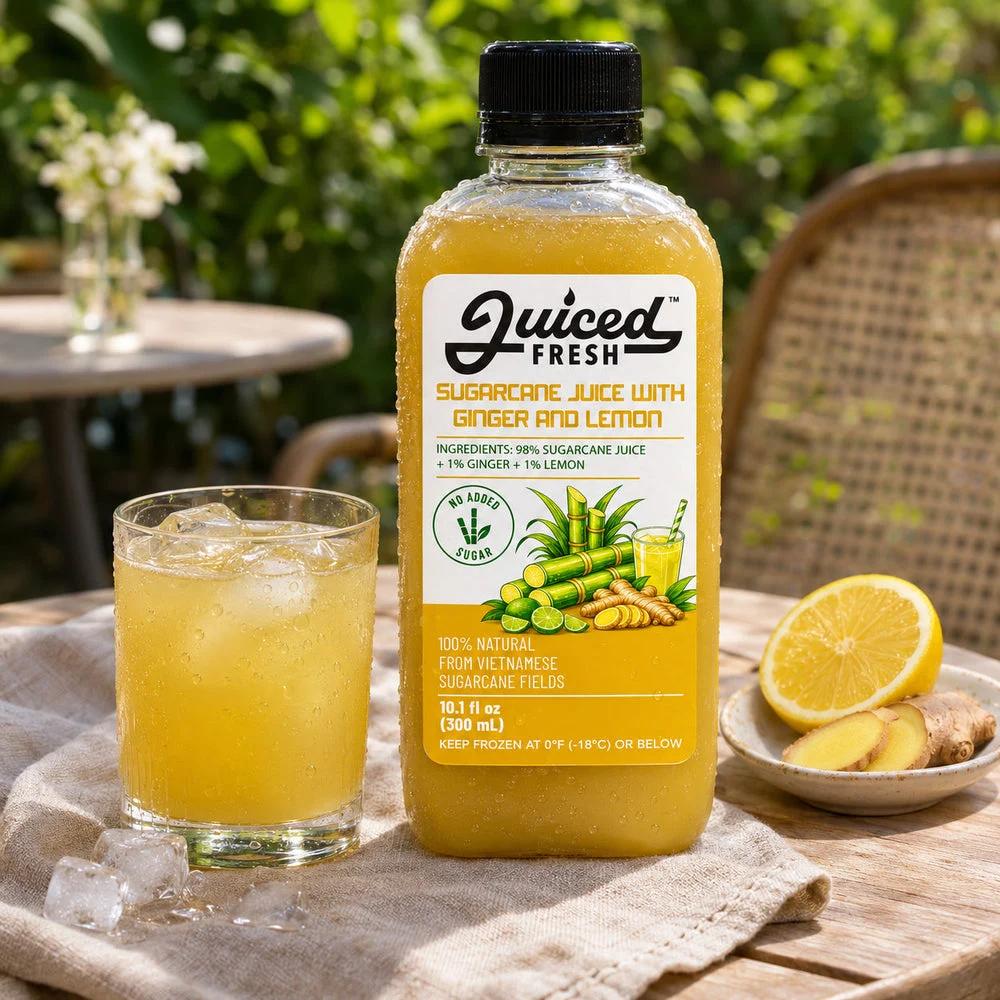
- Sugarcane with ginger and lemon: 98% cane, 1% ginger, 1% lemon. Bright with a little heat.
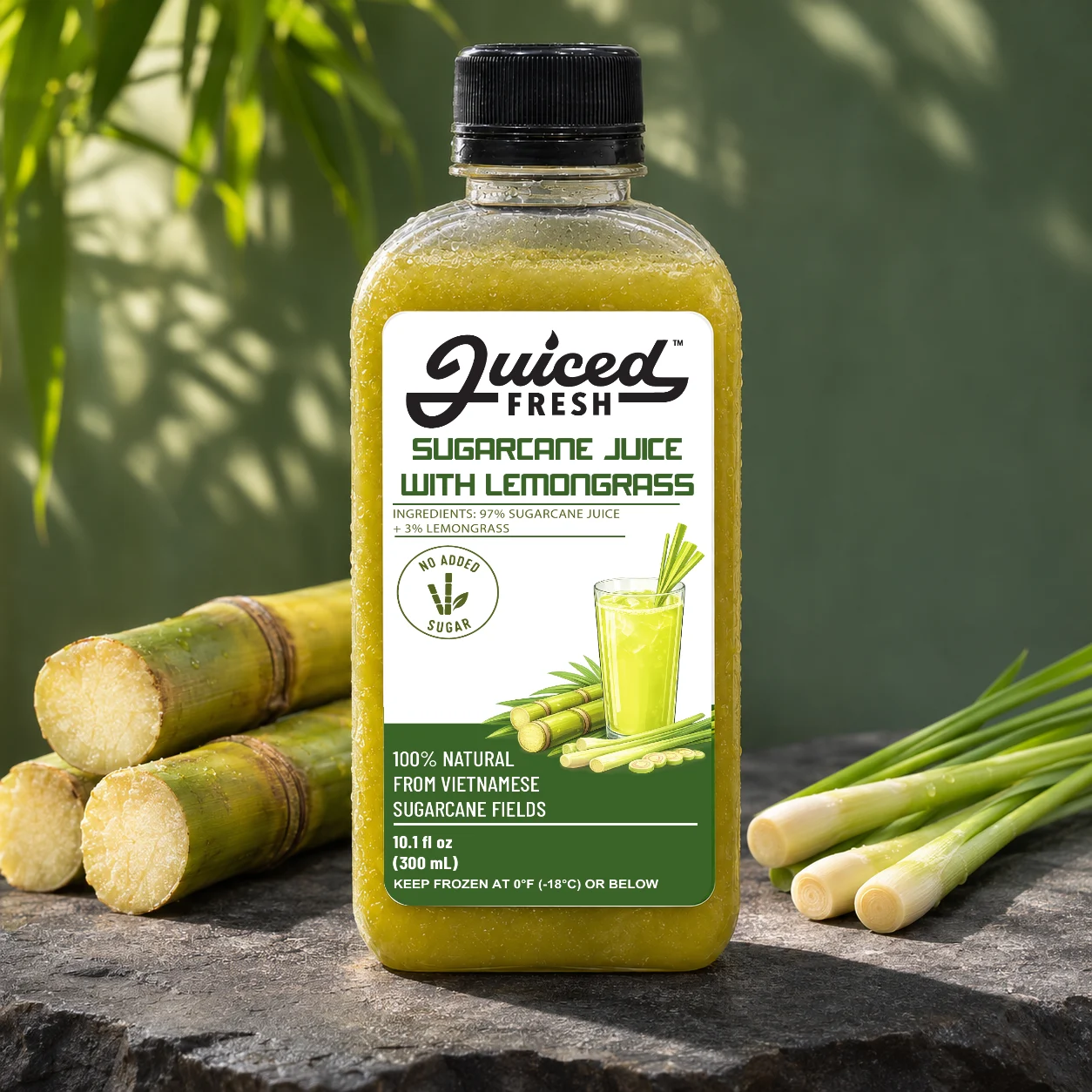
- Sugarcane with lemongrass: 97% cane, 3% lemongrass. Herbal and clean.
How to pour a proper glass
- Thaw overnight. Move a bottle from the freezer to the refrigerator the night before.
- Shake it. Natural juice settles. A few hard shakes bring it back together.
- Fill a tall glass with ice. Crushed ice is traditional. Cubes are fine.
- Pour and taste. If you want it sharper, add citrus.
- Drink it soon. Once thawed, keep the bottle in the fridge and finish it within 7 days.
Four ways to serve it
These are starting points. Adjust to your own taste.
- The street cart glass. Pour any of the blends over crushed ice and squeeze in a wedge of lime or a halved kumquat. For the closest match to tắc, stir in a teaspoon of calamansi juice, taste, and add more if you want it more sour.
- Cane slush. Catch a bottle partway through thawing, while it is still icy, and shake it hard. Pour it into a cold glass and eat it with a spoon and a straw.
- Cane and coconut. Mix equal parts sugarcane juice and coconut water over ice. Less sweet, very refreshing after time outside.
- A simple cane cocktail. Sugarcane juice, a shot of white rum, and a hard squeeze of lime over ice. Cane juice and rum come from the same plant, and they taste like it.
Does bottled nước mía taste like the street cart?
It is close, and it is the closest you can get without a press. A cup pressed in front of you will always have a slight edge in aroma. Frozen juice keeps the color and the fresh flavor far better than canned or boxed versions, which is the comparison that matters if you do not live near a press.
What is the sour fruit Vietnamese vendors add?
Kumquat, called quất or tắc depending on the region. Calamansi is a very close relative and the easiest substitute in the US. Lime works too, though it is less floral.
How long does it keep?
Frozen, 12 months. After thawing, 7 days in the refrigerator. Do not refreeze a bottle once it has thawed.
Where to get it
All four blends are on our products page. Orders ship frozen from Austin, Texas and arrive in 2 to 5 days. If you are stocking a restaurant or cafe, the wholesale page covers pallet pricing.
Published by Juiced Fresh.
Notes from the warehouse, the farm, and the bars we supply. See all Field Notes