01
Fresh calamansi juice service
Thaw a 1 kg pack, mix with simple syrup to spec, serve over ice. Most restaurants run a 4:1 juice-to-syrup ratio. Higher margin than most beverage SKUs.
Why calamansi
Every serious Filipino restaurant in America has the same supply problem: fresh calamansi is nearly impossible to source consistently. The trees don't thrive in the continental US climate, shipping fresh calamansi from the Philippines is cost-prohibitive, and the fruit has a short shelf life once picked. Most restaurants end up diluting with lime, using reconstituted concentrate, or skipping calamansi menu items entirely.
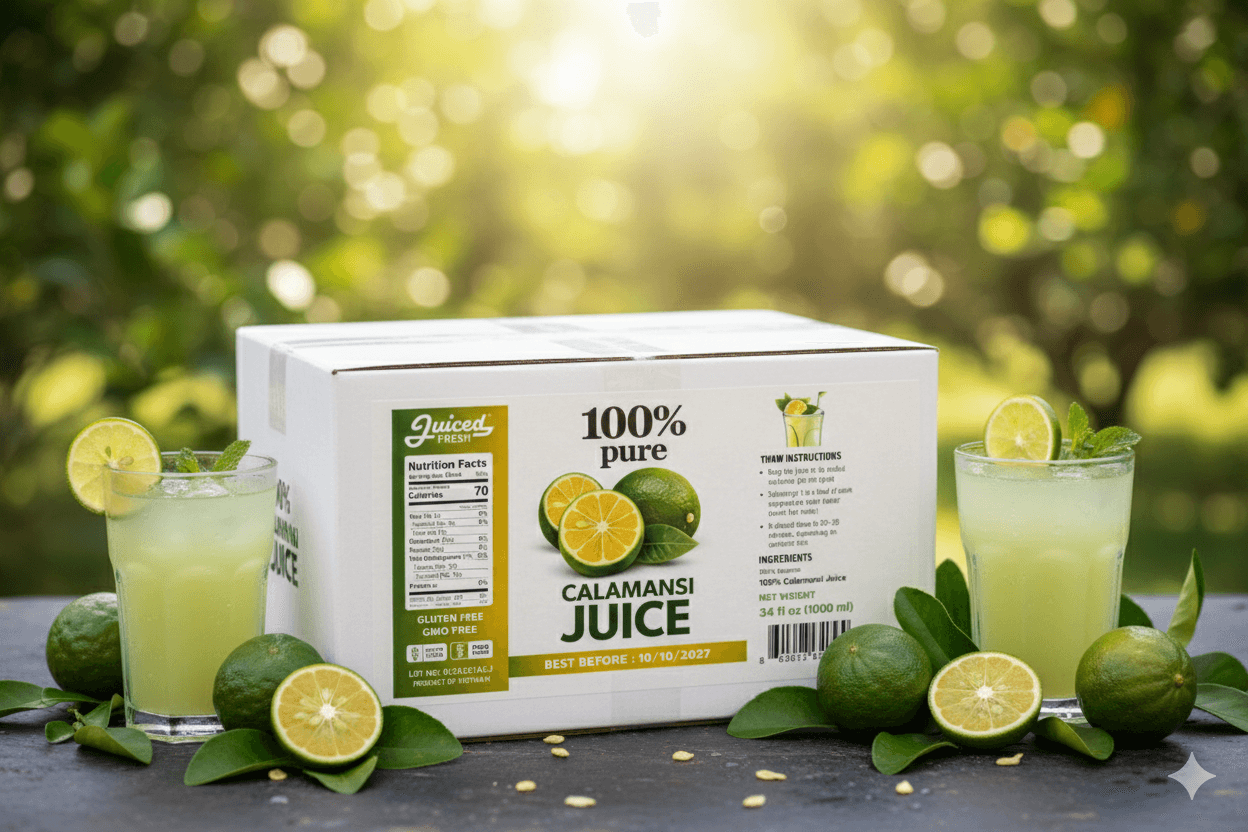
Our frozen pure calamansi juice fixes the supply problem without sacrificing authenticity. Single-ingredient: calamansi juice. No added sugar, no water, no citric acid filler. Sourced from calamansi-dedicated farms in the Philippines and Vietnam, flash-frozen at the press house, and shipped frozen from our Austin warehouse.
Filipino restaurants typically run through a 10 kg case in 10–14 days at medium service volumes. The juice thaws to a fresh-squeezed equivalent; staff can portion straight from a thawed pack for juice service, marinades, or sauces.
Spec sheet
Applications
The common builds we see from filipino restaurants.
01
Thaw a 1 kg pack, mix with simple syrup to spec, serve over ice. Most restaurants run a 4:1 juice-to-syrup ratio. Higher margin than most beverage SKUs.
02
Calamansi is the defining acid for kinilaw. Use at 3 oz per pound of fish, marinate 10–15 minutes for opaque but not 'cooked' texture.
03
A spoonful of calamansi in adobo sauce finishes the dish with the signature Filipino acid. For sawsawan (dipping sauce), combine with soy and bird's eye chili.
04
Use in place of lemon or lime in any recipe that would benefit from a more complex citrus note. Fantastic with grilled pork and lechon.
Order profile
Common questions
Yes. Nothing but calamansi juice. No sugar, no water, no citric acid, no preservatives. The ingredient list on the pack is 'calamansi juice.'
Yes. The flash-freeze process locks in the aromatic oils. A blind taste test by a Filipino chef would identify it as fresh-squeezed. The only loss is the very top-note volatiles that evaporate within 15 minutes of even fresh-squeezing.
We don't currently supply fresh whole calamansi. Only pure juice. For zest applications, fresh kumquats can work as a reasonable substitute (similar rind aromatics, though less acidity).
One 10 kg case. For most Filipino restaurants, that's 2 weeks of service. Enough to test the menu impact before committing to a standing order.
Related