How to Choose the Right Sugarcane Juicer for Your Business: Buyer's Guide
Selecting the right sugarcane juicer is critical for your business success. This comprehensive buyer's guide compares manual, electric, and commercial juicers, helping you make an informed decision based on your volume, budget, and quality requirements.
Choosing the right sugarcane juicer can make or break your juice business. The wrong equipment leads to low juice yield, frequent breakdowns, frustrated customers, and lost revenue. The right juicer delivers consistent quality, maximizes profits, and creates a foundation for growth.
This comprehensive guide will help you navigate the options and select the perfect sugarcane juicer for your specific needs. For side-by-side model picks, see our best commercial sugarcane juicers roundup.
Understanding Your Business Needs
Before comparing juicers, assess your requirements:
Volume Requirements:
- How many servings per day do you project?
- Peak hours vs. slow periods?
- Future growth expectations?
Space Constraints:
- Counter space available?
- Storage for equipment when not in use?
- Electrical outlets and power capacity?
Budget Considerations:
- Initial investment available?
- Operating costs (electricity, maintenance)?
- ROI timeline expectations?
Quality Standards:
- Juice yield importance?
- Consistency requirements?
- Visual appeal during juicing process?
Types of Sugarcane Juicers
Manual/Hand-Crank Juicers
Price Range: $300-$800
How They Work:
Manual juicers use a hand crank to rotate rollers that press sugarcane stalks. Simple mechanical design with no electrical components.
Best For:
- Demos and prep testing
- Farmers markets (no electricity needed)
- Very low-volume operations (under 20 servings/day)
- Backup equipment for small businesses
Pros:
- Low initial investment
- No electricity required (portable)
- Simple maintenance
- Extremely durable
- Quiet operation
- Low operating costs
Cons:
- Labor-intensive and tiring
- Slow processing (10-20 lbs/hour)
- Not suitable for commercial volume
- Customer wait times can be long
- Inconsistent pressure = variable juice quality
Juice Yield: 55-65%
Verdict: Only suitable for very small-scale operations or as backup equipment.
Electric Home/Small Business Juicers
Price Range: $800-$1,500
How They Work:
Electric motor drives the rollers, removing manual labor. Typically designed for intermittent use, not continuous operation.
Best For:
- Small cafes and restaurants (20-50 servings/day)
- Catering businesses
- Home enthusiasts who juice frequently
- Testing market before full investment
Pros:
- Affordable entry point
- Easy to operate
- Compact size fits most spaces
- Less physical effort required
- Reasonable juice yield
Cons:
- Limited duty cycle (not continuous use)
- Motors can overheat with heavy use
- Lower build quality than commercial models
- May struggle with thick or fibrous cane
- Shorter lifespan under heavy use
- Limited warranty coverage
Juice Yield: 60-70%
Capacity: 30-60 lbs/hour
Verdict: Good starter option for small businesses, but you'll likely outgrow it quickly.
Commercial Electric Juicers (Standard)
Price Range: $1,500-$3,500
How They Work:
Industrial-grade motors and reinforced construction designed for continuous commercial use. Higher pressure rollers for maximum extraction.
Best For:
- Juice bars and cafes (50-200 servings/day)
- Restaurants with juice programs
- Event catering companies
- Food trucks and mobile businesses
Pros:
- Built for commercial use
- Continuous operation capability
- Better juice yield than home models
- More durable construction
- Faster processing speeds
- Professional appearance
Cons:
- Higher upfront investment
- Requires dedicated electrical circuit
- Heavier and less portable
- More complex maintenance
- Noise levels can be significant
Juice Yield: 65-75%
Capacity: 80-150 lbs/hour
Verdict: The standard choice for most juice businesses. Reliable and effective.
Premium Vietnamese Commercial Juicers
Price Range: $1,699-$3,000+
How They Work:
Precision-engineered stainless steel rollers with optimal pressure distribution. Designed and perfected in Vietnam over generations of sugarcane juicing tradition.
Best For:
- Serious juice bars (100+ servings/day)
- High-volume restaurants
- Multi-location businesses
- Anyone prioritizing maximum quality and yield
Pros:
- Maximum juice extraction (70-80% yield)
- Superior build quality (lasts 10+ years)
- Handles all sugarcane varieties
- Consistent pressure = consistent quality
- Professional appearance attracts customers
- Lower long-term cost per serving
- Preserves more nutrients and enzymes
- Quieter operation than most commercial models
Cons:
- Higher initial investment
- Heavier equipment
- Professional installation recommended
Juice Yield: 70-82%
Capacity: 100-200+ lbs/hour
Verdict: Best choice for serious businesses. Higher upfront cost, but superior ROI long-term.
Key Features to Evaluate
Roller Material and Design
Stainless Steel 304:
- Industry standard for food equipment
- Corrosion-resistant
- Easy to clean and sanitize
- Long-lasting with proper care
Roller Configuration:
- Three-roller systems typically better than two-roller
- Roller diameter affects juice yield
- Grooved rollers vs. smooth (grooved generally better)
Motor Power and Type
Motor Specifications:
- Measured in watts or horsepower
- Higher power doesn't always mean better performance
- Look for industrial-duty cycle motors
- Gear reduction systems provide more torque
Heat Management:
- Motors generate heat during operation
- Better juicers have effective cooling systems
- Overheating protection features important
Build Quality and Materials
Frame Construction:
- Heavy-duty frames reduce vibration
- Powder-coated or stainless steel finish
- Welded vs. bolted construction
- Stability during operation
Component Quality:
- Bearings (sealed bearings last longer)
- Belts and drive systems
- Electrical components quality
- Replacement parts availability
Ease of Cleaning and Maintenance
Daily Cleaning:
- Can rollers be removed easily?
- Are there hard-to-reach areas?
- Time required for thorough cleaning?
- Parts dishwasher safe?
Maintenance Requirements:
- Lubrication points and frequency
- Belt replacement difficulty
- Common wear items and costs
- Availability of service/support
Safety Features
Essential Safety Elements:
- Emergency stop button
- Guards over moving parts
- Automatic shutoff if jammed
- Non-slip base
- Electrical safety certifications
Juice Yield and Quality
Extraction Efficiency:
- Percentage of juice extracted from cane
- Fiber management (dry pulp = good extraction)
- Nutrient preservation during pressing
- Foam production (less foam = better design)
Testing Juice Yield:
- Weigh sugarcane before juicing
- Measure juice output
- Calculate percentage
- Compare across different juicer models
Noise Level
Importance of Noise:
- Customer experience in your space
- Staff comfort during shifts
- Neighborhood considerations
- Brand image (loud = lower quality perception)
Acceptable Levels:
- Under 70 dB considered quiet
- 70-80 dB moderate
- Over 80 dB may be problematic
Warranty and Support
What to Look For:
- Minimum 1-year parts and labor warranty
- Manufacturer support availability
- Local service technicians
- Replacement parts stocking
- Response time for issues
Red Flags:
- Limited or no warranty
- Difficulty reaching support
- Long wait times for parts
- No local service options
Calculating Your ROI
Example: Premium Vietnamese Juicer ($1,699)
Assumptions:
- 50 servings per day
- $6.00 per serving menu price
- $2.00 cost per serving (including cane)
- $4.00 profit per serving
- 5 days per week operation
Daily Profit: $200
Weekly Profit: $1,000
Monthly Profit: $4,000
Payback Period: 1,699 ÷ 4,000 = 0.42 months (less than 2 weeks!)
Even accounting for other overhead, most quality juicers pay for themselves in under 3 months. Run your own numbers with our sugarcane juice calculator. The difference between a $800 juicer and a $1,700 juicer is negligible when you consider juice yield differences and longevity.
Common Mistakes to Avoid
Buying Based on Price Alone
The cheapest option often costs more in the long run through:
- Lower juice yield = wasted sugarcane
- Frequent repairs and downtime
- Shorter lifespan = earlier replacement
- Customer complaints about quality
Overestimating or Underestimating Volume
- Too small = long customer wait times, unable to meet demand
- Too large = wasted investment, unnecessary complexity
Ignoring Cleaning Requirements
A juicer that's difficult to clean leads to:
- Food safety violations
- Pest problems
- Equipment degradation
- Staff frustration and turnover
Skipping Due Diligence
- Not reading reviews from actual business owners
- Failing to test equipment before purchase
- Not verifying parts and service availability
- Ignoring warranty terms
Focusing Only on Initial Cost
Consider total cost of ownership:
- Electricity consumption
- Maintenance and repairs
- Replacement parts
- Juice yield differences
- Expected lifespan
Our Top Recommendations by Business Type
For Startups and Small Cafes:
Commercial Electric Juicer ($1,500-$2,000)
- Adequate for initial volume
- Room to grow
- Manageable investment
For Established Juice Bars:
Premium Vietnamese Juicer ($1,699-$2,500)
- Maximum juice yield
- Durability and reliability
- Professional image
- Best long-term value
For Multi-Location Businesses:
Premium Vietnamese Juicer + Backup
- Consistency across locations
- Minimize downtime risk
- Training simplification
For Mobile/Event Businesses:
Manual + Small Electric
- Manual for no-electricity situations
- Electric for high-volume events
- Flexibility and redundancy
Questions to Ask Before Buying
What is the actual juice yield percentage?
How long is the warranty, and what does it cover?
What are the annual maintenance requirements and costs?
How long does typical daily cleaning take?
Are replacement parts readily available?
What is the motor duty cycle?
Can I see the juicer in operation before buying?
What training and support is provided?
What do current owners say about reliability?
What's included with purchase (installation, training, accessories)?
Where to Buy
Authorized Dealers:
- Better warranty coverage
- Authentic products
- Professional support
- Proper installation
Direct from Manufacturer:
- Potentially lower prices
- Direct support line
- Customization options available
What to Avoid:
- Unknown brands with no reviews
- Used equipment without warranty
- Extremely low prices (likely poor quality)
- Sellers with no business knowledge
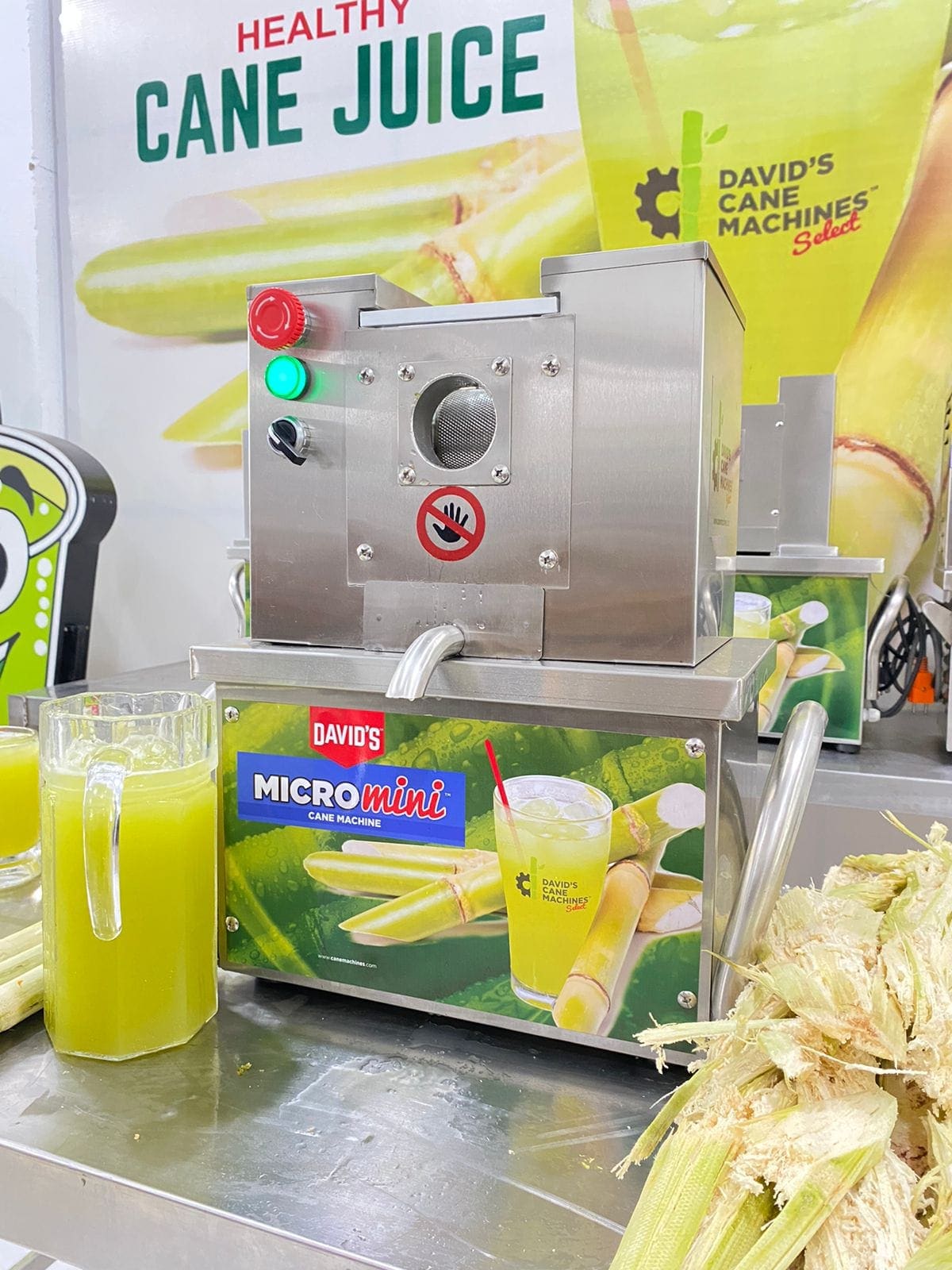
The Juiced Fresh Recommendation: David's Cane Machine
At Juiced Fresh, we recommend and sell David's Cane Machine for several reasons:
Superior Juice Yield: 75-82% extraction (10-15% better than standard models)
- Translates directly to higher profits
- Less sugarcane waste
Premium Vietnamese Engineering:
- Precision-engineered stainless steel rollers
- Generations of sugarcane juicing expertise
- Built to last 10+ years
Professional Results:
- Consistent quality every time
- Preserves maximum nutrients
- Impressive to watch (great for customer engagement)
Complete Package:
- Full warranty coverage
- Installation support
- Ongoing technical support
- Replacement parts available
Fair Pricing at $1,699:
- Less expensive than many commercial juicers
- Superior quality to more expensive alternatives
- ROI in under 2 months for most businesses
Making Your Decision
The right sugarcane juicer depends on your specific situation. However, for most juice businesses, investing in quality equipment makes financial sense. The difference in juice yield alone often justifies the higher cost, not to mention reliability, customer satisfaction, and brand image.
Ready to invest in the right equipment for your business? Contact Juiced Fresh at +1 (201) 920-9678 to discuss your needs and get personalized recommendations. We'll help you select the perfect juicer and provide ongoing support to ensure your success.
Published by Juiced Fresh.
Notes from the warehouse, the farm, and the bars we supply. See all Field Notes