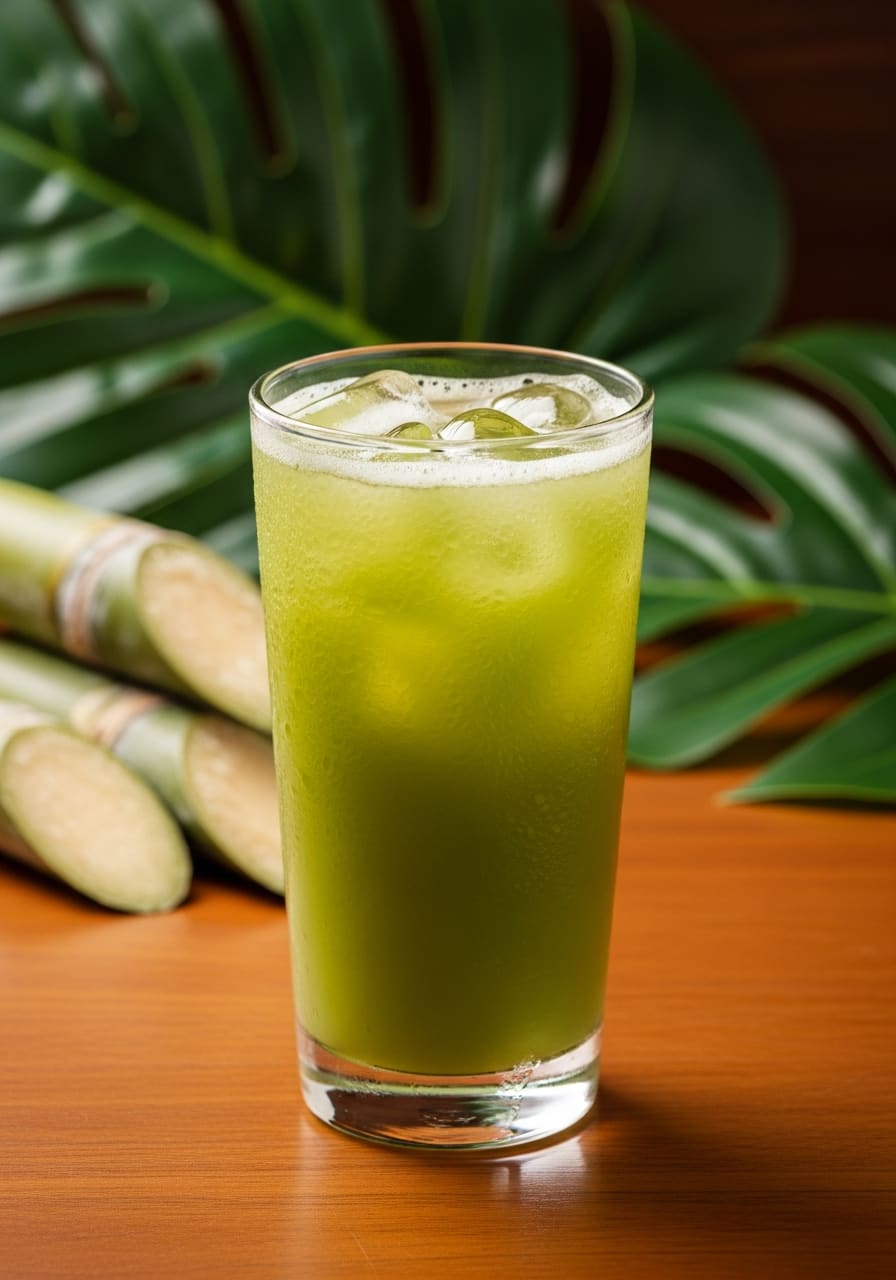
Sugarcane Ginger Lemon: The #1 Juice Bar Combo, Now Ready to Drink
Ginger and lemon is the most-ordered customization at every fresh cane press, and it is also the most labor-heavy drink on the ticket. Here is what the made-to-order version really costs, and how a $2.50 frozen bottle turns the same recipe into a zero-labor SKU.
Ask anyone who has run a cane press for a full season what customers ask to add, and you will get the same two words back. Ginger and lemon. It is the most-ordered customization on fresh sugarcane juice, in Vietnam, in Texas, at farmers markets, in mall food courts, everywhere the drink is sold. Some counters get so many requests that the plain cup becomes the exception.
There is a catch, though, and every operator who presses to order knows it. Ginger lemon cane is also the slowest drink on the ticket. Plain cane is feed the stalk, catch the juice, pour. The ginger lemon version adds peeling, juicing or muddling ginger, cutting and squeezing lemon, straining, and tasting for balance, all while a line forms. The most popular drink on the menu is also the one that eats the most labor per cup.
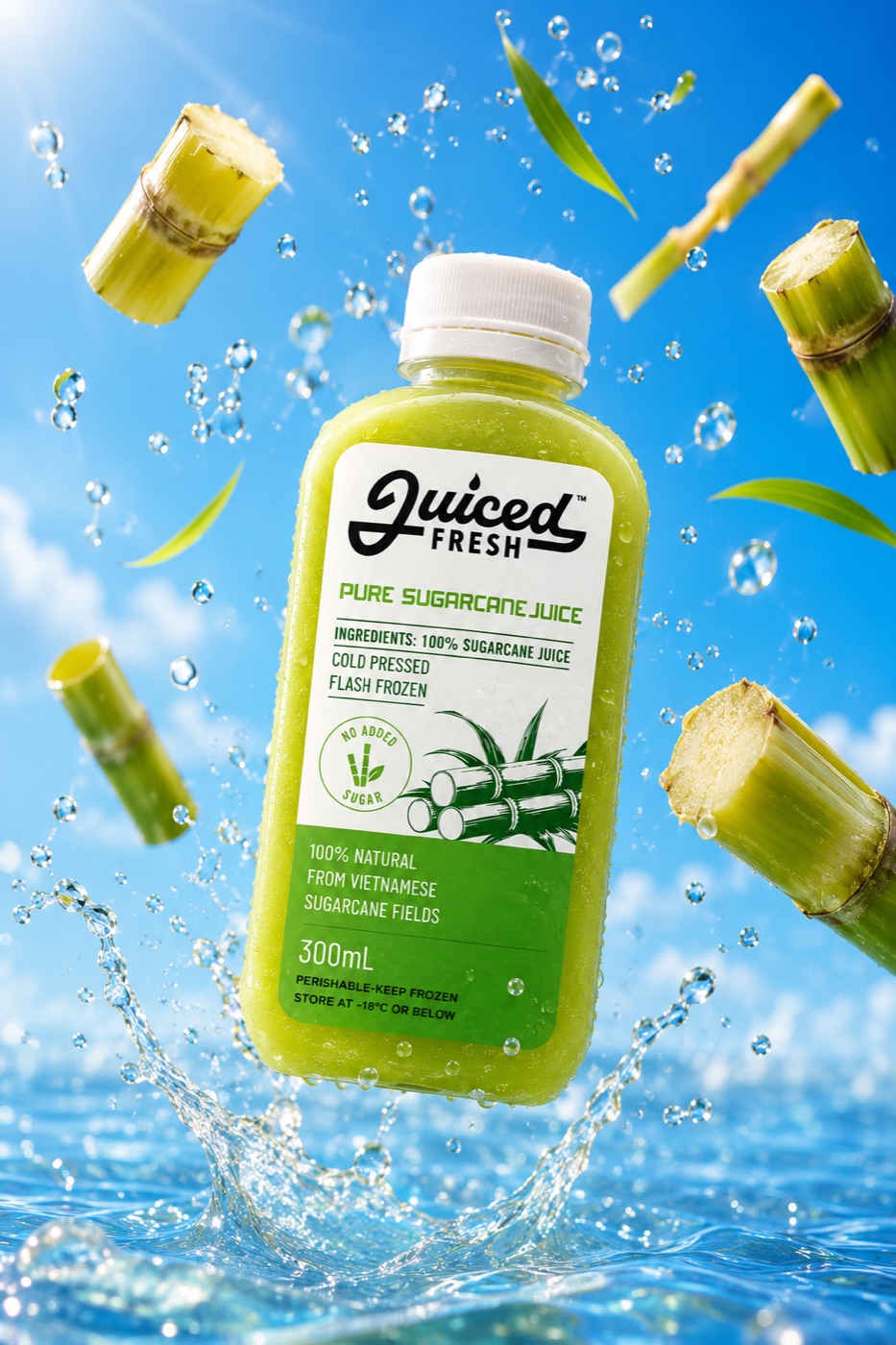
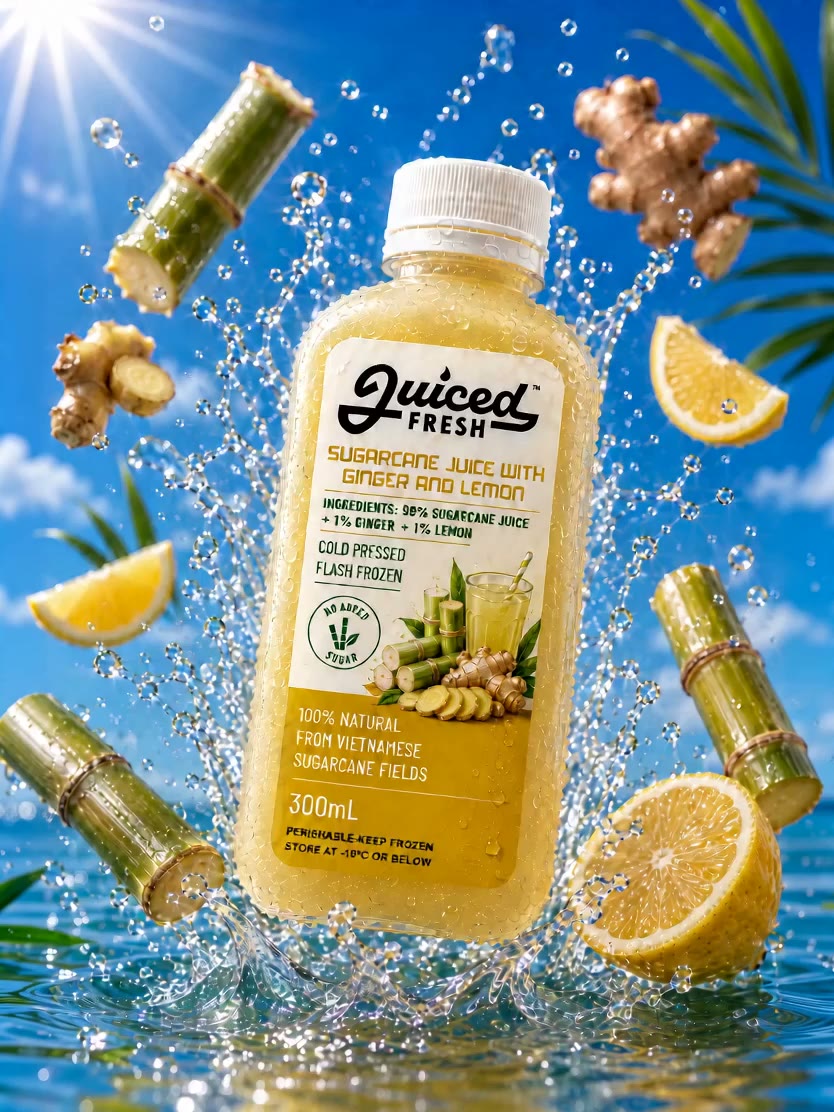
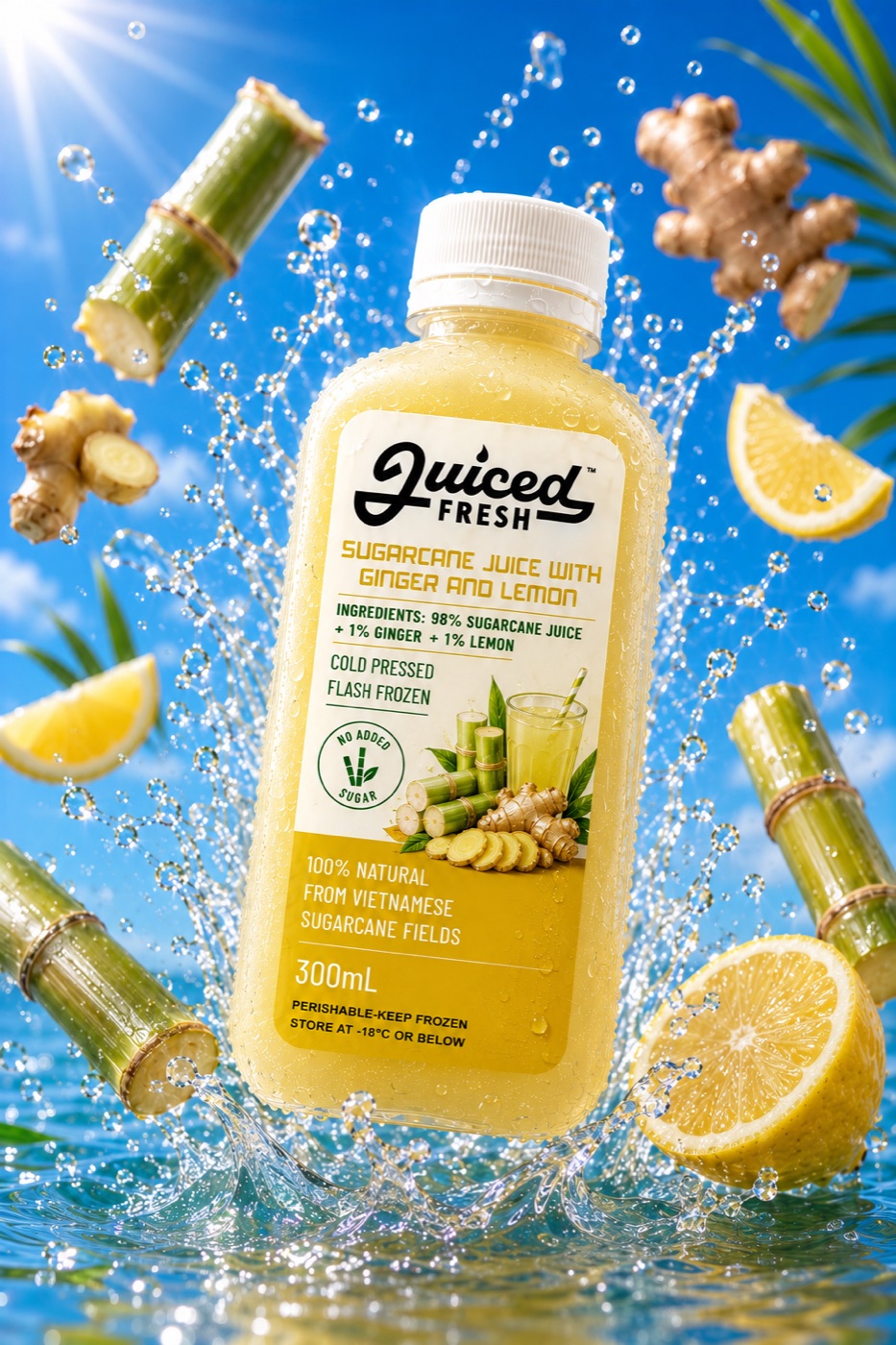
That tension is exactly what our August 2026 bottle is built to resolve. Sugarcane Juice with Ginger & Lemon is the counter-favorite recipe, 98% fresh-pressed Vietnamese cane, 1% ginger, 1% lemon, cold pressed, flash frozen in a 300ml bottle, and sold for $2.50 a bottle in 24-packs. This article walks through why the combo dominates, what the made-to-order version actually costs you per drink, and how the ready-to-drink bottle changes the math.
Why this combo wins on flavor, not fashion
Sugarcane juice on its own is sweet, grassy, and clean, but it is also low in acid. That is why a plain cup, as refreshing as it is, can read as flat to a first-time customer. The classic fix across Southeast Asia has always been citrus, usually calamansi or lime at the origin, lemon in the US, squeezed straight into the cup.
Lemon does two jobs. The acid sharpens the sweetness so the drink finishes crisp instead of syrupy, and the aroma gives the first sip a lift that plain cane does not have. Ginger does a third job. Its heat sits underneath the sweetness and gives the drink a warming, sinus-clearing edge that customers now read instantly as a wellness cue.
Put the three together and you get a drink that is sweet, sour, and spicy at once with zero added sugar, zero water, and zero syrup. It hits the same notes as a ginger shot chased with lemonade, except it is one drink, it is 100% juice, and it tastes better. That is why the combination keeps winning. It is not a trend riding on top of cane. It is the version of cane juice that most palates prefer.
The ratio matters more than people expect. Overdo the ginger and the drink turns harsh. Overdo the lemon and you lose the cane character entirely. The bottle locks the recipe at 98% cane, 1% ginger, 1% lemon, which lands in the pocket where the ginger warms without burning and the lemon brightens without souring. Every bottle pours the same, which is something a busy counter squeezing lemons by hand can never quite promise.
What the made-to-order version actually costs
Operators tend to price the fresh ginger lemon cup on ingredients and forget the labor, so let us do the full math. The numbers below use the same assumptions as our sugarcane juice calculator, which you can rerun with your own figures.
Start with the cane. A 22 lb case of frozen sugarcane stalks runs $38. At a 70% extraction rate on a commercial press, 22 pounds of stalks yields roughly 246 fluid ounces of juice. A 300ml serving is about 10 ounces, so one case presses out to roughly 24 servings. That is about $1.58 in stalk cost per drink, call it $1.60.
Add the customization. Fresh ginger and a wedge of lemon per drink is small money, roughly 10 to 15 cents combined at normal produce prices. So far the ingredient stack is about $1.72 per serving, which looks great next to a $7 to $9 menu price.
Now add the part the menu price has to carry. A made-to-order ginger lemon cane drink takes about three minutes of hands-on time: feeding stalks through the press, juicing the ginger, squeezing and straining the lemon, pouring and balancing. At $16 per hour that is $0.80 of direct labor per drink. Then amortize the daily press teardown, roughly 25 minutes of scrubbing rollers and trays, across a 40-drink day and you add another 15 to 20 cents per cup. Realistic loaded cost: about $2.65 to $2.75 per 300ml serving before the cup and lid.
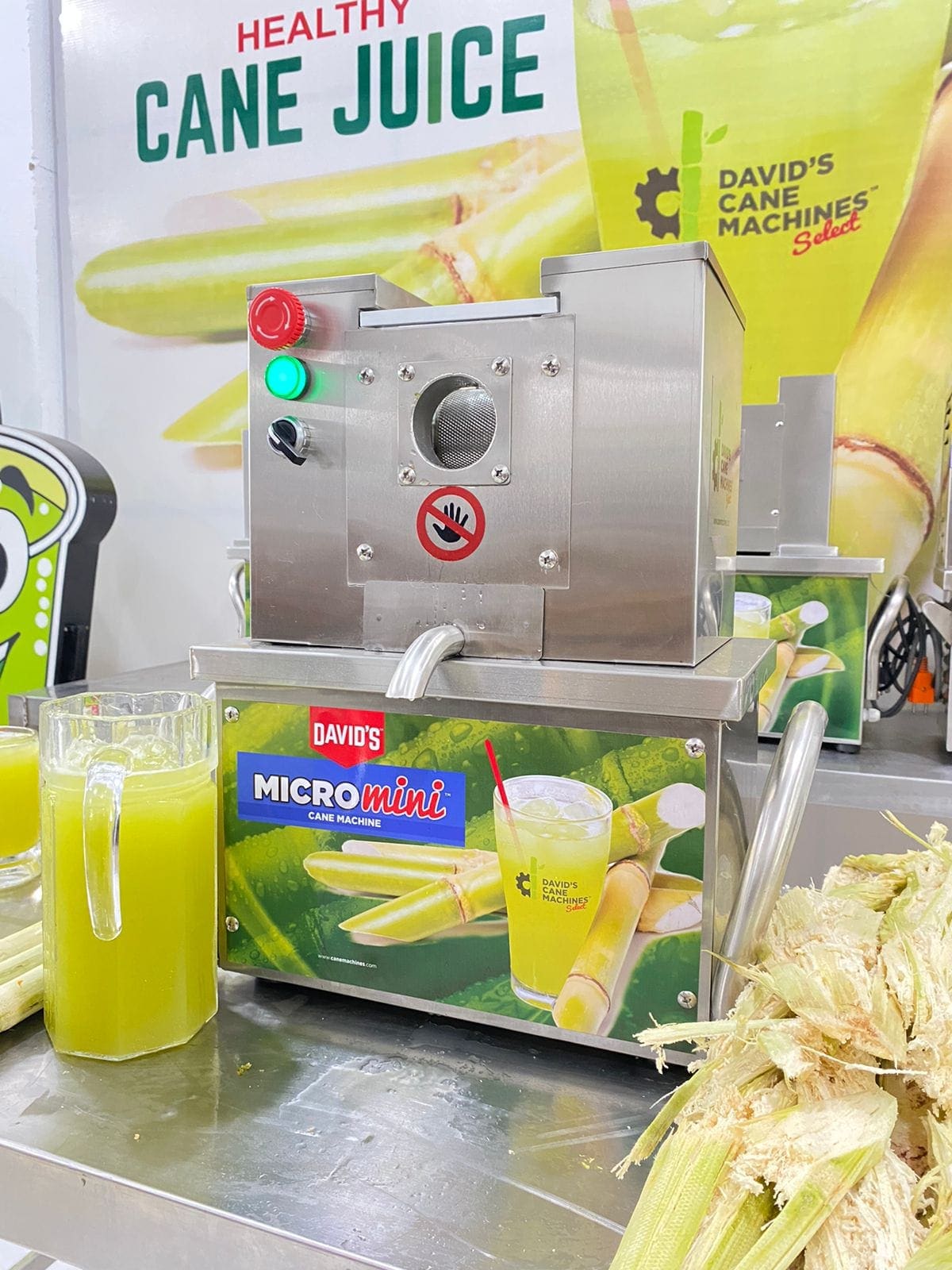
And that assumes the press is already bought and a trained person is already standing at it. An entry-level commercial cane press like David's Sugarcane Juicer runs $1,699, and it only makes money during the hours someone is there to feed it. If you are still weighing that investment, our guide on how to start a sugarcane juice business walks through the full startup stack.
None of this is an argument against fresh pressing. The press is theater, and the theater sells. It is an argument for knowing your real per-drink cost, because that is the number the bottle competes against.
The bottle math: the same drink at zero labor
Now run the ready-to-drink version. A bottle of Sugarcane Juice with Ginger & Lemon costs $2.50 at single-case pricing, $60 for a 24-pack case. Order a pallet, which is 120 cases at 17% off before freight, and the per-bottle cost drops to about $2.08, or roughly $49.80 per case and $5,976 for the full pallet of 2,880 bottles.
Look at those two numbers side by side. The fresh-pressed drink costs you about $2.65 to $2.75 loaded. The bottle costs $2.50 at case price and about $2.08 at pallet price, with zero minutes of labor attached. The bottle is not a premium-priced convenience product. At pallet pricing it is cheaper than making the drink yourself, and at single-case pricing it is a wash, except one version needs a $1,699 machine and a trained pair of hands and the other needs a freezer and a cooler shelf.
The zero-labor part compounds in ways the per-drink math undersells:
- No press station means the drink sells during every open hour, including the hours when your presser is off shift or the machine is torn down for cleaning.
- No three-minute build means no line forming behind one slow ticket during the rush.
- No ginger prep, no lemon case, no strainer, no end-of-day teardown on that station.
- No recipe drift. The hundredth bottle tastes exactly like the first, which is not true of the hundredth hand-squeezed lemon.
Serving is as simple as it gets. Move bottles from the freezer to the refrigerator the night before, and they are pour-ready cold juice by morning. Because the bottles hold frozen until you need them, a slow week costs you nothing in spoilage, the same logic that makes frozen stalks beat fresh cane for juice bars running a cane program.
Margin at the register
Cost is half the equation, so here is the revenue side. A 300ml bottled cold-pressed juice with a wellness story sits comfortably at $6 to $7 in a juice bar or cafe cooler. Bottled cane with ginger and lemon reads as a specialty item, not a commodity lemonade, and it should be priced like one. Take $6.50 as the working number.
- At single-case pricing: $6.50 minus $2.50 leaves $4.00 gross per bottle, a 62% margin. One $60 case returns $156 at the register, $96 of it gross profit.
- At pallet pricing: $6.50 minus $2.08 leaves $4.42 per bottle, a 68% margin. Each case returns about $106 gross, and a fully sold pallet grosses roughly $12,700 on a $5,976 spend before freight.
- Price at $7 in a premium location and the pallet-priced bottle clears $4.92 each, a 70% margin without touching a press.
The honest caveat, same as always: these figures are ingredient cost against shelf price. Your true picture includes freight from Austin, cooler electricity, and shrink. But a grab-and-go SKU that starts at 62 to 68% margin has room for all of it, and unlike the fresh-pressed cup, its cost does not creep when the lemon case goes up or the presser calls in sick.
One more structural advantage. There is no gatekeeping on volume. The big frozen-juice incumbents in this category quote 20,000 lb minimums that lock out independents entirely. Here a single 24-bottle case is a valid first order, so you can test the SKU in one cooler before you ever think about a pallet. Full tier details are on the wholesale page.
The wellness story writes itself
Walk any grocery cold case and count the drinks selling on a ginger-lemon promise: ginger shots, switchels, immunity blends, cold-pressed lemonades. Most of them lean on added sweeteners, dilution, or both to be drinkable, because straight ginger and lemon needs sugar from somewhere.
Cane juice is the somewhere. In this bottle the sweetness is the pressed juice of the cane itself, which means the label reads like a farmers market chalkboard: sugarcane juice, ginger, lemon. No added sugar, no water, no concentrate, no preservatives. Cold pressed, flash frozen at the press house in Vietnam's Mekong Delta within hours of cutting, and held frozen through the Mekong-to-Texas cold chain until it lands in your freezer.
That three-ingredient label is the merchandising. Shelf-talker copy like "pressed cane, real ginger, real lemon, nothing added" does more work than any graphic, because the customer scanning the cooler for a clean-label option finds exactly what they are hoping to find. Health cafes, yoga studios, gyms, and smoothie shops that would never install a cane press can still sell the category's best drink.
Earning the cooler spot
A grab-and-go SKU lives or dies on placement, so treat the bottle like the impulse product it is:
- Eye level in the cold case, next to the smoothies and cold brew, not on the bottom shelf with the water.
- Face at least four bottles so the facing reads as a product line, not a leftover.
- Keep reserve stock frozen and thaw to match your sales pace, so the cooler is always full and nothing ages out.
- Pair it with the counter. Customers who watch fresh cane being pressed for the person ahead of them will grab the bottle when they are in a hurry, and the bottle sells the press back to them on the next visit.
The bottle also travels where the press cannot. Catering drops, office fridge programs, poolside coolers, farmers market ice bins, checkout-adjacent mini fridges at pho shops and banh mi counters. Any business with 4 cubic feet of cold space can run a cane program now, which was simply not true when the category required machinery.
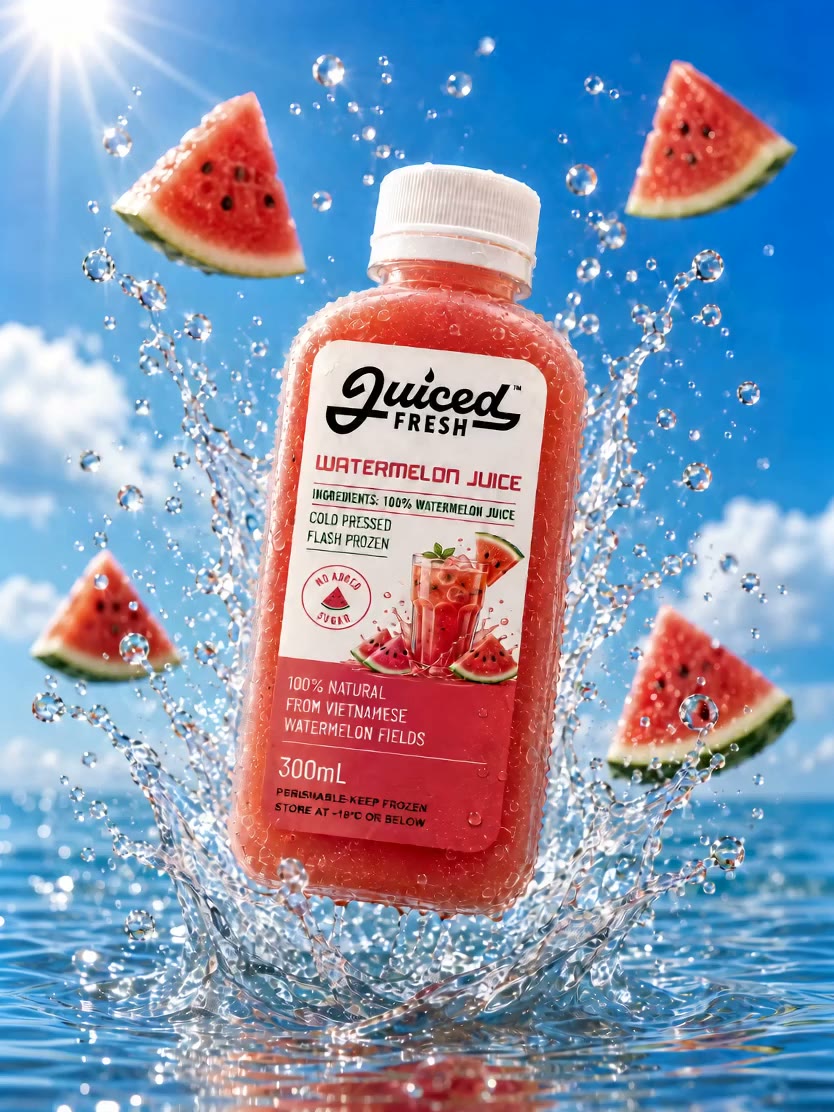
If ginger lemon proves the concept, the August 2026 line gives the cooler a full family at the same $2.50 price: original sugarcane juice, sugarcane with pineapple, pure lemon juice, and watermelon juice. One freezer order, five facings, one story.
Should the bottle replace your fresh press?
No, and it is not trying to. If you already press to order, the machine is your show and your differentiation. Keep it.
What the bottle replaces is everything the press does badly. The rush-hour bottleneck when three ginger lemon tickets stack up. The dead hours when the press is clean and covered but a customer still wants cane. The second location you have not staffed yet. The wholesale account that wants your best drink in their cooler without your equipment in their kitchen. Run fresh cane as the experience and the bottle as the multiplier, and the two versions sell each other.
For operators starting from zero, the bottle flips the traditional order of operations. Instead of spending $1,699 on a press to find out whether your customers want cane juice, spend $60 on a case and let the cooler tell you. If the bottles fly, the playbook for going deeper is in our startup guide.
How many servings does a case of bottles replace?
One 24-bottle case equals 24 made-to-order 300ml drinks, which at three minutes of hands-on time each is about 72 minutes of press labor you did not spend, on top of the daily press cleanup you skipped entirely. At a $16 wage that is roughly $19 to $25 of labor saved per case before you count the faster line.
When can I get it, and how do I order?
The line launches in August 2026. Preorder interest is being taken now on the Sugarcane Juice with Ginger & Lemon page, and early requests get first allocation when stock lands, which matters because the original cane bottle sold through its first run. For pallet quotes, message us on WhatsApp at +1 (201) 920-9678 and you will usually get a reply in minutes. Everything ships frozen from our Austin warehouse and arrives in 2 to 5 days nationwide.
The most-requested drink at every cane counter is about to be a SKU you can stock instead of a ticket you have to build. At $2.50 a bottle against a $6.50 shelf price, with the labor line at zero, the math is the easy part. The hard part is deciding how much cooler space to give it.
Published by Juiced Fresh.
Notes from the warehouse, the farm, and the bars we supply. See all Field Notes