Stocking Frozen RTD Tropical Juice: A Cooler Program That Sells Itself
Six flavors of single-serve frozen tropical juice land in August 2026 at $2.50 a bottle. Here is the cooler-door math at $5.99 to $6.99 retail, the thaw-and-sell workflow, and why frozen dating beats fresh RTD for cafes, delis, food trucks, gyms, and grocers.
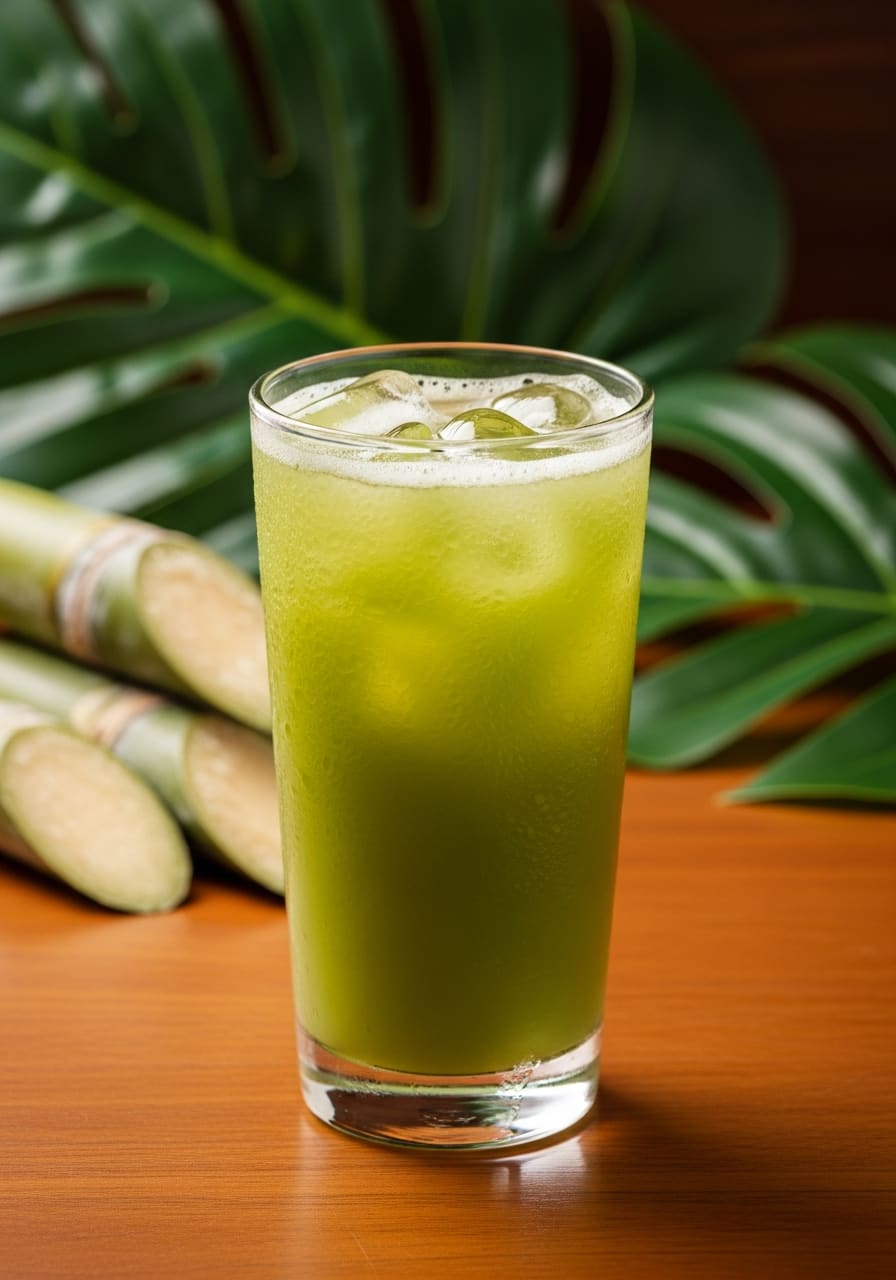
Ready-to-drink is the fastest-moving corner of the beverage business, and tropical flavors are pulling the category. Sugarcane juice has jumped from street stalls and specialty markets into mainstream cooler doors, coconut water built an entire hydration category from nothing, and watermelon and citrus are riding the same clean-label wave. Customers walk to the cooler, grab a bottle that looks and tastes like nothing at the gas station, and pay six or seven dollars without blinking.
The operators who profit from that shift are usually not the ones who invented it. They are the cafes, delis, and independent grocers who noticed that the cooler door is the highest-margin square footage in the building and stocked it accordingly. A cooler bottle takes no prep, no ticket time, and no labor beyond restocking. It sells while your staff is busy doing something else.
The catch has always been supply. Fresh-pressed RTD juice carries a refrigerated code date measured in days, so a slow week ends with cases in the trash. The national HPP brands solve the dating problem, but they arrive through distributors with volume expectations and the same lineup your competitor already pours. The interesting flavors, the ones customers photograph and come back for, rarely reach a small operator at a workable cost.
Frozen bottles change that equation. In August 2026 we are launching a single-serve frozen juice line out of our Austin, Texas warehouse: six flavors, $2.50 per bottle wholesale, 24 bottles to a case, a frozen shelf life of 12 to 24 months, and a thaw-and-sell workflow with a 7-day refrigerated window. This is the full program guide: the flavors, the cooler-door math, the daily workflow, and who it fits.
Six flavors, one wholesale price
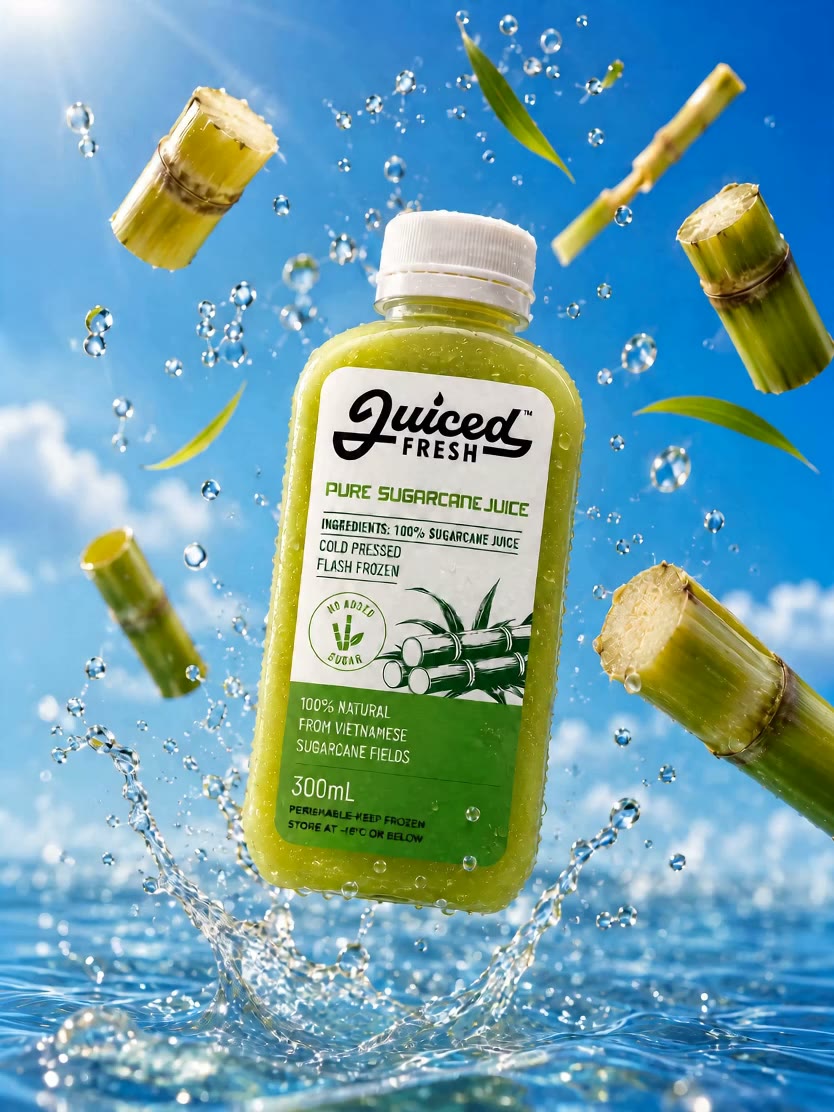
Every bottle in the line is cold pressed, flash frozen at the source, and free of added sugar. Every bottle is also the same $2.50 wholesale, which keeps ordering and shelf pricing simple. A case is 24 bottles, or $60 before freight.
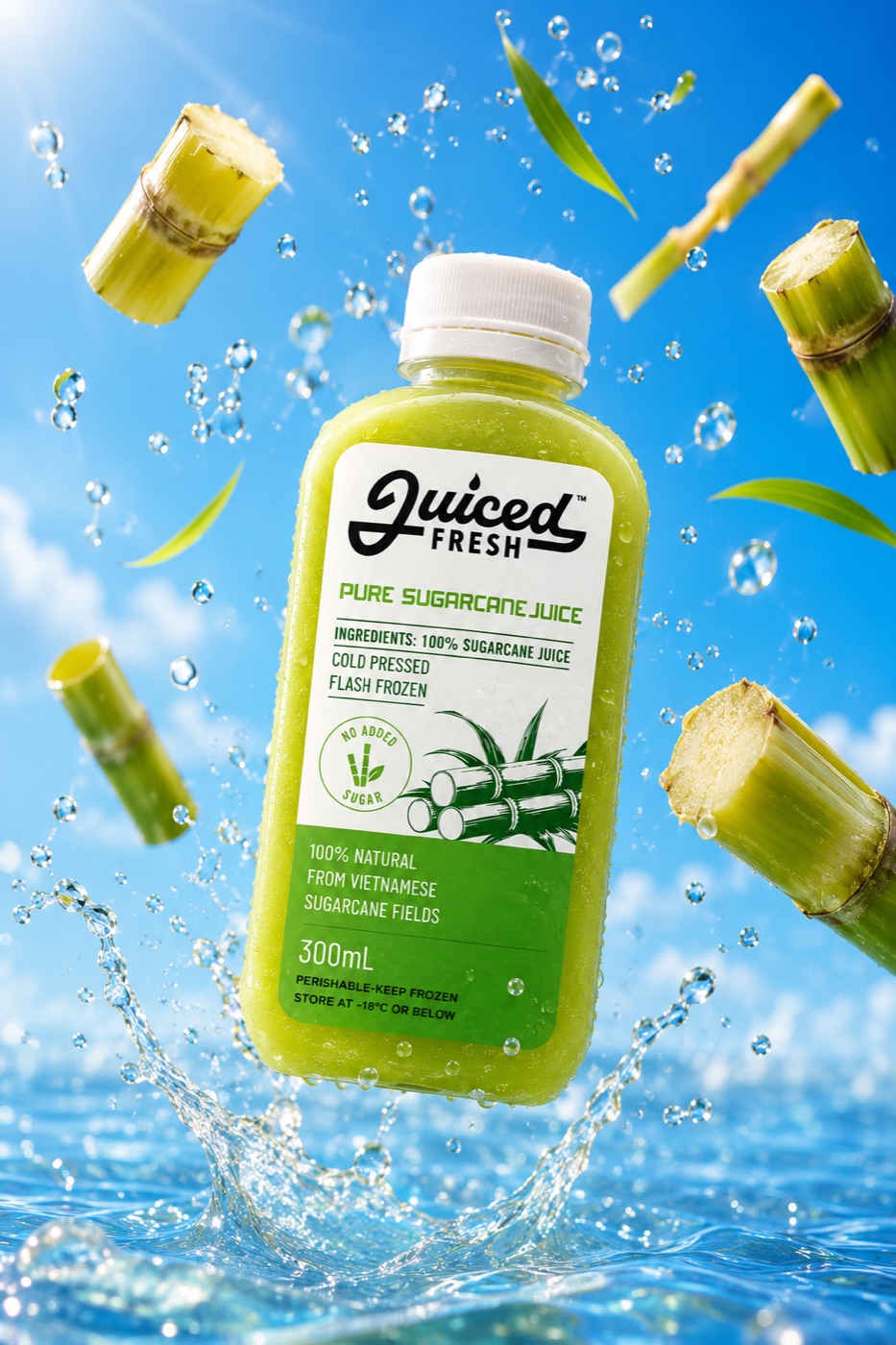
- Sugarcane Juice Original. 100% pressed Vietnamese cane in a 300 ml bottle. This is the flagship, and demand has already outrun supply: it is currently sold through and on back order ahead of the August restock, so the waitlist on the product page is how you get first access.
- Premium Coconut Water. Young coconut water for the hydration crowd, and the SKU that anchors gym and studio coolers.
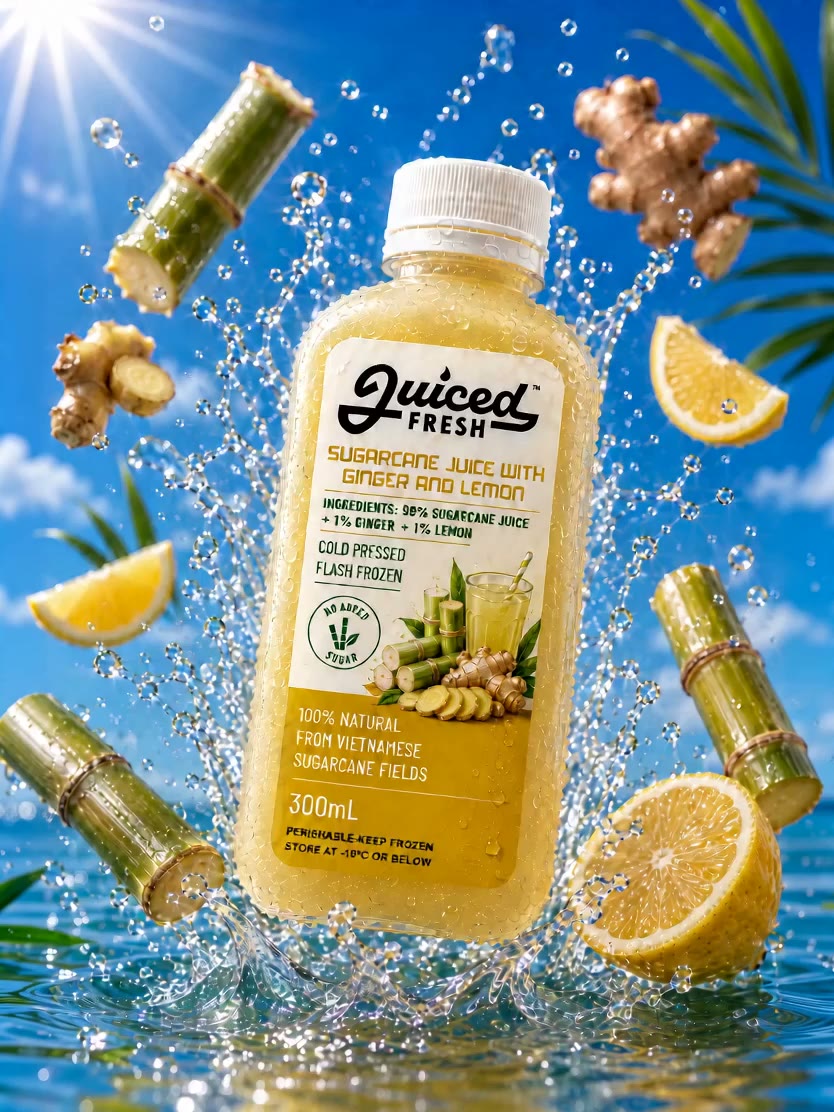
- Sugarcane Juice with Ginger and Lemon. Pressed cane with a bite of ginger and lemon, the closest thing on the line to a wellness shot in a full-size bottle.
- Sugarcane Juice with Pineapple. Cane rounded out with sweet pineapple, the easiest first taste for a customer who has never tried sugarcane juice.
- Lemon Juice. 100% pure lemon juice in a 320 ml bottle, bright acid and natural vitamin C, at home in the cooler and behind the counter as a lemonade base.
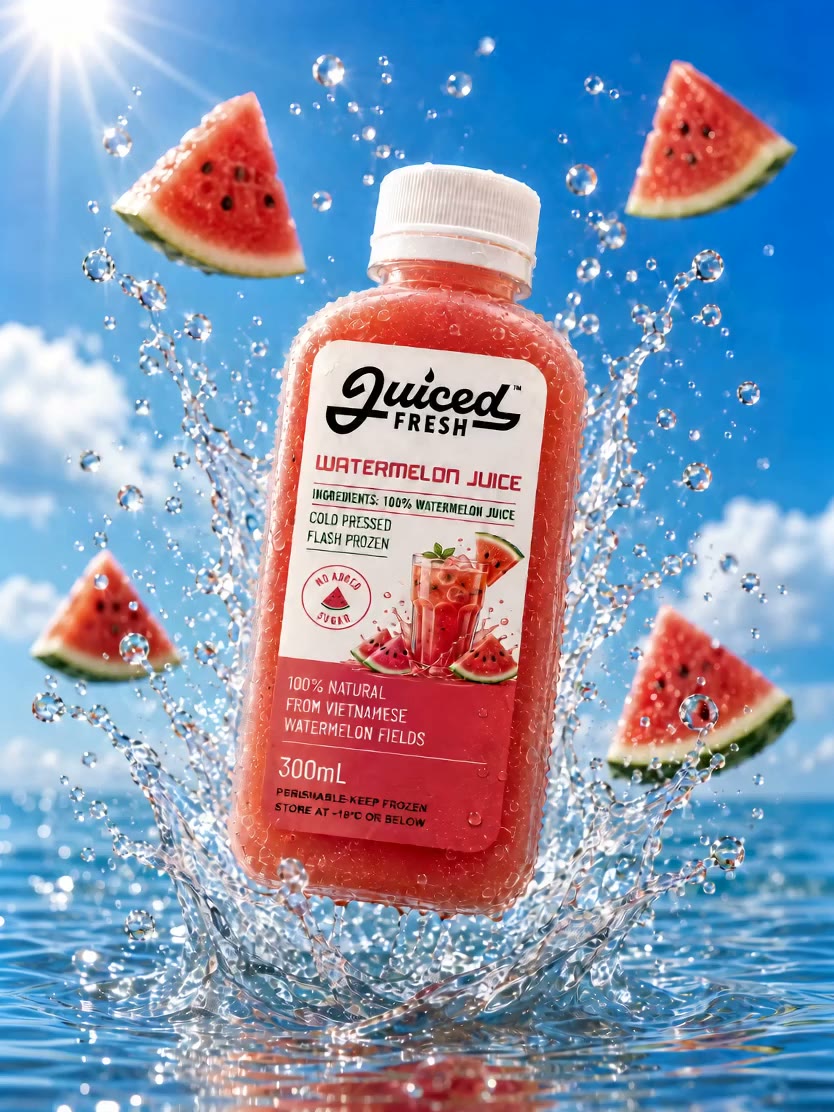
- Watermelon Juice. Pure watermelon, naturally sweet and hydrating, and the summer velocity SKU.
Nothing in the lineup is a from-concentrate reconstruction. The juice is pressed and flash frozen in Vietnam within hours, crosses the Pacific frozen, holds frozen in Austin, and ships frozen to your door in 2 to 5 days nationwide.
Why frozen dating beats fresh RTD
The reason most small operators do not run an interesting juice cooler is not demand. It is dating.
A fresh-pressed bottle gives you 5 to 10 days of code life, and the clock starts before the truck reaches you. Order conservatively and you stock out on a sunny Saturday. Order confidently and one rainy week puts product in the trash. Either way, the spoilage risk gets priced into every bottle you sell, and it is usually what kills the program in month three.
Frozen bottles hold 12 to 24 months at freezer temperature. You can receive a mixed order in September and sell it through the winter without a single unit expiring on you. The freezer becomes your warehouse, and you move inventory to the cooler door one day of sales at a time.
With fresh RTD you buy shelf life by the day. With frozen you buy it by the year and spend it a week at a time.
This is the same logic that moved nearly every smoothie and juice bar in the country onto frozen fruit, applied to the finished bottle instead of the ingredient. The product is the same pressed juice. The risk profile is completely different.
Cooler-door math: facings, margin, and turns
Start with the unit economics. At $2.50 a bottle, a retail price of $5.99 leaves $3.49 gross per bottle, about a 58% margin. Price at $6.99, which is where premium RTD tropical juice already sits in most metro markets, and the gross rises to $4.49, about 64%. A full case sold through returns $83.76 to $107.76 in gross profit on a $60 outlay.
Now put it on the shelf. Six flavors at one facing each fill roughly one shelf of a standard cooler door. Suppose each facing turns a modest 2 bottles a day. That is 12 bottles daily, half a case, and roughly $42 to $54 of gross profit a day, call it $290 to $380 a week, from a single shelf that demands nothing but restocking. A busy location turning 4 bottles per facing doubles that to roughly $590 to $750 a week, a full case a day.
Compare that to what the same shelf earns holding national-brand soda or water at a dollar or so of margin per unit, and the tropical set out-earns it several times over per facing. The cooler door is fixed real estate. The only question is what each slot returns.
Velocity also writes your order sheet for you. At 2 bottles a day per flavor, one case of each flavor covers about 12 days, so a six-case mixed order is roughly a two-week program. Watch which flavors clear early, reweight the next order, and within a month you have a set tuned to your actual traffic.
When the program proves out, pallet pricing changes the margin again. A pallet is 120 cases, 2,880 bottles, at 17% off wholesale before freight, which brings the bottle cost to about $2.08 and the case to $49.80. At a $5.99 retail your margin climbs to about 65%, and at $6.99 to about 70%. A pallet runs about $5,976 before freight and retails for more than $17,000 at $5.99, and because the shelf life is measured in years rather than days, none of it is racing a code date while it sells.
If you want to pressure-test your own numbers, the sugarcane juice calculator runs the same math from the other direction, working backward from menu price to landed cost.
The thaw workflow your team will actually follow
The entire operating manual for this program fits on an index card, which is exactly why it survives staff turnover.
- At close, pull tomorrow's bottles from the freezer and move them to the walk-in. A single-serve bottle thaws overnight in refrigeration and is ready to merchandise by open.
- Date the case the moment it enters the walk-in. Thawed bottles carry a 7-day refrigerated window, so anything dated seven days back comes off the shelf.
- Stock the cooler door first in, first out. New bottles go behind, older bottles come forward.
- Never refreeze a thawed bottle. The freezer-to-fridge move only goes one way.
The one discipline that matters is matching thaw quantity to sales velocity. Thaw a day of sales each evening and the 7-day window becomes a generous buffer instead of a deadline, because nothing sits in the fridge longer than a day or two ahead of demand. If a flavor slows down, you simply stop thawing it, and the frozen cases wait in back with no clock running.
That is the structural difference from fresh RTD. The 7-day window only ever applies to inventory you chose to activate, never to everything you bought. A correctly run frozen cooler program throws away close to nothing.
Mix flavors in one order, no minimums
The incumbents in frozen beverage supply are built for distributors, with minimum orders that commonly run to 20,000 pounds. That structure locks out nearly everyone reading this. Our program starts at a single 24-bottle case with no minimum order, and flavors mix freely in one order: two cases of sugarcane original, one of coconut water, one of watermelon, and so on.
That flexibility matters because the right cooler set is discovered, not planned. Start with a mixed order across all six flavors, watch two weeks of turns, then reorder around what your customers actually reach for. A gym will find coconut water and watermelon leading. A Vietnamese cafe will clear sugarcane original and pineapple first. Neither has to guess up front or commit a pallet to find out.
Everything ships frozen from Austin, arrives in 2 to 5 days, and goes straight into your freezer. The full ordering ladder, from single case to pallet to container, is on the wholesale page, and the framework for knowing when to move up a tier is covered in case vs pallet vs container.
Who the program fits
Cafes and coffee shops. Morning traffic is already standing at your register. A bottle next to the pastry case attaches to food orders and turns a $5 ticket into an $11 one with zero added labor and zero ticket time. Sugarcane with ginger and lemon reads as the grown-up alternative to a third espresso.
Delis and corner stores. Lunch is a cooler-door business, and a premium tropical set is differentiation the chain competitor cannot match quickly. At $3.49 or more gross per bottle, each facing out-earns the soda it replaces several times over.
Food trucks. No press, no prep space, no problem. A small service-line fridge holds the day's thawed stock, the commissary freezer holds the rest, and every order gets a premium drink attach that costs you nothing in cook time.
Gyms and studios. Coconut water and watermelon cover post-workout hydration, and sugarcane original reads as natural energy. A front-desk cooler monetizes foot traffic you already paid to acquire.
Independent grocers. A six-flavor frozen-tropical set is a cooler door shoppers cannot find at the chain across the street, and thaw-and-stock replenishment from your own back freezer means the set never sits empty waiting on a distributor truck.
Operators already pressing cane to order from frozen stalks fit too. Bottles cover grab-and-go and off-peak hours when the press is idle, without touching the fresh-pressed menu that built your reputation.
And if your program leans toward over-the-counter service rather than packaged retail, the same thawed juice pours into ClearCup clear cans, our transparent PET cans built for grab-and-go coolers and events, so the color of the juice does the selling in your own branded package.
When can I order the bottle line?
The line ships in August 2026 from our Austin warehouse. Sugarcane Juice Original is currently sold through with a waitlist running on the product page, and the other five flavors are open for August inquiries now. Message us on WhatsApp with your flavor mix and volume and we reply in minutes, so your cooler set is planned before the first cases land.
How long do the bottles last?
Frozen at 0F, 12 to 24 months. Once thawed under refrigeration, sell within 7 days and never refreeze. Because you thaw in day-size batches matched to velocity, the 7-day window works as a safety margin rather than a deadline, and waste on a well-run program rounds to zero.
What margin should I expect at $5.99 to $6.99 retail?
About 58% at $5.99 and about 64% at $6.99 on single-case pricing of $2.50 a bottle. On pallet pricing of about $2.08 a bottle, those figures climb to roughly 65% and 70%. A single cooler shelf turning 12 bottles a day returns roughly $290 to $380 in weekly gross profit.
Do I have to commit to volume to start?
No. Single cases of 24 bottles carry no minimum order, flavors mix freely within an order, and the 17% pallet discount unlocks at 120 cases whenever the program earns it. You can scale from one trial case to a standing pallet without ever changing suppliers.
A cooler program is the rare addition that grows revenue without growing labor, and frozen is what makes it safe to run at small scale. The bottles hold in your freezer for a year or more, activate a day at a time, and sell at margins most food items cannot touch. Browse products to see the full line alongside the rest of our frozen tropical range, then message us on WhatsApp to reserve your August flavor mix. We reply in minutes.
Published by Juiced Fresh.
Notes from the warehouse, the farm, and the bars we supply. See all Field Notes