Best Tropical Fruit Add-ins for Bubble Tea and Boba Shops
Real frozen passion fruit, calamansi, and dragon fruit give boba shops true flavor and sugar control at a few cents per cup. Here are the builds, doses, and costs.
The boba menu problem nobody talks about
Walk into ten bubble tea shops in any city and you will taste the same passion fruit. Same mango. Same lychee. Not because owners lack taste, but because most of them pour from the same handful of bottled syrups and powder mixes sold by the same distributors. The cup looks different. The flavor underneath is identical.
That sameness is the real competitive problem in boba right now. Foot traffic is up, new shops open every quarter, and the thing that keeps a customer choosing your counter over the one two blocks away is not your cup design or your loyalty app. It is whether the drink tastes like fruit. Real fruit, with acidity and aroma and a little bitterness at the edges, reads instantly on the palate. Syrup reads as sweet and not much else.
The good news for an operator is that the gap between tasting like everyone else and tasting like nobody else is small and cheap to cross. Single-origin frozen tropical juice and fruit chunks cost a few cents per cup, hold for up to two years in the freezer, and carry flavor that no shelf-stable concentrate can match. This is a guide to using them well: which fruits, what doses, how to build the drinks, and what it actually costs per cup.
What a real-fruit add-in costs per cup
Most owners assume real fruit is the premium option that wrecks margins. The numbers say otherwise. Because these are pure juice and plain chunks with nothing diluting them, a single case stretches across hundreds of drinks.
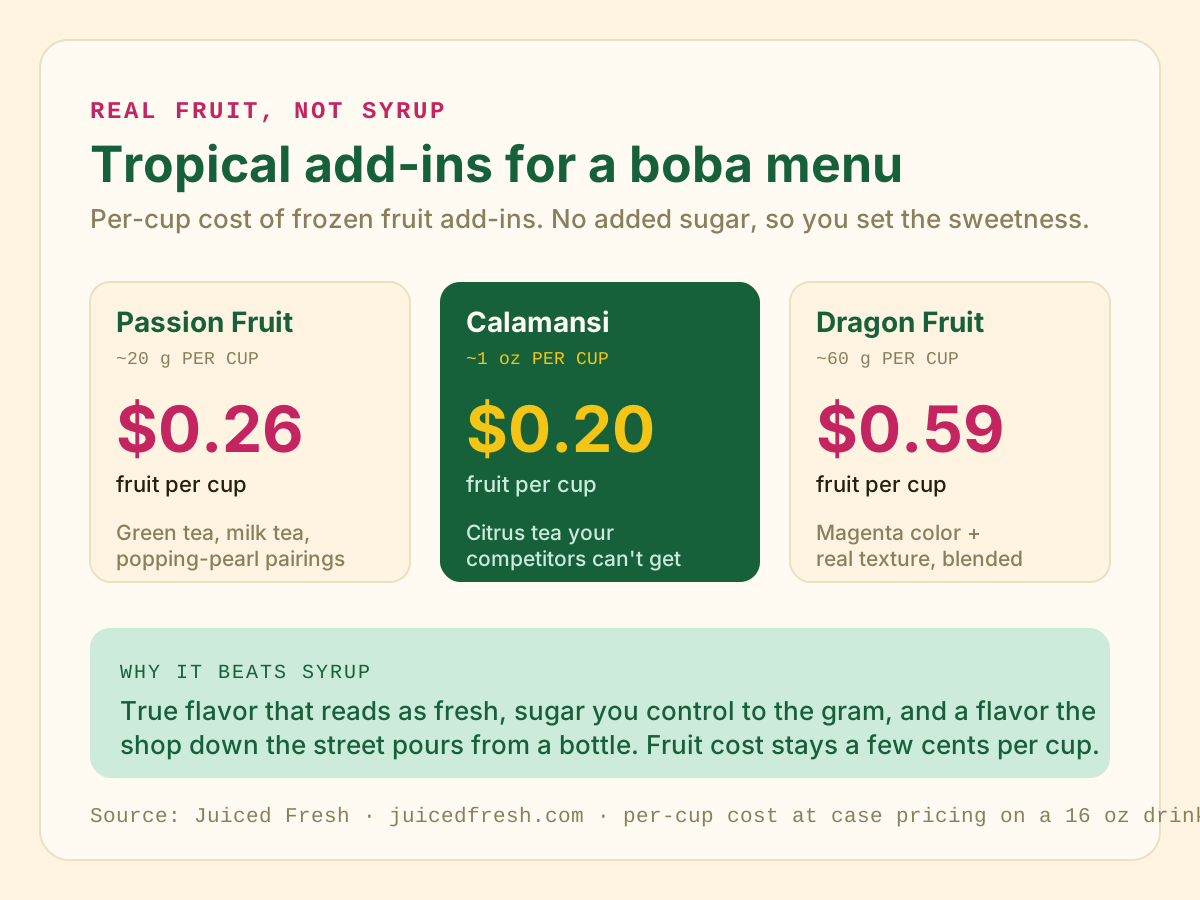
Here is the math on the three fruits that matter most for a tropical boba menu.
- Passion Fruit Juice: a 10 kg case runs $132. At a 20 g dose, which is plenty to flavor a 16 oz tea, that is roughly $0.26 of fruit per cup.
- Calamansi Juice: a 10 kg case runs $69 and yields about 338 fl oz. At a 0.75 to 1 oz pour, you are looking at $0.15 to $0.20 per drink.
- Red Dragon Fruit Chunks: a 10 kg case runs $99. At a 60 g pour, that is about $0.59 per serving, and the chunks bring color and texture, not just flavor.
Set those costs against what you charge. A fruit tea that sells for $5.50 to $7.00 carries a fruit cost between 3 and 11 percent of the menu price. That is well inside the range where you can use the real ingredient, price it as a premium drink, and still run a healthier margin than you would on a syrup line once you account for the markup you can command.
There is a second saving that does not show on the per-cup line. None of these have added sugar. You sweeten to your own recipe with your own simple syrup, which means you control the sugar curve precisely instead of inheriting whatever a syrup manufacturer decided. Customers asking for half-sugar or no-sugar drinks get a real answer instead of a watered-down one.
The builds: passion fruit, calamansi, dragon fruit
Flavor is only useful if it survives the build. Each of these fruits has a job it does best. Here is where to put them.
Passion fruit, the workhorse
Passion fruit is the most forgiving tropical flavor on a boba menu because its aroma is loud and its acidity cuts through milk and ice without disappearing. A little goes a long way, which is exactly why the per-cup cost is so low.
For a passion fruit green tea, start with 20 to 25 g of passion fruit for bubble tea per 16 oz, shaken with brewed green or jasmine tea, simple syrup to taste, and ice. The tea's tannin gives the fruit a backbone and the result is bright and clean, the kind of drink people reorder.
For a passion fruit milk tea, the same 20 to 25 g works, but pull back the syrup slightly because the milk already reads as sweet. Build it cold and serve it fresh and the texture stays creamy with the passion fruit sitting on top like perfume. Float a layer of the pure juice at the bottom for the sunset effect that photographs well and signals real fruit before the first sip.
Pairing: passion fruit loves classic black tapioca pearls and it loves passion-fruit or mango popping pearls even more, because the burst of liquid doubles down on the tropical note. Lychee jelly is a clean third option if you want chew without competing flavor.
Calamansi, the secret weapon
Calamansi is the flavor your competitors almost certainly do not have. It is a Southeast Asian citrus that lands somewhere between lime, mandarin, and kumquat, more fragrant than lime and less harsh. Most boba menus have lemon or lime; almost none have calamansi, which makes it an easy way to own a flavor in your market.
A calamansi green tea is the flagship build. Pour 0.75 to 1 oz of calamansi for juice bars into 16 oz of cold green or oolong tea, sweeten, shake hard over ice, and finish with a calamansi wheel or a sprig of mint if you garnish. It drinks like a craft citrus soda with tea depth underneath. At $0.15 to $0.20 of fruit per cup it may be the highest-margin signature drink you can put on the board.
Calamansi also works as a brightening agent in other drinks. A few milliliters in a mango or passion fruit tea lifts the whole thing the way a squeeze of lime lifts a cocktail. Keep a bottle on the line as a finishing tool, not only as a standalone flavor.
Pairing: calamansi is sharp and clean, so it pairs best with lighter textures. Aloe cubes, lychee jelly, or clear citrus popping pearls keep the drink refreshing. Heavy black tapioca can muddy it, so use a smaller scoop if you go that route.
Dragon fruit, the one you eat with your eyes
Red dragon fruit earns its place on color alone. The flesh is a deep magenta that turns a milk tea or smoothie a vivid pink no powder can fake honestly, and because it comes as chunks rather than juice, it brings real texture to blended drinks.
For a dragon fruit milk tea, blend 60 g of Red Dragon Fruit Chunks with your milk tea base and ice, or muddle the chunks and build over ice if you want visible fruit suspended in the cup. The flavor is mild and slightly sweet, more about body and color than punch, so it pairs beautifully with a stronger tea or a splash of passion fruit to give it a top note.
For a dragon fruit smoothie, those same 60 g blended with ice, a little milk or coconut, and syrup make a thick, naturally pink drink that sells itself in a clear cup. This is the build that travels on social feeds and pulls walk-ins.
Pairing: dragon fruit's mild flavor and soft texture sit well with chewy contrast. Black tapioca pearls, popping pearls, or crystal boba all work. Because the fruit is the visual star, clear or white toppings keep the color clean in the cup.
Syrups and powders versus real frozen fruit
The case for syrup has always been convenience and shelf life. Frozen fruit answers both. Cases store in any standard freezer, and single-origin Vietnamese and Philippine fruit flash-frozen within about four hours of harvest at minus 35 Celsius holds for up to two years. There is no opened-bottle clock ticking, no refrigerated spoilage window, and no rush to use a perishable before it turns.
What you give up with syrup is everything that makes a drink taste handmade. Bottled syrups are built around sugar and flavoring, often with concentrate, acidulants, and stabilizers doing the work that fruit should do. Powders are worse on flavor and add a chalky note that lingers. Both are formulated to taste consistent, which is another way of saying they taste like every other shop using them.
The points that matter to an operator:
- True flavor. Pure juice and plain chunks carry aroma and acidity that read as fresh, because they are. No concentrate, no additives, nothing added back to fake what was processed out.
- Sugar control. With unsweetened fruit you sweeten to your own spec, so half-sugar and no-sugar orders are real drinks, not compromises. That is increasingly what customers ask for.
- Differentiation. When your passion fruit tastes like passion fruit and your calamansi is a flavor the shop down the street cannot get, the menu does the marketing. Sameness is the syrup shop's problem, not yours.
- Cost that holds up. At a few cents to roughly half a dollar of fruit per cup, real ingredients fit the margin math, especially once you price the drinks as the premium they are.
The shops that win the second visit are the ones where the fruit tastes like fruit. Everything else on the menu is comparable; the flavor is not.
None of this asks you to change your workflow much. You are still building drinks to a recipe card. You are just starting from an ingredient that does the flavor work for you instead of one engineered to be cheap and stable on a warehouse shelf.
How much should a shop order to start
Start with one case each of the fruits that fit your concept, ordered by the case online so you can test recipes and customer response before scaling. A single 10 kg case of passion fruit alone covers several hundred cups, so even a busy shop has room to dial in doses before reordering. Once a flavor proves out on the menu, move to pallet pricing to bring the per-cup cost down further.
Where does the fruit ship from and how fast
Everything ships frozen from Austin, Texas, and lands in 2 to 5 days nationwide in insulated packaging. It arrives frozen and goes straight into your freezer, so there is no thaw-and-use pressure on delivery day. Plan a reorder when you are about a week out and you will never run a flavor dry mid-service.
Can I control sugar with these add-ins
Yes, and it is one of the main reasons to switch. All three products are pure juice or plain chunks with no added sugar, so you build sweetness with your own simple syrup at your own ratio. That lets you offer genuine half-sugar and no-sugar versions of every fruit drink, which a pre-sweetened syrup cannot do without tasting thin.
How do I order pallets or a container
Cases go through the online store via DeliveredCold, which is the right channel for testing and for small to mid volume. When you are ready for wholesale and pallet pricing, a pallet runs 120 cases at 17 percent off before freight, and pallets and full containers are handled over WhatsApp, where the team replies in minutes. You can also browse products to see the full tropical range before you commit to a build.
The boba market rewards the shops that taste different, and tasting different is mostly about what goes in the cup before the tea and the pearls. Real frozen passion fruit, calamansi, and dragon fruit give you flavor your competitors pouring bottled syrup cannot match, sugar you control to the gram, and a fruit cost measured in cents. Start with a case of Passion Fruit Juice, test it on your best-selling tea, and see what a real ingredient does to the reorder rate. When the flavors prove out, move to wholesale and pallet pricing to scale the cost down, and reach the team on WhatsApp for pallet and container orders, where the replies come in minutes.
Published by Juiced Fresh.
Notes from the warehouse, the farm, and the bars we supply. See all Field Notes