Frozen Watermelon Juice for Restaurants and Juice Bars: Cost Per Bottle Case
Watermelon juice sells itself all summer and dies on the prep list. Here is the operator math for the frozen 300 ml not-from-concentrate bottle landing August 2026: cost per case and pallet, margin at a $6 to $8 menu price, and why frozen beats both fresh-pressed and concentrate.
Walk past a taqueria window in Texas in July and you will see it: a jug of agua de sandia sweating on the counter and a line of people who did not come for the tacos. Watermelon juice needs zero menu education. Customers already know it, already crave it, and in summer they will happily pay real money for it. Ask any operator who has ever run it as a special.
Demand was never the problem. The problem is that watermelon juice is genuinely annoying to produce in a commercial kitchen. Melons are heavy, bulky, seasonal, and inconsistent, and the juice you press on Monday is a drain pour by Wednesday night. That operational drag is why most restaurants either skip the category entirely or fake it with a syrup base that tastes like candy.
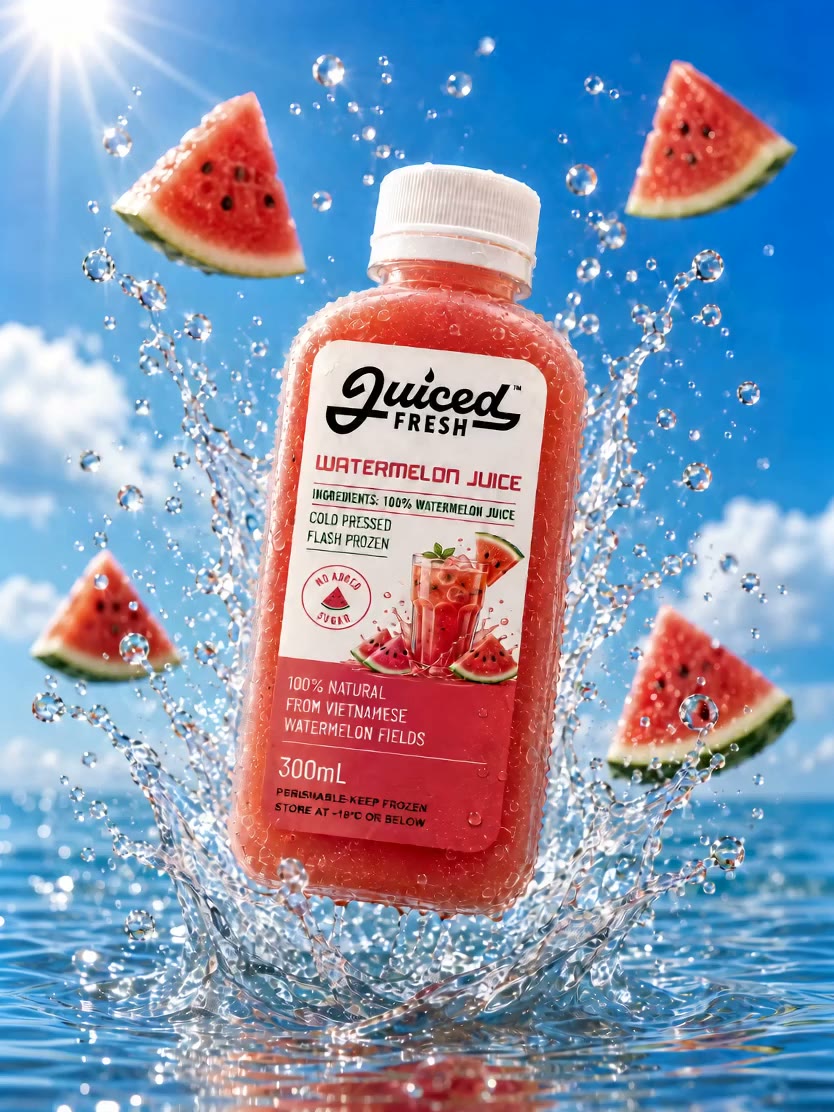
In August 2026 we are launching a frozen answer: Watermelon Juice in 300 ml single-serve bottles, 24 to a case, at $2.50 a bottle. It is 100% not-from-concentrate juice, cold pressed and flash frozen with no added sugar. This article is the operator math: what a case costs, what each bottle earns at a $6 to $8 menu price, how frozen NFC stacks up against fresh-pressed and concentrate, and where it fits on a menu without adding a single prep hour.
Why watermelon juice is having a menu moment
Aguas frescas have crossed over. What used to be a taqueria staple now shows up at fast casual chains, coffee shops, poke counters, and hotel pool bars, and watermelon is the flavor that anchors the category. It leads agua fresca menus for a simple reason: it is familiar, photogenic, and naturally sweet without reading as a dessert.
The hydration angle helps too. Watermelon is roughly 92% water, so a 100% watermelon juice sells as the lighter, cleaner alternative to soda and lemonade. For operators chasing the better-for-you beverage dollar, a drink with one ingredient and no added sugar is the easiest story a menu board can tell.
And the color does the merchandising for you. A pink-red pour in a clear cup works the same way a magenta pitaya bowl works: customers see someone else holding one and order it. The logic that makes Red Dragon Fruit Chunks a margin driver for smoothie bowls applies here in liquid form.
The catch is that demand is seasonal at the grocery store but surprisingly year-round in foodservice. Summer is the peak, but agua fresca programs, brunch menus, and cocktail lists want watermelon in March too, exactly when fresh melons are at their most expensive and least ripe. That mismatch is the entire argument for frozen.
The bottle spec we are pricing from
Everything below is based on the frozen watermelon bottle launching in August 2026. The spec is short because the product is simple.
- 300 ml frozen bottle, a proper single serve with no cup, lid, or straw required.
- 100% watermelon juice. Not from concentrate, cold pressed, flash frozen, no added sugar, no added water, no dyes.
- 24 bottles per case, which works out to 7.2 liters of juice per case.
- $2.50 per bottle, or $60 per case.
- Pallet pricing at 17% off wholesale, 120 cases to a pallet.
- Ships frozen from our Austin warehouse and arrives in 2 to 5 days across the US.
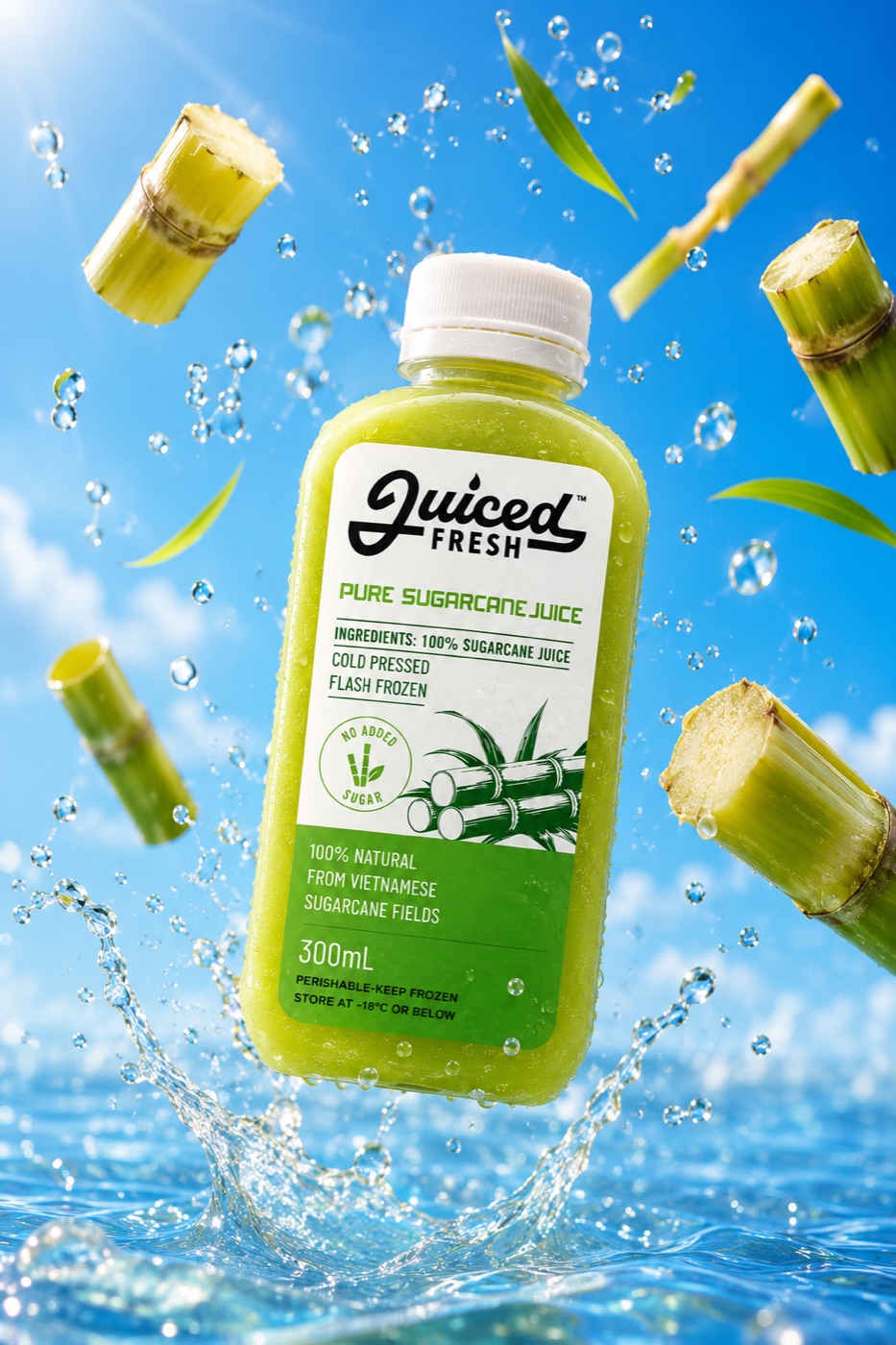
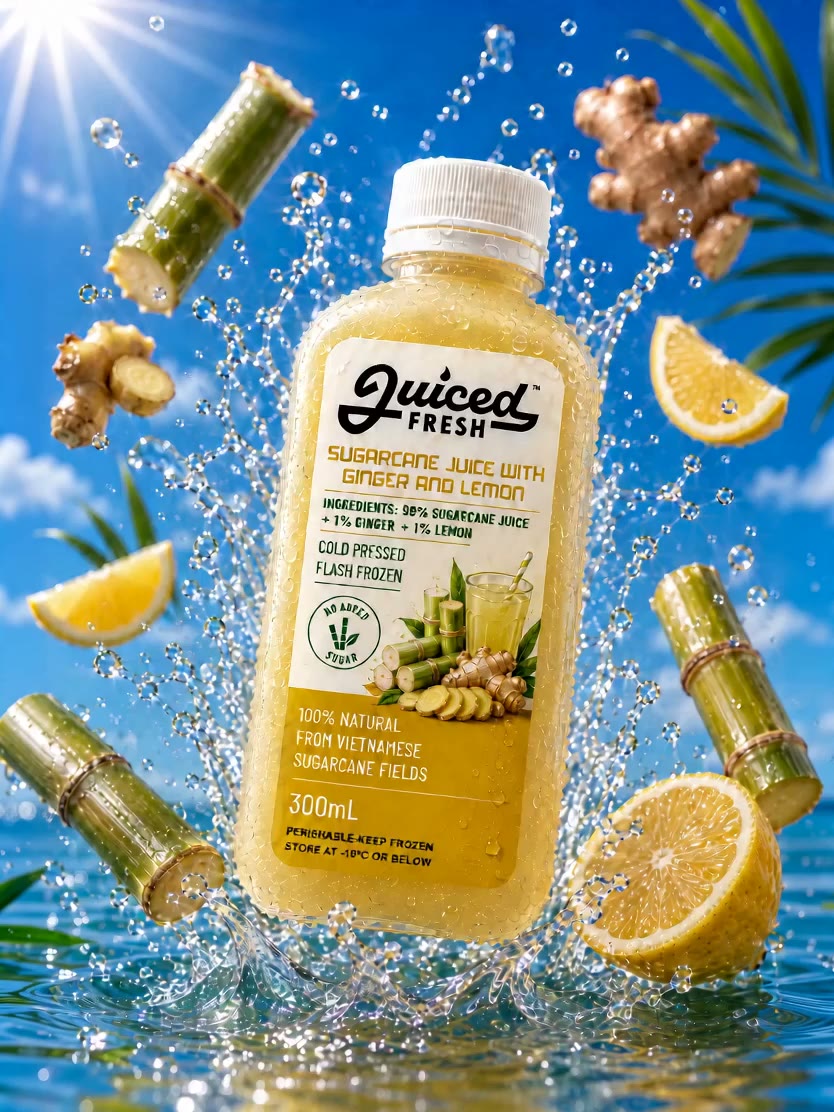
It is part of the same single-serve line as our Sugarcane Juice Original, which sold through its first run and is being restocked for the same August window, alongside Premium Coconut Water, Sugarcane Juice with Pineapple, lemon juice, and a sugarcane ginger lemon blend. If you are stocking a grab-and-go cooler, the whole line lands together.
Cost per bottle, case, and pallet
The unit math is short because the bottle is the unit. There is no yield calculation, no trim loss, no juicing variance. Every bottle in the case is a sellable serving.
- Single case: $60 for 24 bottles, or $2.50 per serving. No minimum order, so one case is a real trial.
- Pallet: 120 cases at 17% off comes to about $49.80 per case, or roughly $2.08 per bottle. A full pallet is 2,880 bottles for about $5,976 before freight.
One thing the spreadsheet usually forgets: the frozen bottle already includes its own packaging. A fresh-pressed program still has to buy the cup, the lid, and the label, which typically adds 20 to 40 cents to every serving before a drop of juice is poured. The $2.50 is fully loaded and retail ready.
Margin at a $6 to $8 menu price
Premium single-serve juice in US foodservice comfortably retails between $6 and $8, and cold-pressed bottle shops routinely charge more. Here is the gross profit per bottle at the single-case price of $2.50:
- At $6 on the menu: $3.50 gross profit per bottle, a 41.7% beverage cost.
- At $7 on the menu: $4.50 gross profit per bottle, a 35.7% beverage cost.
- At $8 on the menu: $5.50 gross profit per bottle, a 31.3% beverage cost.
At pallet pricing of roughly $2.08 per bottle, the same menu prices improve to:
- At $6: $3.92 gross profit, a 34.6% beverage cost.
- At $7: $4.92 gross profit, a 29.7% beverage cost.
- At $8: $5.92 gross profit, a 26% beverage cost.
Now put weekly volume against it. A cafe selling 40 bottles a week at $7 books $280 in revenue against $100 in product at case pricing, which is $180 in weekly gross profit from one cooler shelf. Run that across a 20-week warm season and the single SKU contributes about $3,600 with zero prep labor attached. At pallet pricing the same 40 bottles return about $197 a week.
Those beverage cost percentages sit inside the 25% to 35% band most beverage programs target, and the gross dollars per unit beat most drip coffee. The margin was never the fragile part of watermelon juice. The fragile part is production, which is exactly what frozen removes.
Frozen NFC versus fresh-pressed: the honest comparison
Fresh-pressed watermelon looks cheap on paper, so let us be honest about the paper. An 18 lb seedless melon at a summer wholesale price of around $8 gives you roughly 5 kg of flesh after the rind, which presses and strains down to about 4 liters of juice. That is 13 to 14 servings at 300 ml, or roughly 60 cents of fruit per serving. Against $2.50 a bottle, fresh wins the raw ingredient line every single time.
Then the loaded costs arrive. Breaking down a melon, pressing, straining the pulp, and cleaning the juicer runs 20 to 30 minutes per melon, and at $18 an hour that is another 45 to 60 cents per serving in labor before anyone sells anything. Fresh watermelon juice also holds for only 24 to 48 hours before it separates, sours, and dulls, so every batch is a bet on the next two days of foot traffic. Dump a third of Tuesday's batch and the effective cost of the servings you did sell jumps by half. Add the cup and lid a fresh pour still needs, and a realistic loaded cost lands between $1.50 and $2.00 a serving on a good week, and well above the frozen bottle on a bad one.
And that is July math. In February the same melon costs $12 to $14, tastes like water, and presses pale. Watermelon sugar content swings hard across the season and even between individual fruits from the same bin, which means a fresh program serves a noticeably different drink week to week. The frozen bottle is pressed from ripe fruit at peak season and flash frozen the same day, so the bottle you open in January tastes like the one you opened in July.
Fresh wins the ingredient line. Frozen wins the P&L, because $2.50 is flat, fully loaded, and never gets thrown away.
The point is not that frozen is always cheaper per milliliter. The point is that the price is flat and predictable: no labor, no waste, no seasonality, no juicer cleanup, no 48-hour clock. You thaw what you sell and the rest waits in the freezer for up to 12 months. For a line cook, the entire watermelon program becomes moving bottles from the freezer to the reach-in before service. That is the whole prep sheet.
Frozen NFC versus concentrate and syrup bases
The other shortcut operators reach for is concentrate, and with watermelon it is a flavor trap. Watermelon is mostly water carrying a small set of delicate aroma compounds, and the evaporation that turns juice into concentrate cooks them. Reconstituted watermelon concentrate reads as cooked squash with sugar on top, which is why concentrate-based watermelon drinks lean on added sugar, acid, and flavoring to fake freshness. Many foodservice watermelon products are not juice at all, just flavored syrup engineered for slush machines.
Not from concentrate means the juice was pressed, frozen, and nothing else. No evaporation step, no reconstitution, no added sugar covering the damage. If the menu says watermelon juice, NFC is the only version that cashes the check the menu wrote. It is the same reason serious Filipino beverage programs build on frozen 100% Calamansi Juice instead of shelf-stable concentrate: the aroma is the product, and heat is what kills it.
Where it fits on the menu
The bottle earns its keep two ways: as a grab-and-go serve on its own, and as a base you pour from.
- The straight serve. Thaw, chill, and sell the bottle at $6 to $8 from the cooler. Zero labor, packaging included, and the pink bottle merchandises itself next to the rest of the frozen line.
- Agua de sandia, properly. Pour over ice with a squeeze of lime and a small pinch of salt. One 300 ml bottle builds a generous 16 to 20 oz iced serve.
- Watermelon lemonade. Two parts watermelon to one part lemonade made with our frozen Lemon Juice bottle is a two-SKU summer special with no fruit prep anywhere in the build.
- The house cooler. Watermelon with a splash of Sugarcane Juice with Ginger & Lemon reads as a signature drink and takes thirty seconds to build.
- The cocktail modifier. A watermelon margarita or spritz takes 60 to 90 ml of juice, so one bottle builds around 4 cocktails at roughly 63 cents of watermelon per drink at case pricing.
- Frozen and slushed. It is 100% juice, so it runs through a granita or slush machine without reformulation. Add lime and salt for a frozen agua fresca.
- Tea shops. Watermelon fruit tea is a summer staple, and the bottle portions cleanly at 100 to 150 ml per drink, the same way tea shops portion passion fruit for bubble tea.
- Brunch and kids menus. A naturally sweet juice with no added sugar is one of the few kids beverages parents do not negotiate over.
Ordering, cold chain, and freezer notes
The bottles ship frozen from our Austin warehouse on temperature-controlled carriers and arrive frozen in 2 to 5 days for most US locations. Hold them at 0F and they keep for up to 12 months, which means a summer program bought in one pallet in June is still good for a warm October.
Service is simple. Thaw overnight in the reach-in, keep thawed bottles refrigerated, and use them within 5 to 7 days. Shake before serving, because 100% juice with no stabilizers separates naturally, and separation is the proof there is nothing else in the bottle.
On order size: most suppliers in this category want you to commit to truckload volume, and the big incumbents quote 20,000 lb minimums. We sell single cases with no minimum, because the right way to test a new SKU is one case in your own cooler, not a contract. When the item proves itself, pallet pricing at 17% off is the next step, and full pricing tiers are on our wholesale page.
How much does frozen watermelon juice cost per serving?
$2.50 per 300 ml bottle at the case price of $60 for 24 bottles. At pallet volume, 120 cases at 17% off wholesale, it drops to about $2.08 per bottle. The bottle is the serving, so there is no yield loss, prep labor, or packaging cost stacked on top.
When will the watermelon juice bottles be available?
The single-serve line launches in August 2026. You can raise your hand now on the Watermelon Juice product page, and pallet reservations are quoted over WhatsApp, where we usually reply in minutes. Early commitments get first allocation from the initial production run.
What should restaurants charge for watermelon juice?
$6 to $8 for a 300 ml serve is in line with premium single-serve juice in US foodservice. At $7 the beverage cost is 35.7% at case pricing and about 29.7% at pallet pricing, which leaves $4.50 to $4.92 of gross profit per bottle.
Watermelon juice is a proven seller that has been trapped behind a bad production model, and a frozen NFC bottle deletes the production model entirely. Reserve launch cases on the Watermelon Juice page, review pallet tiers if you are planning a multi-location or full-summer program, and message us on WhatsApp for a quote. We usually reply in minutes, and we ship frozen from Austin to most of the US in 2 to 5 days.
Published by Juiced Fresh.
Notes from the warehouse, the farm, and the bars we supply. See all Field Notes