Frozen fruit · smoothie shops
Tropical fruit for smoothie shops.
Blender-ready, frozen, no minimums.
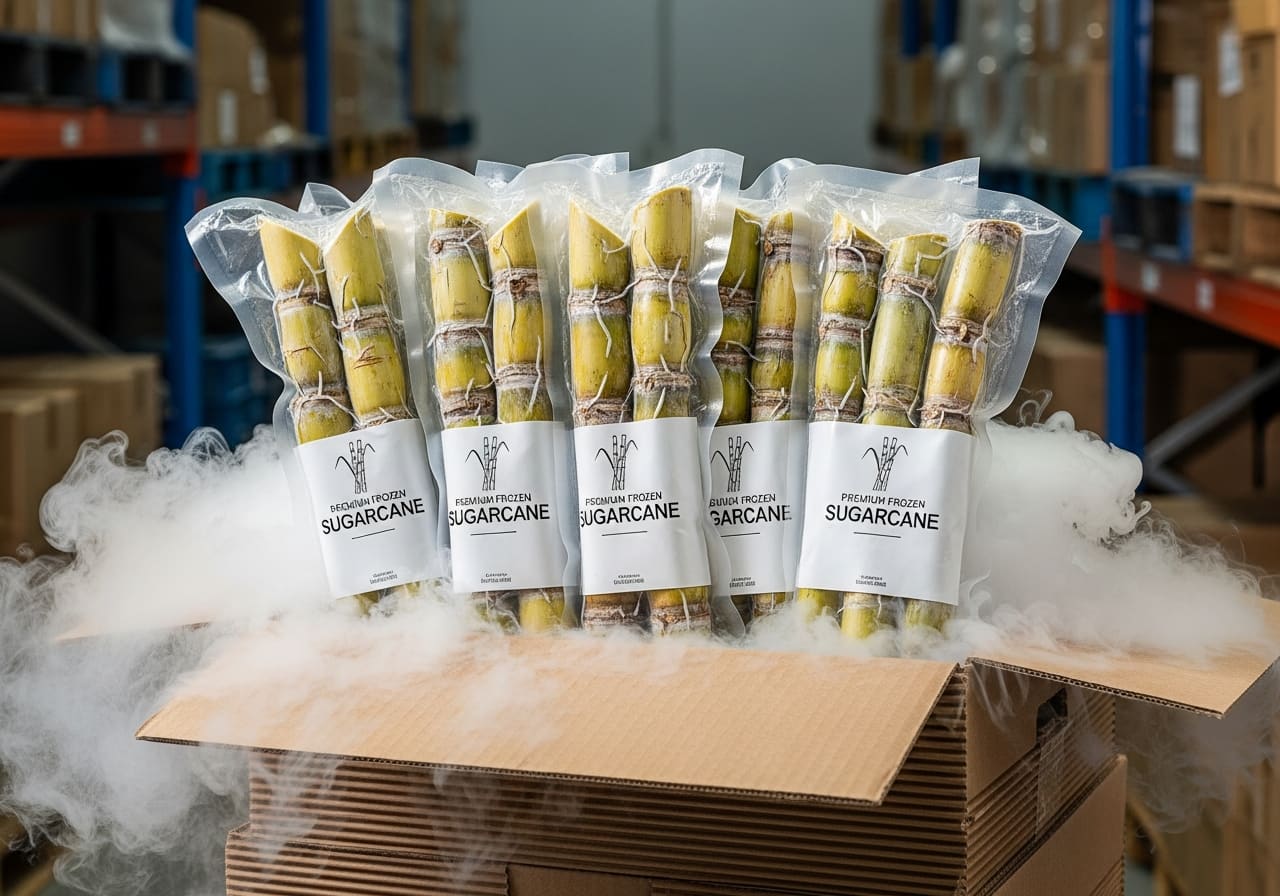
Red dragon fruit chunks, passion fruit and calamansi juice, and pressed sugarcane, flash-frozen at origin in Vietnam's Mekong Delta and held in our Austin warehouse. Ships frozen to your shop in 2 to 5 days. Order one case or a pallet of 120.
Ships from
Austin · 2 to 5 days
Minimum order
One case
Pallet route
120 cases · 17% off
Prep
Blend from frozen
The smoothie four
Four cases that carry a blend menu.
Real wholesale prices, published. Every case ships frozen from Austin and every product page has specs, thawing notes, and volume pricing.
Pour cost
The per-smoothie math, in the open.
A 10 kg case is 10,000 grams. Divide by your portion size and the cost per drink stops being a mystery. Here it is at single-case pricing.
01
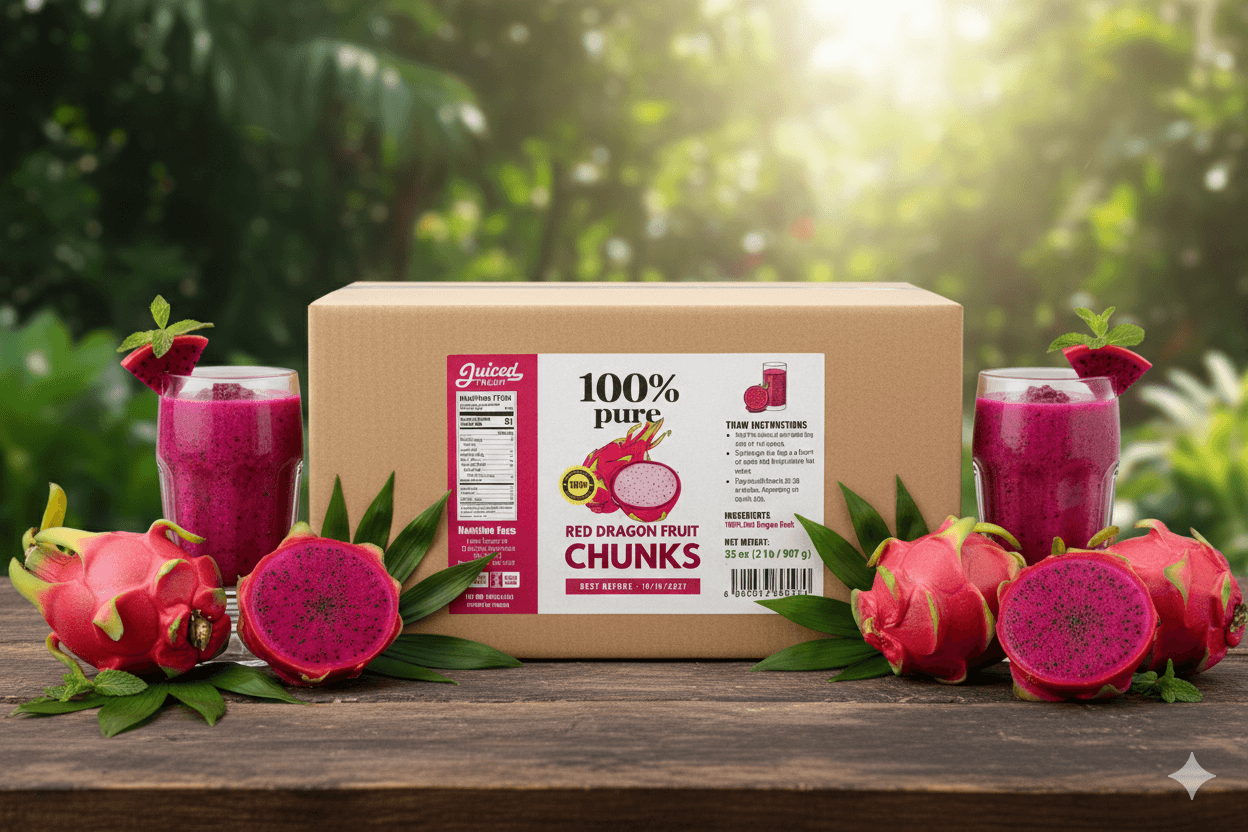
Dragon fruit: $0.99 a smoothie
A $99 case holds 10 kg of usable chunks, so a generous 100 g portion costs $0.99 at single-case pricing. On a pallet the case drops to about $82 and the same portion to $0.82. One case covers 100 fruit-forward drinks.
02
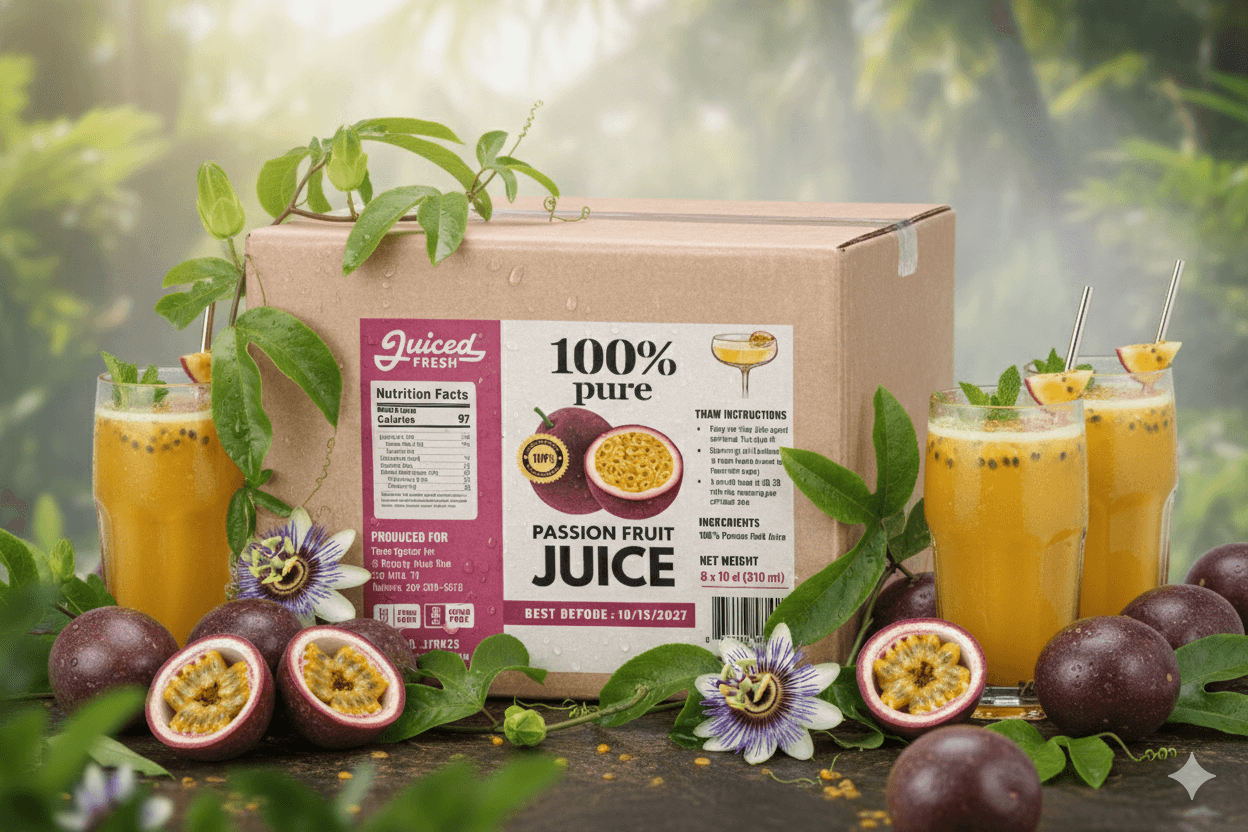
Passion fruit: $0.53 a pour
$132 for 10 kg works out to $1.32 per 100 g. A 40 g tang shot costs $0.53 per drink, or about $0.44 on pallet pricing, and one case stretches across 250 drinks. It is the cheapest way to make a menu taste imported.
03
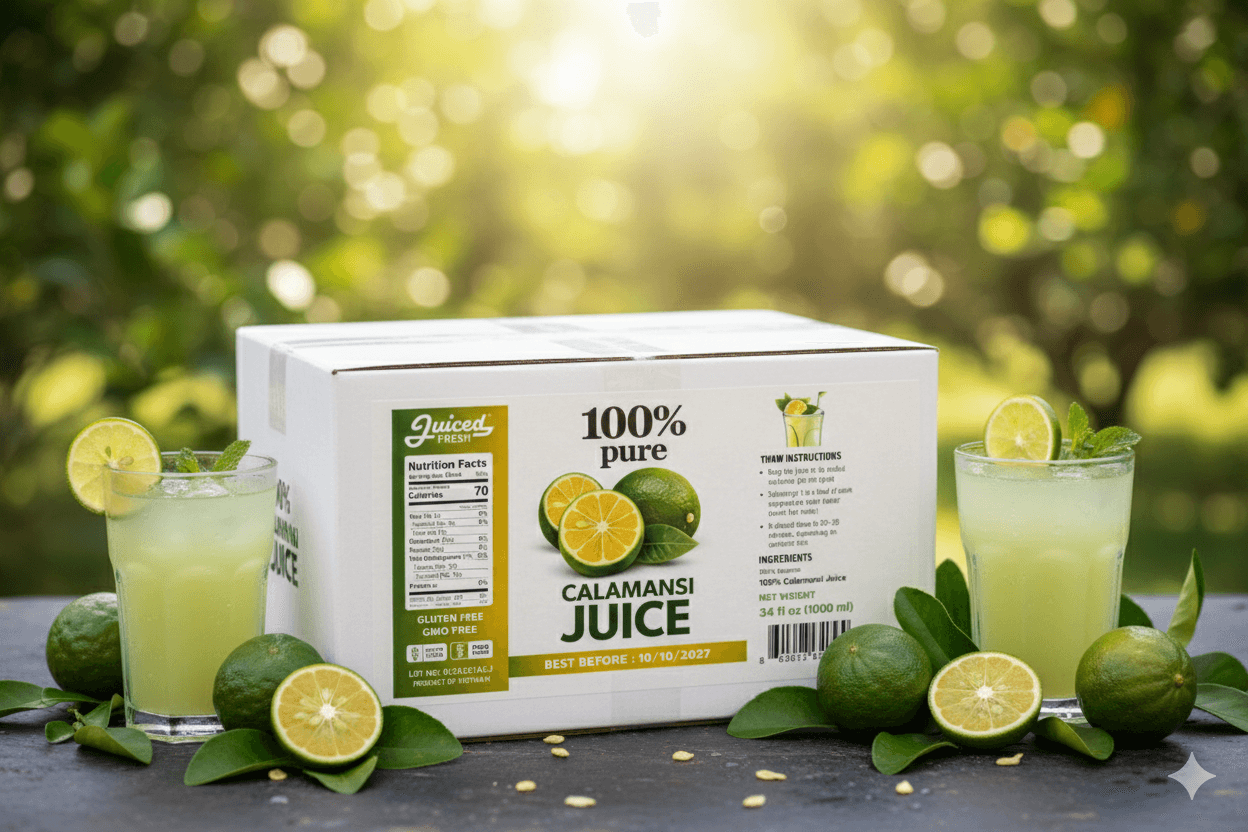
Calamansi: $0.21 a boost
At $69 for 10 kg, calamansi is the lowest-cost flavor lever on this page. A 30 g citrus boost costs $0.21 and a single case covers more than 330 drinks. Most shops use it where they used to reach for lime.
Worked example
The $1.73 pitaya smoothie.
Build a 16 oz tropical smoothie with 100 g of dragon fruit ($0.99), a 40 g passion fruit pour ($0.53), and a 30 g calamansi boost ($0.21). The fruit costs $1.73 before your base and banana. At a $9 menu price that is roughly a 19% fruit cost, with room left for protein add-ons and the cup. Sweetening with pressed cane instead of syrup? Run your volumes through the sugarcane juice calculator to size the program.
Built for the blender
Frozen is the format smoothies actually want.
Smoothie shops buying fresh tropical fruit pay for peel, spoilage, and seasonality. Frozen deletes all three and blends better anyway.
01
No thaw step
Chunks go from the case to the blender still frozen. The fruit does the job of ice, so drinks blend thicker and taste like fruit instead of water. No overnight staging, no half-thawed pans at the 2 pm rush.
02
Zero trim waste
Every pound you buy is a pound you can sell. Fresh dragon fruit loses roughly a third of its weight to peel before it earns a cent, and anything you don't cut in time goes in the bin. Frozen chunks are 100% yield.
03
Same fruit in February
Everything is flash-frozen at peak season in Vietnam's Mekong Delta, so color and sweetness don't drift when the season turns. Your signature pink bowl looks the same in week 40 as it did in week 1.
Where each case earns
Bowls, blends, and the acai question.
The same four cases stretch across very different menus. Here is where operators point them.
Acai and pitaya bowl shops
Red dragon fruit blends from frozen into the same scoopable base texture as acai and gives you the pink bowl cameras love. Many shops run both and let the menu split the traffic. Start with the dragon fruit smoothie bowl guide, then read the dragon fruit vs acai breakdown for the cost and menu comparison.
Smoothie and juice bars
Passion fruit and calamansi are the flavor levers that separate a tropical menu from a banana-strawberry one. Both are juices, so they meter precisely and cost pennies per drink. See how juice bars use calamansi and how tea shops run passion fruit in bubble tea for builds that carry straight over to smoothies.
Shops replacing syrup
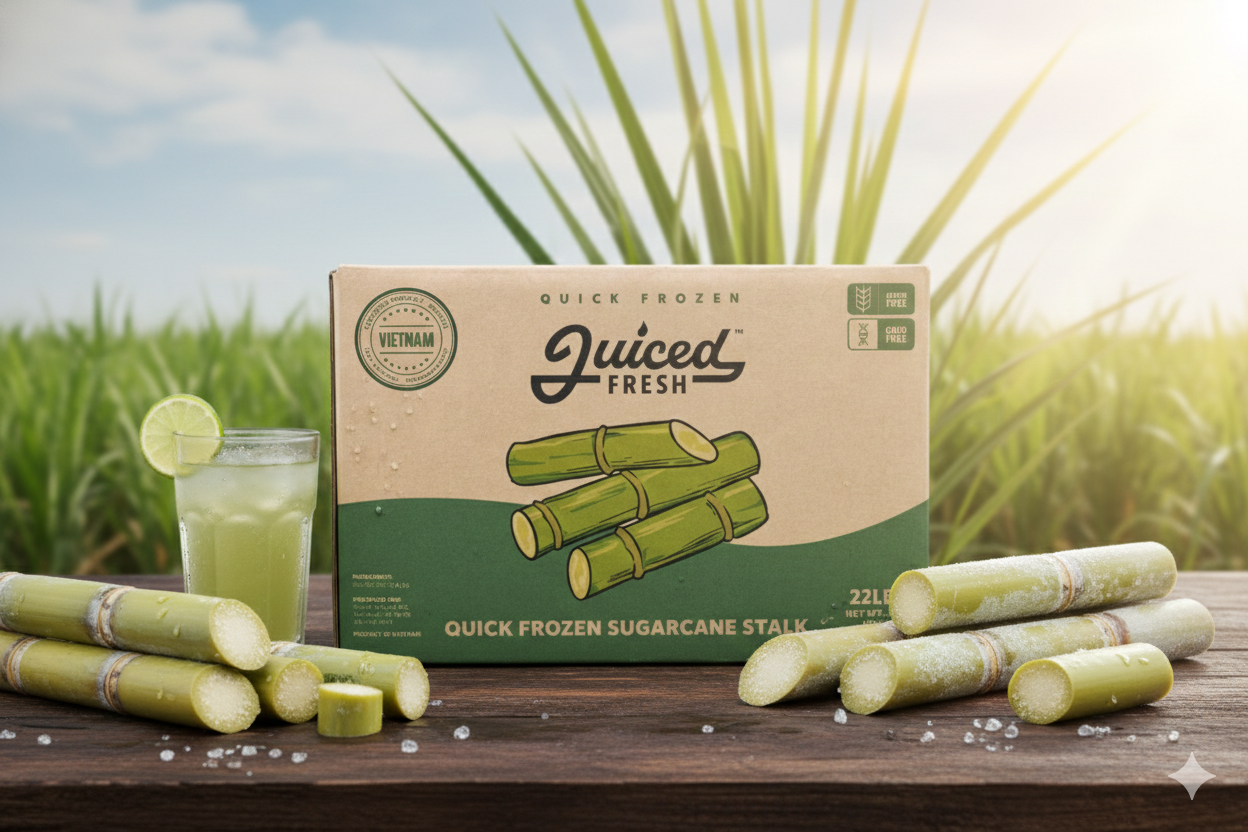
Pressed sugarcane sweetens a smoothie the way agave or simple syrup does, but it reads as an ingredient instead of an additive. A $38 case of frozen stalks presses in-house, and the bottled sugarcane juice line arrives in August 2026 for shops that would rather skip the press.
Buying for multiple locations or a commissary? The wholesale program covers pallet and multi-drop pricing. Going deep on one fruit? Start at the dragon fruit supplier hub or the frozen dragon fruit wholesale page for sourcing, specs, and volume tiers.
How ordering works
From first message to full freezer.
No account setup, no sales calls, no contract. Four steps, and the first one takes a minute.
01
Message us on WhatsApp
Send your monthly volume and ship-to zip. We reply in minutes with per-case, per-pallet, and freight pricing, and quotes hold for 30 days.
02
Start with one case
No minimum order. Test recipes with a single $38 or $99 case before committing to anything. Legacy frozen fruit programs demand 20,000 lb minimums; we built ours so a single shop can qualify the supply first.
03
Frozen freight from Austin
Temperature-logged frozen freight from our Texas warehouse to your door in 2 to 5 business days for most US locations. It arrives frozen solid and goes straight into your reach-in.
04
Scale to a pallet
When the menu proves out, pallet orders of 120 cases take 17% off wholesale pricing. One delivery a quarter replaces the weekly produce scramble.
FAQ
What smoothie shop owners ask first.
What is the minimum order for a smoothie shop?
One case. A 10 kg case of red dragon fruit chunks is $99 and a 22 lb case of sugarcane stalks is $38, and you can order a single case of anything to test recipes. Most national frozen fruit programs want 20,000 lb commitments, which locks small shops out. When your menu proves out, pallet orders of 120 cases take 17% off wholesale pricing.
Can I blend the fruit straight from frozen?
Yes, and you should. Dragon fruit chunks go from the freezer into the blender with no thawing step, and the frozen fruit replaces most or all of the ice, so blends come out thicker with more fruit flavor. The juices work either way: chip pieces off frozen for blending, or thaw a pack overnight in the walk-in and use it refrigerated within 5 to 7 days.
How does frozen delivery work for a small shop?
We hold inventory frozen in our Austin, Texas warehouse and ship temperature-logged frozen freight nationwide. Most US destinations arrive in 2 to 5 business days, frozen solid. There is no import paperwork on your side because you are buying from a US company with US stock. Hold the cases at 0°F and pull what each day needs.
What does the fruit cost per smoothie?
Simple division on real case prices: a 100 g dragon fruit portion costs $0.99, a 40 g passion fruit pour costs $0.53, and a 30 g calamansi boost costs $0.21 at single-case pricing. A loaded 16 oz tropical smoothie carries about $1.73 in fruit before your base and banana. Pallet pricing takes 17% off all of those numbers.
Do you supply acai?
No. We freeze what the Mekong Delta grows best: dragon fruit, passion fruit, calamansi, durian, and sugarcane. For bowl programs, red dragon fruit is the closest working analog to acai. It blends from frozen into the same scoopable base texture and gives you a bright pink bowl instead of a purple one. Our dragon fruit vs acai comparison walks through the numbers side by side.