Dragon Fruit vs Acai for Smoothie Bowls
An honest, operator-to-operator comparison of red dragon fruit and acai as a smoothie bowl base, across cost per bowl, prep, color, flavor, nutrition, and sourcing. Includes real dragon fruit numbers and why many bars run both.
If you run a smoothie bowl or juice bar program, the base is the single biggest decision on your menu. It sets your food cost, your prep routine, the photo that sells the item, and how often you reorder. For years that decision had one default answer, acai, and for good reason. But red dragon fruit, or pitaya, has become the base a lot of operators now lead with, and it is worth understanding exactly why before you commit a freezer shelf to either one.
This is a fair comparison, not a takedown. Acai has a real story and a loyal following, and there are menus where it belongs. Our read, as a supplier who ships both kinds of operators their fruit, is that dragon fruit wins on cost and consistency for most bowl programs, ties on visual appeal, and is easier to keep on the menu week after week. Here is the honest breakdown so you can decide for your own bar.
The short version
Acai is the established name. It carries a genuine antioxidant reputation, a wellness-brand halo built over a decade, and customers who walk in specifically asking for it. If your concept is built around that name, acai earns its place and you should keep it.
Dragon fruit is the margin and operations play. It is typically cheaper per bowl, milder and more crowd-pleasing in flavor, just as photogenic with its bright magenta color, and far easier to source consistently as frozen single-origin chunks. For a lot of bars, it is the base that lets you charge a premium price without the cost and supply headaches.
Plenty of operators do not choose at all. They run both, lead with dragon fruit for the margin, and keep acai for the customers who ask for it by name. More on that below.
Head to head
Let us go category by category, because the right answer genuinely depends on what you weigh most.
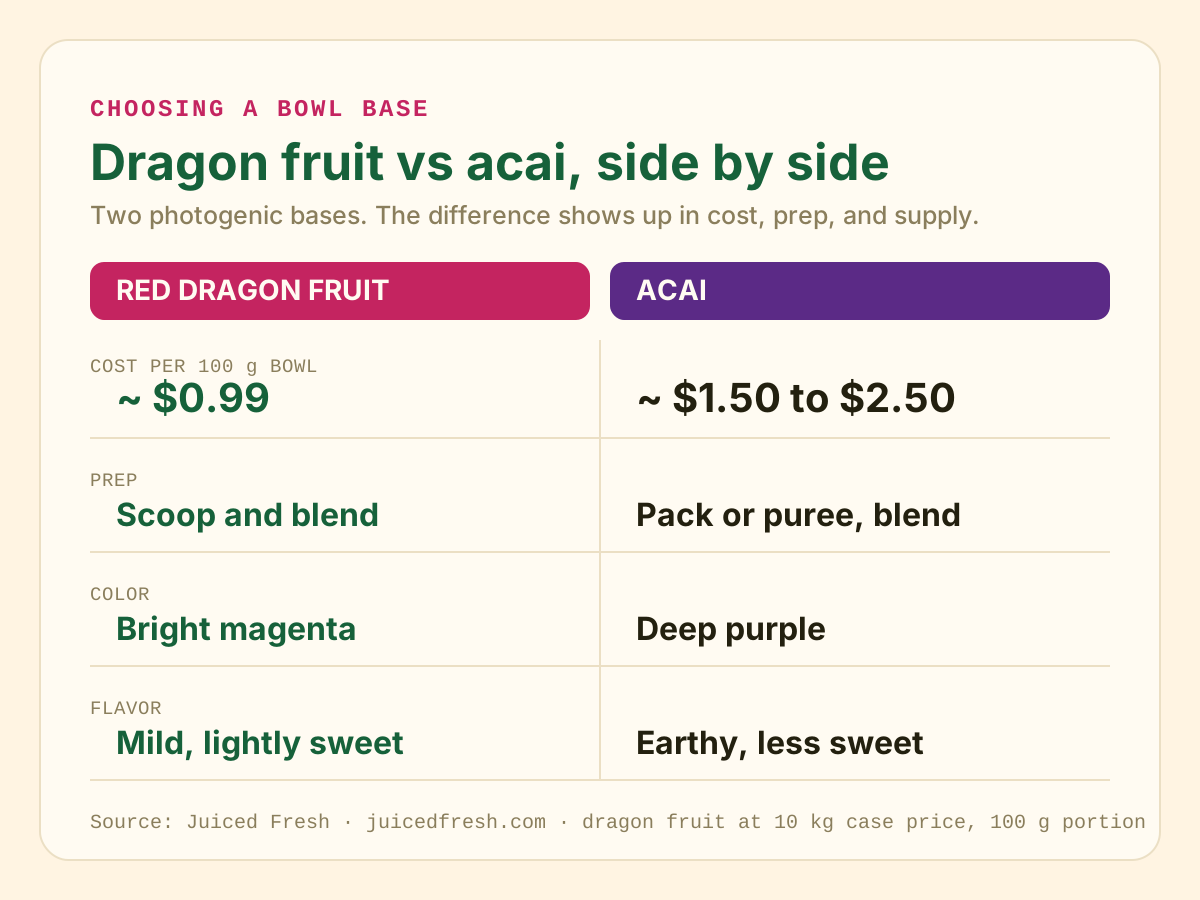
Cost per bowl. This is where the gap is clearest. A frozen dragon fruit base lands around one dollar of fruit for a standard 100 g bowl, covered in detail below. Acai, bought as frozen packs or unsweetened puree, more commonly runs $1.50 to $2.50 of base per bowl depending on brand, pack format, and how much you use. It is a premium import with a long supply chain from Brazil, and that shows up in the price. Over a few hundred bowls a week, the difference is real money.
Prep and labor. Both are frozen, and neither needs peeling or cutting, already a win over whole fresh fruit. Dragon fruit chunks scoop straight from the case and blend from frozen, with no packs to portion and no thawing window to manage. Acai usually comes as frozen packs you snap and blend, or a puree you portion, which is fine but adds a small step and ties you to a pack size. Slight edge to dragon fruit on simplicity, and a tie on skipping the knife work.
Color and visual appeal. This is the category people assume acai wins, and it does not. Acai gives you a deep, moody purple. Dragon fruit gives you a vivid, saturated magenta that is arguably the most photogenic base behind any counter. Both shoot beautifully. The honest difference is tone, not quality: acai reads darker and richer, dragon fruit reads brighter. If your bowls live or die on the photo, either one delivers, and dragon fruit's pink tends to pop harder in a busy grid.
Flavor and broad appeal. Acai has a distinctive earthy, slightly bitter taste, often described as dark berry crossed with unsweetened chocolate, which is why most acai bowls lean on sweetened packs or a lot of banana and juice. Some customers love that depth. Others find it an acquired taste. Dragon fruit is mild and lightly sweet, almost neutral, with a clean fruit note and no bitterness. That mildness is a feature for a base: it pleases a wider range of palates, takes on toppings well, and rarely gets sent back. If broad appeal matters more to you than a signature strong flavor, dragon fruit is the safer base.
Nutrition story. Acai's headline is antioxidants, specifically anthocyanins, and it has a legitimate, well-marketed reputation there. That story is real, and it is part of what you are paying for. Dragon fruit has its own honest story: naturally low in sugar, a source of fiber, vitamin C, and magnesium, and red pitaya gets its color from betalains, the same antioxidant pigments found in beets. Neither is a miracle food, and we would not market either one that way. But if a customer asks "is this good for me," both bases give you a truthful, attractive answer.
Sourcing consistency. This is the quietest category and often the one that decides the menu. Acai supply and pricing swing with harvest, demand, and a long cold chain, and pack formats and sweetness vary by brand. Dragon fruit, bought as frozen single-origin chunks, is one of the most consistent specialty bases you can stock. Flash-frozen within about four hours of harvest at -35C from a single growing region, the color, sweetness, and texture of the case you open in January match the one you open in July. With up to a two-year frozen shelf life, you can buy ahead at volume pricing without gambling on whether you will use it in time. For a bowl program, predictable input keeps your cost and your photo stable.
The cost-per-bowl math on dragon fruit
Specifics matter, so here are the real numbers behind that "about a dollar" figure.
The base case is Red Dragon Fruit Chunks sold by the 10 kg box at about $99 a case. That box is 10,000 grams of edible chunks with no peel and no soft fruit to discard, so your usable yield is the full case weight. That puts your raw fruit cost around one cent per gram.
At a standard 100 g of dragon fruit per bowl, that is about $0.99 of fruit per bowl, and a single case yields 100 bowls. Buy a pallet, which is 120 cases at 17% off before freight, and the per-case cost drops to roughly $82.17, taking the same bowl to about $0.82 of fruit.
Now lay a menu price over it. Smoothie bowls commonly sell for $9 to $14. Take a 100 g dragon fruit bowl priced at $12. The dragon fruit itself is roughly 8% of the menu price as a single ingredient, which leaves room for everything else in the build, banana, liquid base, toppings, and packaging, plus a healthy margin. That is the whole argument: the base costs about a dollar but carries a premium price.
The honest caveat is that this is the dragon fruit cost only. Your true food cost includes the rest of the build, labor, and freight, and an acai bowl's full build includes those too. The point of the comparison is the base line specifically, and on that line dragon fruit starts lower and stays more predictable. If you want the complete teardown including drinks and pallet math, see dragon fruit profit margins.
Which should you run
Here is the operator-to-operator read, with no pretending there is one answer for everyone.
Lead with dragon fruit if margin and consistency are your priorities. It is cheaper per bowl, pleases a wider range of customers, the magenta photographs as well as anything, and frozen single-origin chunks are easy to keep in stock and stable in cost. For a new bar, a value-conscious menu, or any program that wants a signature-looking bowl without a premium-import food cost, it is the base that pencils out. This is why a growing number of operators build their hero bowl on pitaya and treat dragon fruit for smoothie bowls as the anchor of the menu.
Keep acai if the name is part of your brand. Some concepts are built on the acai bowl specifically, and some customers walk in asking for it and nothing else. That demand is real and worth serving. If "acai bowl" is on your sign and in your reviews, acai stays.
Run both, which is what many bars land on. Lead the menu and your photography with a dragon fruit bowl for the margin and color, and keep an acai bowl for the customers who ask for it by name. The two bases are not rivals on a menu; they cover different customers, and frozen makes running both low-risk because nothing spoils on a slow day and you portion only what you sell.
The smartest bowl menus we see do not pick a side. They lead with dragon fruit for margin and keep acai for the name, and let frozen storage make running both painless.
A practical way to decide is to put a dragon fruit bowl on as a special for two weeks beside your acai bowl and watch the numbers: which one sells, which one gets photographed and tagged, and what each one actually costs you per ticket. One 10 kg case is 100 bowls at a 100 g portion, which is enough to run a real trial before you commit shelf space.
Is dragon fruit cheaper than acai for smoothie bowls?
Usually, yes. A frozen dragon fruit base runs about $0.99 of fruit for a 100 g bowl, while acai packs or puree more commonly land in the $1.50 to $2.50 range per bowl depending on brand and how much you use. The exact gap depends on your portion size and pricing, but dragon fruit typically starts lower and stays more stable because it is sourced as single-origin frozen chunks rather than a long-chain premium import.
Does dragon fruit taste like acai?
No, and that is part of the appeal. Acai is earthy and slightly bitter, closer to a dark berry crossed with unsweetened chocolate, which is why most acai bowls lean on sweetened packs and added banana. Dragon fruit is mild, lightly sweet, and nearly neutral, so it pleases a broader range of customers and takes on toppings well without overpowering them.
Is a dragon fruit bowl as photogenic as an acai bowl?
Yes. Acai gives you a deep purple and dragon fruit gives you a bright magenta, and both photograph beautifully. The difference is tone rather than quality: acai reads darker and moodier, while dragon fruit reads more vivid and tends to pop harder in a crowded feed. For a menu that sells on its photos, either base delivers.
Can I run both dragon fruit and acai bowls?
Absolutely, and many operators do. Lead with a dragon fruit bowl for the margin and color, and keep an acai bowl for customers who ask for it by name and for the antioxidant story. Because both are frozen, you portion only what you sell and nothing spoils on a slow day, so carrying both adds menu range without adding waste.
Whichever way you lean, the base only works if it shows up the same every week, and that is what frozen single-origin chunks are built to do. See full specs and order cases on the Red Dragon Fruit Chunks page, review wholesale and pallet pricing to lock in the 17% pallet discount, or browse products to round out your bar. As a US-based dragon fruit supplier shipping frozen from Austin in 2 to 5 days nationwide, we can quote a pallet or container over WhatsApp, usually with a reply in minutes.
Published by Juiced Fresh.
Notes from the warehouse, the farm, and the bars we supply. See all Field Notes