RI6 vs Monthong Durian: Which Frozen Pulp Belongs in Your Kitchen
RI6 and Monthong are the two durian varieties every US pulp buyer chooses between, and they behave differently in ice cream, pastry, smoothies, and coffee. Here is how they compare on flavor, texture, and color, plus the real yield and cost math from a 10 kg case.
Ask about frozen durian in the US and two names come up before any others: RI6 and Monthong. One is the pride of Vietnam's Mekong Delta. The other is the Thai cultivar most of the world's exported durian is built on. Both are premium fruit, both are widely grown in Vietnam, and both are sold as frozen pulp. They are also different enough in flavor, texture, and color that picking the wrong one for your application quietly costs you money on every batch.
This guide is written for the people actually buying the pulp: ice cream and gelato makers, pastry kitchens, smoothie and juice bars, Asian restaurants, and the coffee shops experimenting with durian drinks. We will cover how the two varieties differ, which one belongs in which application, what a 10 kg case actually yields in servings and dollars, how to thaw and handle the fruit, and the question every first-time buyer asks quietly: what do I do about the smell.
Two cultivars, two personalities
Durian is not one flavor. Variety matters as much as it does with mango or apple, and the gap between cultivars is wide enough that a recipe dialed in on one can taste flat or overwhelming on another. There are hundreds of named durians across Southeast Asia, and the famous Malaysian names like Musang King and D24 get most of the press. If you want the full landscape, our complete durian guide walks through all the varieties that matter to a commercial kitchen.
For a US operator buying frozen pulp, though, the practical choice narrows fast. Vietnamese production, which is where the best-priced export pulp comes from, is dominated by two cultivars: RI6, the homegrown Vietnamese variety, and Monthong, the Thai standard that Vietnamese growers adopted decades ago and now grow at scale. Understand these two and you understand almost every case of frozen durian pulp on the US market.
RI6: the Vietnamese heavyweight
RI6 is Vietnam's flagship durian, bred and grown in the Mekong Delta and prized domestically the way Musang King is prized in Malaysia. The flesh is a deep golden yellow, the seeds are small and flat, and the texture is dense, dry, and custard-like, closer to a rich creme patissiere than to fruit.
The flavor is the reason people become durian devotees. RI6 is intensely sweet with caramel and cooked-cream notes, and underneath the sweetness sits a faint bittersweet edge that gives the fruit depth. The aroma is pronounced. This is the durian in the smoothies sold on every corner in Saigon, and it is the profile Vietnamese and Southeast Asian customers recognize as the real thing.
In a kitchen, that intensity is an economic asset. Because the flavor is concentrated, RI6 punches through dairy, sugar, and cold at lower inclusion rates, which means each kilogram of pulp stretches across more finished servings.
Monthong: the mild Thai workhorse
Monthong means golden pillow in Thai, and the name describes it well. The lobes are large and thick, the flesh is a pale cream-yellow, and the flavor is gently sweet with very little of the bitter complexity RI6 carries. The aroma is the mildest of any major cultivar, which is exactly why Monthong became the world's default export durian. It is almost certainly the variety behind most Americans' first taste.
Texturally, Monthong is firmer and noticeably more fibrous than RI6. The flesh holds its shape rather than collapsing into custard, which reads as a flaw if you are expecting RI6 richness and as a feature if you need a filling that keeps structure through baking.
Vietnamese orchards grow Monthong extensively, often marketed as Dona durian, so a Vietnamese-packed case of Monthong pulp is common and does not mean the fruit crossed a border. Mildness is Monthong's whole personality: a gift when your audience is new to durian, and a limitation when the recipe needs durian to survive a freezer and a scoop of cream.
Side by side: flavor, texture, color
Here is the comparison in one place, the version worth pinning to the prep-room wall:
- Flavor intensity: RI6 is loud and complex, sweet with a bittersweet caramel depth. Monthong is mild, clean, and straightforwardly sweet.
- Texture: RI6 is dense, dry, and creamy with almost no fiber. Monthong is firmer and fibrous, and it holds its shape.
- Color: RI6 runs deep golden yellow, which carries visibly into ice cream, fillings, and smoothies. Monthong is pale cream, and finished products read lighter.
- Aroma: RI6 is unmistakably durian from across the room. Monthong is the quietest major cultivar, noticeable but polite.
- First-timer friendliness: Monthong wins. It is the on-ramp variety. RI6 is what people graduate to.
- Blending behavior: RI6 purees glass-smooth with no straining. Monthong may leave fine fiber in delicate applications like mousse or panna cotta.
Neither is better in the abstract. They are tools for different jobs, and the next section matches them to the work.
Which pulp belongs in which application
Ice cream and gelato: RI6, almost every time. Cold mutes flavor, and dairy fat mutes it further, so a mild durian disappears inside a frozen base. RI6 at 15 to 20 percent of the mix by weight delivers a clear, recognizable durian scoop, while Monthong often needs 25 percent or more to land the same impression, which erases its price advantage per batch. The deep RI6 color also gives the scoop a golden hue that pale Monthong cannot match. If ice cream is your program, the sourcing and recipe detail on our durian for ice cream makers page and the per-scoop economics in our durian for ice cream and bakeries breakdown go deeper.
Pastry and baking: this one splits. For cream-based work, mousse, pastry cream, crepe cake layers, and piped fillings, RI6's smooth, fiber-free texture is the right call, and its intensity means a 40 gram dose does the work of 60. For baked goods, buns, tarts, and cookies, Monthong earns its place: the fiber gives a filling body that survives oven heat without weeping, and the milder aroma is easier on a mixed-audience bakery case. Plenty of shops run both, RI6 for the cold case and Monthong for the oven. Our durian for bakeries page covers formats and dosing for pastry programs specifically.
Smoothies and blended drinks: RI6 is the classic. A Vietnamese-style durian smoothie is defined by RI6's custard body and caramel depth, and the variety blends completely smooth with milk or condensed milk and ice. If your customer base skews Southeast Asian, serving Monthong here will get noticed, and not kindly. If you run a mainstream smoothie shop introducing durian for the first time, Monthong's gentler profile can be the wiser opening move. Asian restaurants building dessert and drink menus around durian can see how other operators structure this on our durian for Asian restaurants page.
Durian coffee: the fast-growing oddball. The Vietnamese pairing of strong robusta coffee, sweetened condensed milk, and a spoon of durian has jumped from Ho Chi Minh City cafes to US menus, and it only works with RI6. Coffee is a wall of bitterness and roast, and Monthong vanishes behind it. Twenty to thirty grams of RI6 blended into the drink is enough to make the cup unmistakably durian, which is the entire point of putting it on the menu.
What a 10 kg case yields, in servings and dollars
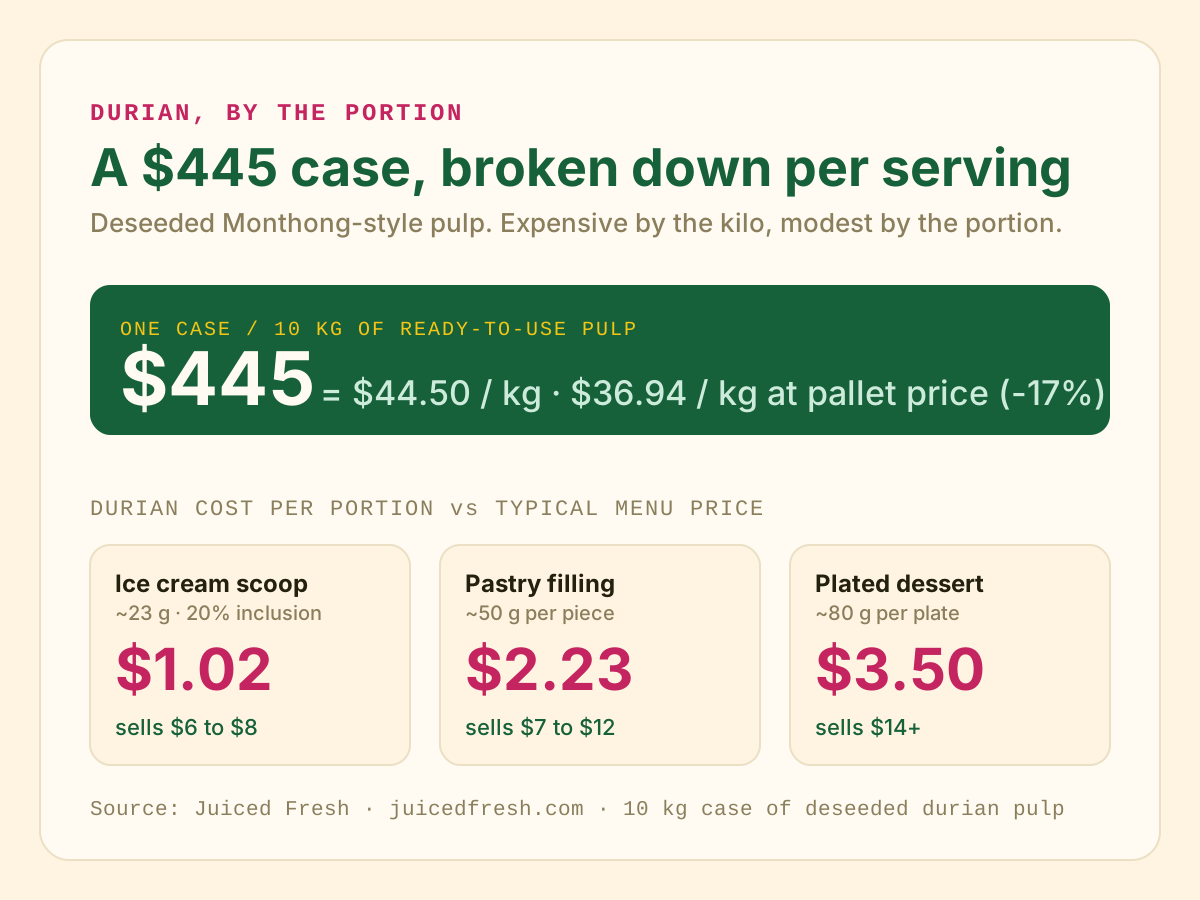
Now the math. Our Durian Pulp ships as a 10 kg frozen case at $445, which works out to $44.50 per kilogram. Because pulp arrives with the husk already gone, essentially every gram you pay for is usable fruit, so the case cost converts directly into serving costs without a waste discount. A pallet is 120 cases at 17 percent off before freight, which brings the case to about $369.35 and the kilogram to roughly $36.94, and pallet quotes come back over WhatsApp with replies in minutes through our wholesale and pallet pricing program.
One structural note before the numbers: you do not need to commit to volume to test any of this. The big frozen fruit importers typically want 20,000 pound minimum orders, which locks small shops out entirely. We sell single cases with no minimum, so a $445 experiment is the actual barrier to entry, not a container.
Here is what one case becomes at sensible doses:
- Ice cream at 20 percent inclusion: about 23 grams of pulp in a 4 ounce scoop, roughly 434 scoops per case, about $1.02 of durian per scoop at case price or $0.85 at pallet price. Durian scoops routinely sell for $6 to $8.
- Pastry filling at 50 grams per piece: 200 pastries per case, about $2.23 of durian each at case price or $1.85 at pallet price, on items that sell for $7 to $12.
- Smoothie at 80 grams per drink: 125 smoothies per case, about $3.56 of durian each at case price or $2.96 at pallet price, in a drink that sells for $9 to $12.
- Durian coffee at 25 grams per cup: 400 cups per case, about $1.11 of durian each at case price or $0.92 at pallet price, in a $7 to $9 signature drink.
The pattern across all four is the same. Durian is expensive by the kilogram and cheap by the portion, because the flavor is concentrated enough that small doses carry the product. The variety choice feeds directly into this math: pick the cultivar whose intensity matches your application and your effective cost per serving drops, because you stop over-dosing a mild fruit to compensate.
The wrong variety does not just taste wrong. It makes you use more of it, and that is where the margin leaks.
Handling and thawing
Frozen durian pulp is one of the easier premium ingredients to run, as long as you respect two rules: thaw slowly and never refreeze.
Move only what you need from the freezer to the refrigerator and let it thaw overnight. RI6 thaws to a soft, spoonable custard that folds straight into a base or pipes into a shell. Monthong thaws firmer and benefits from a quick mash or a pass in the blender before it goes into a mix. Keep thawed pulp sealed and cold, use it within a couple of days, and portion the rest of the case straight from frozen. Refreezing thawed pulp wrecks the texture and dulls the flavor, the same rule you already follow for every premium frozen fruit.
Sealed and held at 0 degrees Fahrenheit, the pulp keeps up to two years. Because it was flash-frozen at minus 35 Celsius within about four hours of harvest, the fruit in the bag is captured at peak ripeness, so the case you open next winter behaves like the one you opened this week. Cases ship frozen from our Austin warehouse and arrive in 2 to 5 days across the US, frozen solid.
Managing the smell in a working shop
Every operator worries about this before their first case, so here is the honest version: frozen pulp is nearly odorless while it stays frozen. The famous aroma comes from thawed flesh sitting exposed at warm temperatures. That means smell management is really just temperature and container discipline, and a few habits solve it.
- Keep the case double-sealed in the freezer, ideally in a dedicated lidded bin, so nothing shares air with your other frozen inventory.
- Thaw in a sealed container inside a second container. The refrigerator is where most complaints start, and two lids end them.
- Portion cold and work quickly. Aroma escalates sharply as the pulp warms toward room temperature, so scoop, dose, and reseal.
- Give durian its own cutting board and spatulas, and wash tools immediately in hot soapy water rather than letting them sit.
- Schedule durian prep outside service hours and run ventilation while you work. Fifteen minutes of prep before open beats an hour mid-rush.
- An open box of baking soda in the thawing fridge is a cheap insurance policy.
And one reframe worth considering: for the right audience, the aroma is marketing. Shops serving Southeast Asian communities lean into it, because the smell of real durian in the room is proof you are not serving flavoring. Know your crowd, and manage accordingly.
Is RI6 or Monthong better for ice cream?
RI6. Freezing and dairy both mute flavor, and RI6 has enough intensity to stay unmistakably durian at 15 to 20 percent inclusion, while Monthong tends to fade unless you push the dose higher. RI6 also colors the base a richer gold. Use Monthong in ice cream only if your customers are new to durian and you deliberately want a gentler scoop.
Can I substitute one variety for the other in a recipe?
Not one to one. Moving from RI6 to Monthong usually means raising the durian percentage by a quarter to a half to keep the same flavor presence, and moving the other way means cutting it back so the fruit does not dominate. Texture shifts too, since Monthong carries fiber that RI6 does not, so delicate smooth applications may need a quick blend and strain. Treat a variety change as a small recipe re-test, not a swap.
How many servings does a 10 kg case actually produce?
It depends entirely on the dose. At ice cream inclusion of about 23 grams per scoop, a case yields roughly 434 scoops. At 50 grams per pastry it fills 200 pieces, at 80 grams per smoothie it pours 125 drinks, and at 25 grams per durian coffee it flavors 400 cups. In every one of those, the durian cost per serving stays between about $0.85 and $3.56, against menu prices from $6 to $14.
Choose the variety the way you choose any ingredient: by the job. RI6 for intensity, color, and anything frozen, blended, or poured over coffee. Monthong for baked goods, gentle introductions, and structure. Both arrive as ready-to-portion frozen pulp with none of the husk, seed, and labor problems of whole fruit. See specs and order a case on the Durian Pulp page, dig into program-level sourcing on our frozen durian wholesale page, or start with the durian supplier USA hub for the full cold-chain story. Cases ship frozen from Austin in 2 to 5 days nationwide, and pallet and container quotes come back on WhatsApp in minutes.
Published by Juiced Fresh.
Notes from the warehouse, the farm, and the bars we supply. See all Field Notes