Calamansi vs Yuzu: The Sourceable Asian Citrus for Your Menu
Yuzu is extraordinary, but it is scarce and expensive in the US. Here is an honest head-to-head with calamansi, the bright Asian citrus you can actually source and build a permanent menu on.
You came here for yuzu
You tasted yuzu somewhere good. A pristine ponzu, a yuzu kosho that made a grilled scallop sing, a highball that smelled like a winter orchard. You wanted it on your menu. Then you went to source it, and the wall went up.
Fresh yuzu is hard to get in the US and seasonal when it appears. Most of what you can buy is frozen puree or bottled juice at a price that makes a single cocktail spec wince. By the time it clears freight and lands in your walk-in, you are looking at a hero ingredient you can run for a special, not a workhorse you can pour every shift.
This is not a hit piece on yuzu. Yuzu is wonderful and there are dishes only yuzu should touch. But if you are a chef, bar director, or beverage operator trying to put bright, perfumed Asian citrus on a menu you can actually hold a price on, there is a better everyday answer. It is calamansi, and it is sitting right where yuzu is not: consistent, sourceable, and affordable as pure frozen juice.
The honest head-to-head
Let us compare the two the way you would in a tasting, not a sales sheet.

Flavor is where people assume the two are interchangeable, and they are not, quite. Yuzu reads floral and high, with a grapefruit-like bitterness and a piney, almost herbal aromatic lift. It is a perfume citrus first and an acid second. Calamansi is brighter and rounder, somewhere between lime and mandarin, with real tartness up front and a sweet citrus-peel perfume of its own behind it. Where yuzu whispers winter and bergamot, calamansi snaps and then turns golden and mandarin-sweet on the finish.
The practical takeaway: yuzu is a top note you add in small, precious amounts. Calamansi is a complete citrus you can build the whole acid structure of a drink or a dressing around. It gives you the souring power of lime with a fragrance that lime does not have.
On sourcing, the gap is wide. Yuzu in the US is mostly frozen puree or bottled juice, often pasteurized, frequently salted in the case of imported juice, and routinely out of stock. Lead times are unpredictable and the per-unit cost is high before you even account for inconsistent quality between suppliers. Calamansi is available as a consistent frozen pure juice, single-origin from the Philippines, with no concentrate and no additives. You order it, it ships, you reorder it next month and it tastes the same.
On cost, the difference stops being a rounding error and starts being a menu strategy. We will put real numbers on it next.
What calamansi actually costs you
Here is the math operators care about, with our product as the reference.
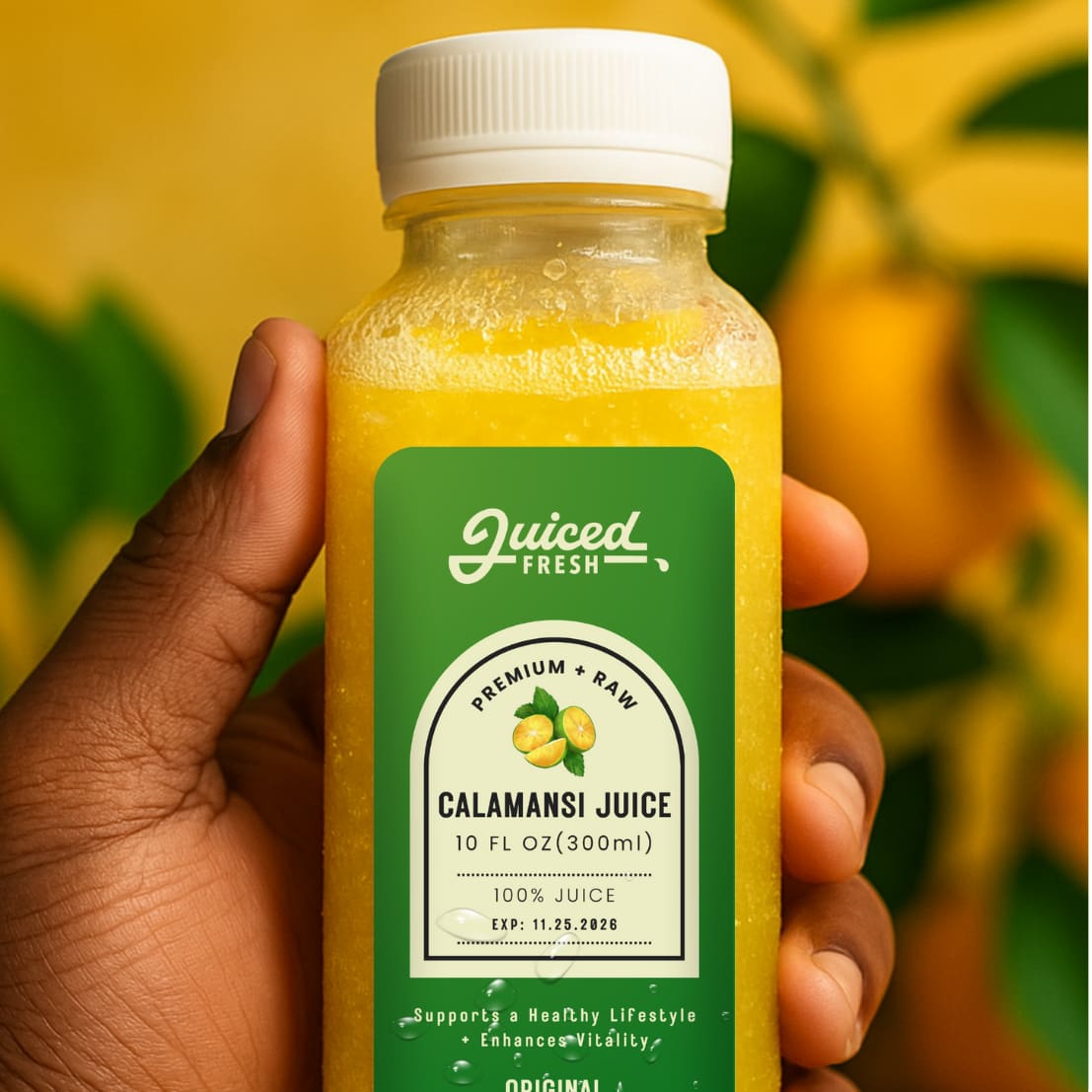
Calamansi Juice ships as a 10 kg frozen box at about $69 per case, which is roughly 338 fluid ounces of 100% pure juice. At a normal pour of three quarters of an ounce to one ounce per drink, that puts the calamansi cost of a single serving at about $0.15 to $0.20.
Read that again, because it is the whole argument. Fifteen to twenty cents of citrus per cocktail, sour, or signature lemonade. You can pour calamansi every shift, on every ticket, and never feel it in your cost line. Yuzu juice, by contrast, typically runs many times that per serving once you account for its bottle price and the small yields you get, which is exactly why it lives on specials and tasting menus rather than the well.
A few more things that matter once this is in your building:
- It is flash-frozen within about four hours of pressing at -35C, so the juice you thaw tastes like fresh fruit, not a shelf-stable approximation.
- Frozen, it holds up to a two-year shelf life, so you portion what a shift needs and the rest waits without spoiling. No more dumping bruised fresh citrus.
- It is single-origin and pure, so your spec is reproducible. The drink you dialed in during R&D is the drink that goes out in November and again in March.
For the full picture on portioning, batching, and where the margin lands across formats, see our breakdown of calamansi cost and menu ideas.
When to use each
This is the fair part. Reach for each where it actually belongs.
Use yuzu when yuzu is the point. A yuzu kosho, a classic ponzu, a Japanese-forward tasting course where that specific floral-bitter aromatic is the dish, a one-night special where you can charge for the rarity and you have secured supply. If you can get good yuzu and the cost works for that single moment, it is a beautiful thing. Treat it as the rare hero it is.
Use calamansi when you need Asian citrus to show up reliably and pay for itself. That is most of the menu, most of the time:
- The house sour, highball, margarita riff, or spritz that runs every service.
- The bright acid in a dressing, marinade, ceviche, glaze, or dipping sauce.
- A signature calamansi lemonade, agua fresca, soda, or mocktail program.
- Any item where you need the same flavor and the same cost next quarter.
The short version: yuzu for the rare, expensive flourish you can occasionally land. Calamansi for the permanent, affordable backbone you can actually operate.
Menu builds where calamansi stands in beautifully
Calamansi is not a yuzu impersonator. It is its own citrus, and the best menus use it on its own terms.
Behind the bar, it carries a sour cleanly: a calamansi whiskey sour or daiquiri-style build needs no other acid, and the mandarin perfume reads as something more interesting than lime. It plays with agave, rum, gin, and soju, brightens a tropical spritz, and makes a non-alcoholic calamansi soda that adults will actually order. Bar teams working it into a full program can start with calamansi for cocktail bars.
In the juice and cafe world, calamansi is a star. A pure calamansi lemonade or calamansi-honey cooler tastes like nowhere else, and because the juice is pure and pre-pressed, your team is not hand-juicing tiny fruit through a rush. Operators building grab-and-go or blended programs can see formats and ideas at calamansi for juice bars.
In the kitchen, it is a quiet workhorse. A few ounces lift a nuoc cham, a calamansi beurre blanc, a citrus glaze for grilled fish, or a vinaigrette that wakes up a heavy plate. Anywhere you would have reached for an expensive squeeze of yuzu to finish, calamansi gives you brightness and fragrance you can use generously.
Yuzu is the special you hope to land. Calamansi is the citrus you build the menu on.
Is calamansi a good substitute for yuzu?
It is the most practical Asian-citrus substitute available in the US, with a caveat worth stating plainly. Calamansi will not replicate yuzu's exact floral-grapefruit profile, because no other citrus does. What it gives you is bright, perfumed, mandarin-lime acid that fills the same role on a plate or in a glass at a fraction of the cost and with reliable supply. For everyday menu use, most operators find it the smarter call.
Why is yuzu so hard to source in the US?
Fresh yuzu faces import limits and is highly seasonal, so most US supply arrives as frozen puree or bottled, often pasteurized and sometimes salted, juice. Demand from high-end kitchens outpaces that limited supply, which keeps prices high and stock inconsistent. Calamansi avoids this because it is available as a steady frozen pure juice rather than a scarce seasonal fruit.
How much calamansi juice does one drink use?
A typical pour is three quarters of an ounce to one ounce per serving. With our Calamansi Juice at about $69 for roughly 338 fluid ounces, that works out to about $0.15 to $0.20 of juice per drink. A single 10 kg case covers a few hundred servings, which is why it pencils out for everyday menu items rather than only specials.
How is the juice shipped and stored?
It ships frozen from Austin, Texas, and arrives in 2 to 5 days nationwide. Flash-frozen within about four hours of pressing at -35C with no concentrate or additives, it carries up to a two-year frozen shelf life, so you keep it in the freezer and thaw only what a shift needs. Cases are available online, and larger formats move by pallet or container.
If you searched for yuzu and ran into the price and the empty shelf, calamansi is the answer that lets you actually ship the idea. Start with a case of Calamansi Juice and dial in a spec, then scale it once it earns its place. Pallets run 120 cases at 17% off before freight, and you can see full wholesale and pallet pricing or read more about us as a calamansi supplier for foodservice. For pallets, containers, or a sourcing question, message us on WhatsApp and we reply in minutes. Keep yuzu for the rare hero moment if you can get it. Build the everyday menu on calamansi.
Published by Juiced Fresh.
Notes from the warehouse, the farm, and the bars we supply. See all Field Notes