Calamansi on the Menu: Cost per Serving, Sourcing, and Menu Ideas
Calamansi is one of the most distinctive citrus flavors you can put on a menu, and one of the hardest to source fresh in the US. Here is what a 10 kg case of pure frozen juice costs per drink, why frozen beats fresh or concentrate, and how to build it into your program.
Calamansi is the flavor your regulars cannot get anywhere else. It is a small round Philippine citrus, sometimes called calamondin or Philippine lime, with the sourness of lime, a whisper of mandarin, and a perfume that does not exist in any other fruit. One squeeze tells a Filipino guest they are home, and tells everyone else they are tasting something new. The problem is supply. Fresh calamansi is almost impossible to buy reliably in the US, which is exactly why a frozen 100% juice is the path most serious kitchens and bars end up taking.
This article lays out the economics first, because that is what decides whether calamansi earns a permanent spot or stays a one-off special. Then sourcing, then concrete menu builds with ratios you can put straight into a spec sheet.
What calamansi actually is, and why fresh is so hard to get
Calamansi grows across Southeast Asia and is a staple of Filipino cooking, where it lands on everything from grilled fish to pancit to the dipping sauces called sawsawan. The fruit is tiny, about the size of a large grape, with a thin skin and a lot of seeds. It bruises easily, it does not travel well, and it has no commercial citrus supply chain into the US the way limes and lemons do.
What that means in practice: when you can find fresh calamansi at a specialty market, it is seasonal, expensive, inconsistent in ripeness, and gone again in a week. You cannot build a menu item on an ingredient you can only sometimes buy. Bottled calamansi concentrate is the usual fallback, and it is a poor one. Most concentrate is reconstituted, sweetened, or cut with other citrus, and it carries a cooked, flat note that the fresh fruit never has.
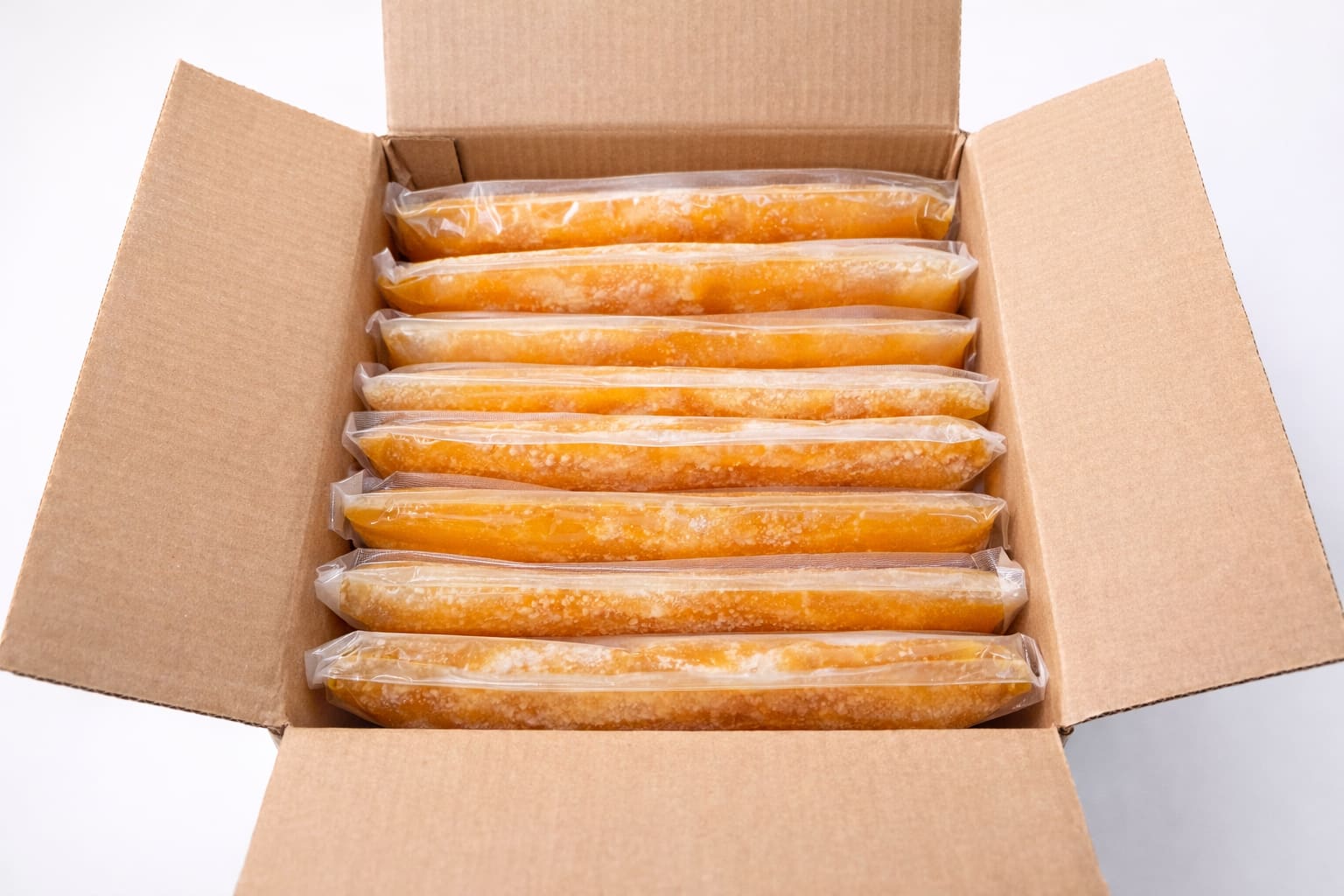
Frozen pure juice solves the supply problem without the concentrate compromise. Our Calamansi Juice is 100% calamansi, single-origin from the Philippines, flash-frozen within about four hours of harvest at -35C. No concentrate, no water, no additives, nothing added back. You get the aromatic, high-acid juice of fruit picked at peak, available every week of the year, with the same flavor in January that you had in July.
The cost math: what a 10 kg case actually buys
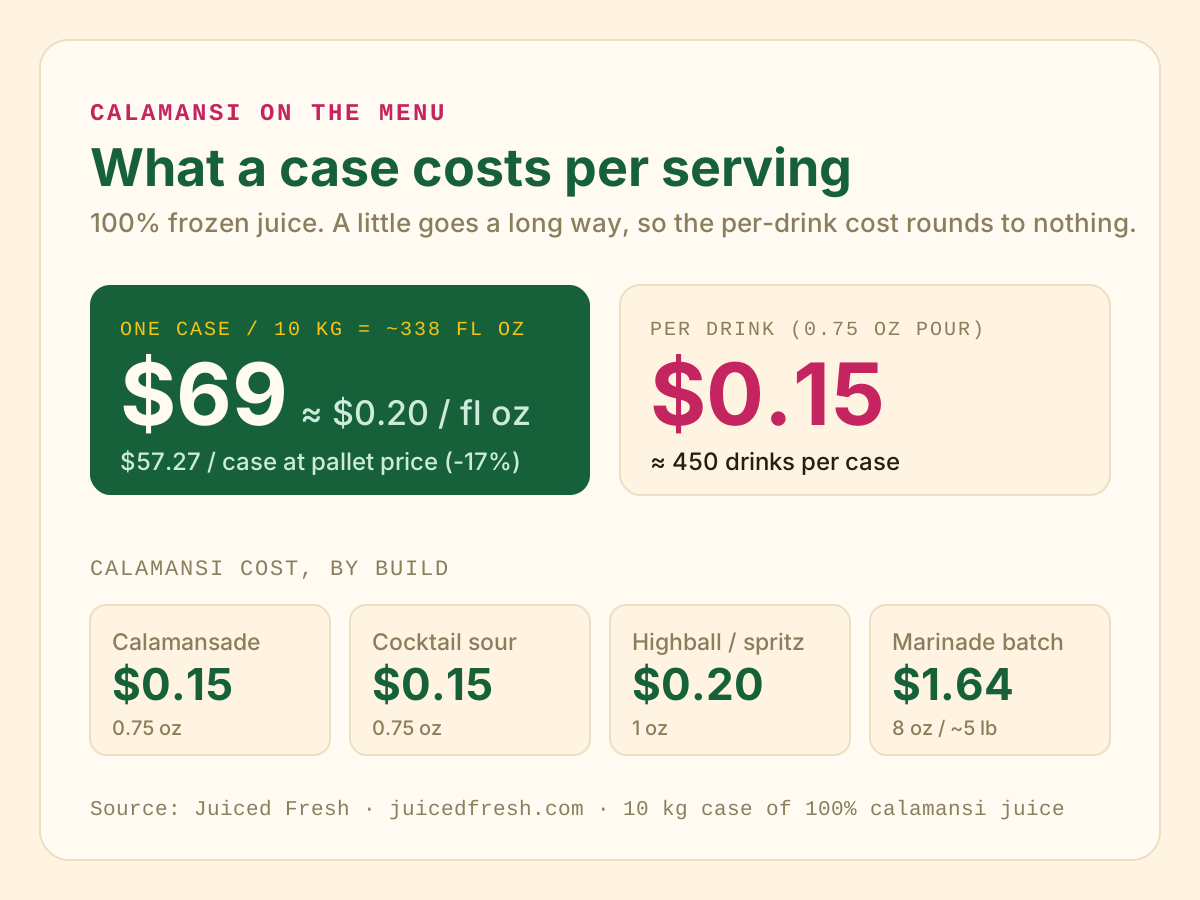
Here is the part that matters for your spreadsheet. A case is a 10 kg frozen box of pure juice at about $69. Calamansi juice is close to the density of water, so 10 kg is roughly 10 liters, or about 338 fluid ounces of usable juice per case.
That single number drives everything else. At $69 a case, your raw juice cost is about $0.20 per fluid ounce. Because this is pure juice and not a ready-to-drink product, a little goes a long way, and most drinks use well under an ounce of it.
Run it across the formats you would actually serve:
- Calamansade or a juice-bar cooler, at 0.75 oz juice per 12 oz finished drink: about 450 servings per case, roughly $0.15 of calamansi per drink.
- A cocktail sour or a calamansi margarita, at 0.75 oz per build: again about 450 drinks, roughly $0.15 of calamansi each.
- A highball or spritz with a fuller 1 oz pour: about 338 drinks per case, roughly $0.20 of calamansi each.
- A marinade or kinilaw batch, at say 8 oz of juice to dress about 5 lb of protein: about 42 batches per case, roughly $1.64 of calamansi per batch.
A drink that costs you fifteen cents in hero juice and sells for nine to fourteen dollars is the kind of pour cost that makes a beverage director happy. The flavor is the talking point, the cost is a rounding error, and the menu line reads as a genuine specialty rather than a flavored syrup.
Buying deeper drops the number further. A pallet is 120 cases at 17% off before freight, which takes the case to about $57.27 and the juice to roughly $0.17 per ounce, or about $0.13 of calamansi in a 0.75 oz pour. If calamansi is a year-round fixture for you, see wholesale and pallet pricing for the math at volume.
Why frozen pure juice wins over fresh or concentrate
Three operational reasons, beyond flavor.
First, consistency. Every case is the same single-origin juice at the same acidity, so a drink spec you write today still works in six months. Fresh fruit swings with the season; concentrate swings with whatever the bottler blended that batch.
Second, waste and labor. Fresh calamansi means hand-juicing a tiny, seedy fruit, which is slow, and any fruit you do not use spoils fast. Frozen pure juice has up to a two-year frozen shelf life, so you thaw only what you need and the rest waits in the freezer with no spoilage clock running. There is no peeling, no seeds, no press.
Third, supply you can plan around. We ship frozen from a warehouse in Austin, Texas, and it reaches most of the country in 2 to 5 days. You are not waiting on a seasonal specialty shipment or hoping your produce vendor has it this week. For the broader case on supply, see why we are a reliable calamansi supplier for US foodservice.
Pure juice is concentrated flavor on its own terms. You are not buying a drink, you are buying the most intense part of the fruit and building around it.
Menu ideas and builds
Because this is undiluted juice, almost every use starts by adding something: water, soda, sweetener, or spirit. Treat the dilution ratio as the recipe. Below are starting points, not gospel; adjust sweetness to your guests.
Calamansi juice and ade. The cleanest expression. For a still calamansade, start at 0.75 to 1 oz calamansi juice, 0.75 oz simple syrup, and 8 to 10 oz cold water over ice, then adjust. For a sparkling version, swap the water for soda. This is the anchor item for juice bars and a strong non-alcoholic option everywhere; juice bars can read more at calamansi for juice bars.
Cocktails and highballs. Calamansi behaves like a more aromatic lime, so it slots into any sour. A calamansi margarita or daiquiri runs about 0.75 oz calamansi juice, 0.75 oz simple or agave, and 2 oz spirit, shaken. For a long drink, a calamansi highball is 1 oz juice, 1 oz sweetener, 1.5 oz spirit, topped with soda. It also makes an excellent shrub or a non-alcoholic spritz. Bar programs can dig into specs at calamansi for cocktail bars.
Bubble tea. Calamansi green tea is one of the most refreshing things on a boba menu. Build with about 1 oz calamansi juice, 1 to 1.5 oz fructose or sugar syrup, 6 oz brewed and cooled green tea or jasmine, shaken with ice. It pairs naturally with lychee or passion popping pearls and reads as a brighter, more interesting alternative to a standard lemon tea.
Salad dressings and marinades. This is where Filipino kitchens already know the move. Calamansi is the acid in sawsawan dipping sauces, combined with soy and chili, the cure in kinilaw, the Filipino ceviche where the juice cooks raw fish, and a marinade base for grilled meats and seafood. Use it anywhere a recipe calls for lime or lemon and you want more fragrance. A vinaigrette runs about 1 part calamansi to 3 parts oil with salt and a touch of honey. Filipino and Asian kitchens can see more at calamansi for Filipino restaurants.
Desserts. The high acidity makes calamansi a natural for curds, tarts, sorbet, and panna cotta, where it cuts richness the way lemon does but with more perfume. A calamansi sorbet or a calamansi bar travels well as a feature dessert and uses the same case you already stock for the bar.
How much should I order to start?
Start with a single case to test placement and dial in your ratios across one or two menu items. At roughly 338 ounces, one 10 kg case covers hundreds of drinks, which is plenty to run a special or a soft launch and see how it sells before you commit. You can order cases online and have them shipped frozen.
How is it shipped, and will it stay frozen?
It ships frozen from our Austin, Texas warehouse and arrives in 2 to 5 days nationwide, packed to stay frozen in transit. Once it reaches you it goes straight into the freezer, where the pure juice holds up to a two-year frozen shelf life. Thaw only what you need for service and keep the rest frozen.
Do I order cases or a pallet?
Order cases online through DeliveredCold when you are testing or running steady single-location volume. When calamansi becomes a fixture or you are supplying several locations, a pallet of 120 cases at 17% off before freight is the better number, and full containers are available too. Pallets and containers are quoted on WhatsApp, and we reply in minutes.
Calamansi is a rare thing on a US menu: a flavor guests genuinely cannot get elsewhere, at a cost per serving that rounds to nothing. The only thing that has kept it off most menus is supply, and frozen pure juice removes that obstacle. Put it on as a calamansade, a signature sour, or the acid in your kinilaw, and let the flavor do the selling. To get started, see the Calamansi Juice product page, review wholesale and pallet pricing for volume, or message us on WhatsApp for a pallet or container quote and we will reply in minutes. You can also browse products for the rest of the frozen tropical range.
Published by Juiced Fresh.
Notes from the warehouse, the farm, and the bars we supply. See all Field Notes